
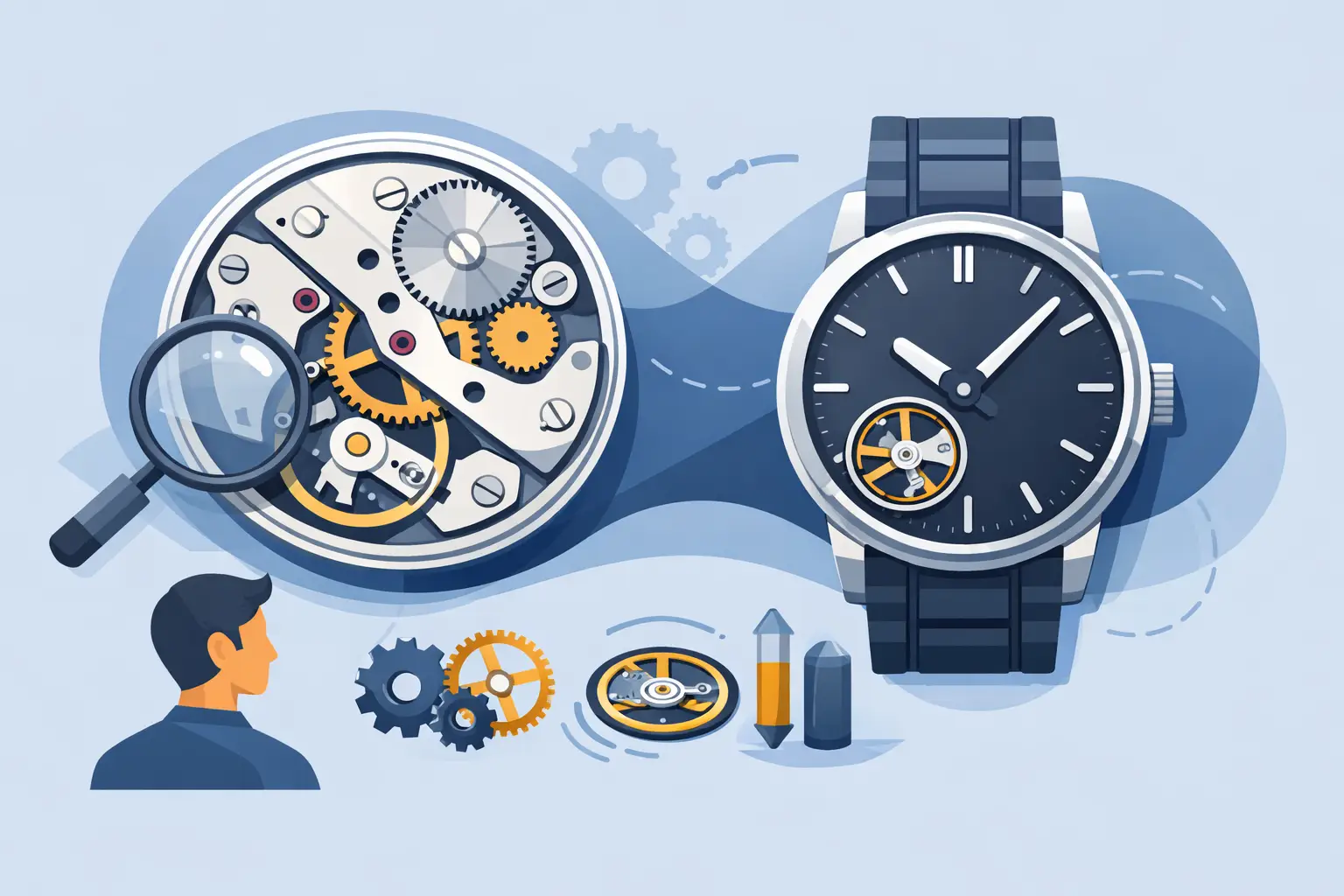
You can tell a lot about a watch from the dial, the case shape, or the bracelet. But the part that decides how it actually lives on your wrist is the movement. If you have been searching for watch movements explained for beginners, this is the part that makes every other buying choice easier, from budget to maintenance to long-term appeal.
A great-looking watch with the wrong movement for your lifestyle can become a regret fast. The guy who wants grab-and-go convenience usually won’t love resetting a mechanical piece after it sits for a weekend. The buyer chasing craftsmanship and character may find a battery-powered watch a little too clinical. Neither choice is wrong. The better choice is the one that fits how you wear a watch.
Watch movements explained for beginners: what a movement actually is
The movement is the engine inside the watch. It powers the hands, tracks the passing of time, and in some cases runs extra functions like a date, chronograph, moonphase, or GMT hand.
When people talk about a watch being quartz, automatic, or mechanical, they are talking about the movement type. This matters because movement affects accuracy, price, thickness, service needs, prestige, and even how the watch feels emotionally. For many first-time buyers, that last point is a surprise. A movement is technical, but it also shapes the personality of the watch.
At the beginner level, there are three main categories to understand. Quartz is battery-powered. Mechanical is hand-wound. Automatic is mechanical too, but it winds itself as you wear it. Once you understand those three, most of the watch market starts to make a lot more sense.
Quartz movements: accurate, affordable, and easy
Quartz is the simplest place to start because it is the most practical for most people. A quartz watch uses a battery to send electricity through a tiny quartz crystal, which vibrates at a precise frequency. That regulates the timekeeping.
In plain English, quartz watches are usually very accurate, low-maintenance, and relatively affordable. If you want a watch that you can pick up, set once, and trust, quartz is hard to beat. This is one reason brands like Casio, Timex, Citizen, and Seiko have built such strong reputations in the everyday market.
There is also a style advantage here. Because quartz movements can be small and efficient, they allow for slimmer cases and lower price points. If you want a clean office watch, a dependable weekend piece, or a gift watch that won’t ask much from the owner, quartz often makes the smartest first purchase.
The trade-off is emotional rather than functional. Enthusiasts sometimes see quartz as less romantic because it lacks the intricate mechanics that make traditional watchmaking so admired. That does not mean quartz is cheap in a bad way. It means it prioritizes utility over theater. For some buyers, that is exactly the appeal.
Mechanical movements: traditional watchmaking in pure form
A mechanical watch runs on a mainspring that you wind by hand. No battery. No electronics. Just gears, springs, and a carefully engineered system that releases energy in a controlled way.
This is where watch culture starts to feel a little more intimate. A mechanical watch asks for participation. You wind it, wear it, and pay attention to it. That ritual is part of the charm. For men who appreciate craftsmanship, heritage, and the idea of wearing a tiny machine on the wrist, mechanical watches have a distinct allure.
They are not usually the most accurate option, and they are rarely the cheapest. They also need more care over time. But if you are drawn to the artistry of watchmaking, those trade-offs can feel worth it. A hand-wound watch often has a tactile satisfaction that battery-powered pieces simply do not offer.
Mechanical movements also show up more often in dress watches and enthusiast-focused models. There is a certain confidence in wearing something that values craft over convenience. It signals taste in a quieter, more informed way.
Automatic movements: the sweet spot for many buyers
Automatic movements are mechanical movements with an added rotor that winds the mainspring as your wrist moves. You get the same traditional engineering, but with less daily effort.
For many men buying their first serious watch, automatic is the sweet spot. It offers the prestige and character of mechanical watchmaking without requiring constant hand-winding. If you wear the watch regularly, it stays powered. That balance of heritage and convenience is a big reason automatic watches dominate the entry-level luxury and enthusiast market.
There are some caveats. Automatics are often thicker than quartz watches, and they still are not as accurate as most quartz models. If you rotate between several watches, an automatic may stop when left unworn for a couple of days, which means setting the time again. Some owners enjoy that ritual. Others get tired of it.
Still, if you want your watch to feel like more than an accessory, automatic is often where that connection begins. It is one of the clearest expressions of craftsmanship you can wear every day.
Watch movements explained for beginners: how accuracy really works
A lot of first-time buyers assume a more expensive movement always keeps better time. That is not necessarily true.
Quartz is generally the most accurate of the three main types. Mechanical and automatic watches can gain or lose several seconds per day, and sometimes more depending on the movement quality, regulation, age, and how the watch is worn. That sounds bad on paper, but in real life many owners accept it because they are buying into craftsmanship, not just precision.
Think of it this way: if your only goal is exact timekeeping, quartz wins easily. If your goal includes heritage, engineering, and the pleasure of wearing something mechanically alive, automatic or hand-wound starts to make more sense.
This is why movement choice is rarely about one feature. It is about priorities. Accuracy matters, but so do feel, tradition, service costs, and the kind of ownership experience you actually want.
Service, upkeep, and long-term cost
Movement type affects what ownership looks like after the purchase. Quartz watches usually need a battery change every few years, and that keeps maintenance simple and affordable. Not every quartz watch is disposable, but many are built around convenience first.
Mechanical and automatic watches need periodic servicing because lubricants age and internal components wear over time. Service intervals vary by brand and movement, but the point is simple: a mechanical watch is a machine, and machines need care.
That does not mean beginners should avoid them. It means you should go in with the right expectations. An affordable automatic can be a fantastic first serious watch, but it is smart to think beyond the sticker price. A watch that feels like a bargain upfront may cost more to maintain than a quartz model over several years.
On the other hand, many buyers are happy to pay that premium because a good mechanical watch can feel more enduring, more personal, and more collectible.
Which movement is best for your lifestyle?
If you want your first watch to be easy, dependable, and budget-friendly, quartz is probably the right move. It suits daily wear, travel, and busy schedules. It is also ideal if you care more about style and practicality than horological tradition.
If you like the idea of owning something with more craftsmanship and old-school appeal, automatic is often the best entry point. It gives you a richer watch experience without going fully old-fashioned. For many men building a collection, this is where the hobby starts to get interesting.
If you are drawn to minimalism, ritual, and traditional mechanics, a hand-wound watch has real character. It is less common as a first purchase, but for the right buyer it feels intentional and refined.
Budget matters here too. At lower price points, quartz often delivers better reliability and finishing for the money. As you move upmarket, automatic and mechanical options become more compelling because the movement itself becomes part of the value story.
A final way to think about movement choice
The best movement is not the most expensive one or the one enthusiasts praise the loudest. It is the one that fits your habits, your expectations, and the role the watch will play in your life. If a watch makes you want to wear it, trust it, and keep it for years, the movement is doing its job. That is the standard worth buying for.