
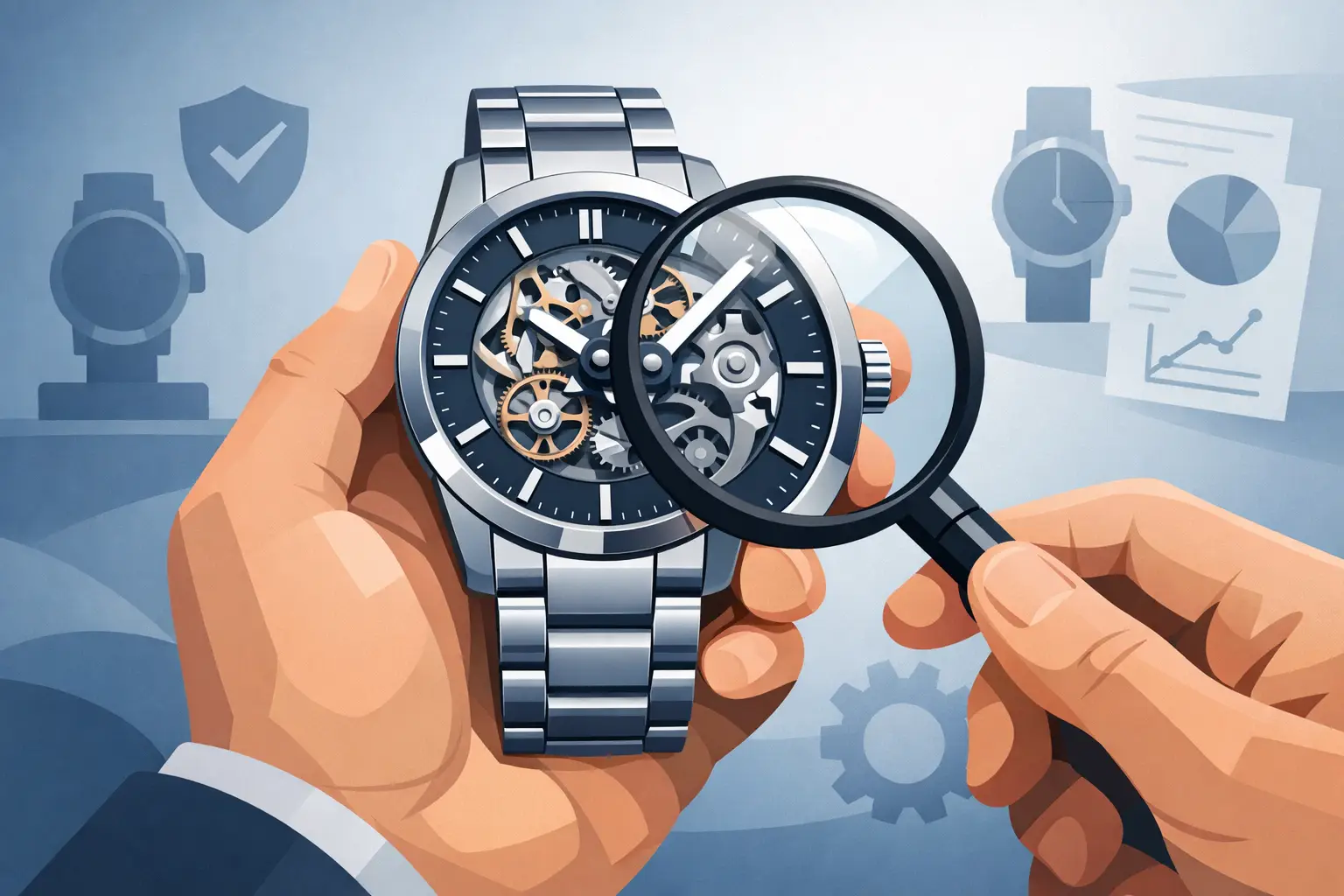
A good automatic watch earns its place on your wrist differently than a smartwatch or a quartz piece. It is powered by the movement of your day, carries a small mechanical engine beneath the dial, and often looks better with a little age. Learning how to choose an automatic watch comes down to more than picking a recognizable name. You need a watch that suits your wrist, wardrobe, routine, and expectations of ownership.
For a first serious watch, that balance matters. The right automatic can make a suit feel sharper, give casual clothes more intention, and become the piece you reach for without thinking. The wrong one can feel too large, too delicate, or too expensive for how little you wear it.
Start With How You Will Actually Wear It
Before comparing movements or admiring exhibition casebacks, decide where the watch belongs in your life. An automatic watch is available in nearly every category, from field watches built for weekends outdoors to polished dress watches made for boardrooms and formal events.
If you want one watch for almost everything, look for a versatile sports watch or everyday style with a steel bracelet, a clean dial, and moderate water resistance. A case around 38mm to 41mm will work for many men and can move comfortably between the office, dinner, and a casual Saturday. Black, navy, silver, and dark green dials are especially easy to pair.
A dress watch is a better fit if your wardrobe leans tailored or you are shopping for weddings, client meetings, and special occasions. These watches are usually slimmer, simpler, and more restrained. Think leather strap, clean hour markers, and a case that slides under a shirt cuff.
For a more active lifestyle, a dive watch, GMT, or field watch brings greater durability and visual presence. These styles can handle daily wear well, but their thicker cases and sportier details are not always ideal with formal clothing. There is no universal best choice. The best automatic is the one that looks natural in the settings where you spend your time.
How to Choose an Automatic Watch by Movement
The movement is the heart of the watch, but buyers do not need to become watchmakers to judge it well. An automatic movement winds itself through a rotor that moves as you wear the watch. Unlike a battery-powered quartz watch, it needs regular wrist time or occasional winding to keep running.
For most first-time buyers, movement reliability and service access matter more than a long list of technical specifications. Japanese automatic movements, especially those associated with Seiko, Citizen, Orient, and Miyota, have a strong reputation for value, durability, and straightforward ownership. They are common in affordable and mid-range watches, making them a sensible choice for an everyday piece.
Swiss movements generally carry more prestige and can offer refined finishing, strong accuracy, and a deeper connection to traditional watchmaking. Brands using Swiss automatic calibers often command higher prices, but the difference is not simply about keeping better time. You are also paying for heritage, finishing, brand position, and the experience of owning a more elevated object.
Pay attention to power reserve, which is how long the watch runs after it is fully wound. Around 38 to 42 hours is common and perfectly workable if you wear the watch often. A reserve of 70 hours or more is more convenient for someone who rotates several watches during the week. Leave it off Friday evening, and it may still be running Monday morning.
Accuracy deserves perspective. Mechanical watches can gain or lose a few seconds each day, sometimes more at accessible price points. That is normal. If exact timekeeping is your priority, quartz remains the more precise and lower-maintenance option. Buy an automatic because you appreciate mechanical craftsmanship and the character that comes with it, not because you expect laboratory precision.
Get Case Size and Fit Right
A watch can be beautifully made and still look wrong if its proportions fight your wrist. Case diameter is the number most shoppers see first, but it is only part of the picture. Lug-to-lug distance, case thickness, dial opening, bezel width, and bracelet design all influence how large a watch feels.
As a useful starting point, men with smaller or average wrists often find 36mm to 40mm especially wearable. Watches from 40mm to 42mm offer more presence and suit many average to larger wrists. Above 43mm, a watch becomes a deliberate statement and generally works best for larger wrists or sport-oriented designs.
Lug-to-lug measurement is often the deciding factor. The lugs are the extensions of the case where the strap attaches. Ideally, they should not hang over the edges of your wrist. A compact 41mm diver can wear smaller than a long-lugged 39mm field watch, so never judge fit by diameter alone.
Thickness matters if you wear dress shirts frequently. Many automatic watches are thicker than quartz models because the mechanical movement requires space. A watch around 10mm to 12mm thick is usually easy to live with. Dive watches and chronographs can be considerably thicker, which is part of their rugged appeal but less convenient beneath a cuff.
Choose Materials That Match Your Routine
Stainless steel is the default choice for good reason. It is durable, versatile, and appropriate in nearly every setting. A brushed finish feels more understated and practical, while polished surfaces add refinement but show hairline scratches more quickly.
For the crystal, sapphire is the premium standard. It is highly resistant to scratches and a strong feature to seek out if you plan to wear the watch frequently. Mineral crystal is more common at lower prices and can still serve well, though it marks more easily. Acrylic crystal has a warm vintage charm and can often be polished, but it is the least scratch-resistant option.
Water resistance should be treated as a practical specification, not a decorative badge. A 30-meter rating is best viewed as protection from splashes. At 50 meters, the watch can handle everyday rain and hand washing, but it is still not the first choice for swimming. For regular pool time, beach use, or water sports, choose at least 100 meters and a screw-down crown when possible.
Do not assume an automatic watch needs to be fragile. A well-built sports automatic can take years of daily use. Still, mechanical movements dislike hard impacts more than quartz watches do. If your job or hobbies involve frequent shocks, heavy vibration, or rough manual work, consider saving the automatic for off-hours and using a tougher quartz or digital watch as your workhorse.
Let Style Do Some of the Work
Your watch should complement your personal style, not compete with it. A black-dial dive watch on a steel bracelet projects confidence and utility. A cream or silver dial on leather feels more classic and understated. A vintage-inspired field watch signals an appreciation for heritage without looking overly formal.
The bracelet or strap changes the personality of a watch almost as much as the dial. A steel bracelet is durable and versatile, particularly for a first automatic. Leather adds warmth and elegance but is less suited to water and humid summer days. Rubber is the practical choice for active wear, while a fabric strap can give a military or casual character to a simple watch.
Dial details deserve a close look. Highly polished indices, sunburst finishing, and applied logos can make a watch feel more luxurious. High-contrast numerals, luminous hands, and a matte dial improve legibility. If you value an uncluttered, timeless look, avoid buying every complication at once. A date display is useful for most men. Day-date windows, GMT hands, rotating bezels, and chronographs should earn their place by fitting your needs or your taste.
Set a Budget With Ownership in Mind
Automatic watches offer meaningful choices at nearly every level. In the entry range, you can find dependable Japanese-powered watches with real character and strong everyday value. In the mid-range, expect better finishing, sapphire crystals, more refined bracelets, and recognizable Swiss or Japanese names. Luxury territory brings heightened craftsmanship, heritage, finishing, and resale appeal, though it also raises the stakes for servicing and insurance.
Do not spend your entire budget on the logo alone. Compare the details you will touch and see every day: bracelet comfort, clasp quality, dial finishing, crystal, lume, and case proportions. A lesser-known model that fits beautifully can be more satisfying than a prestigious watch that stays in its box.
Also plan for maintenance. Mechanical watches eventually require service, often after five to ten years depending on the movement, use, and manufacturer guidance. Service costs vary widely, especially among luxury brands. That is not a reason to avoid an automatic. It is simply part of owning a small machine designed to last for decades.
Check These Details Before You Buy
When you have narrowed your choices, look beyond the product photos. Confirm the case diameter, lug-to-lug length, thickness, water-resistance rating, movement caliber, and crystal material. Read the warranty terms and make sure the seller has a solid reputation, particularly when a price seems unusually low.
If possible, try the watch on in person. A few minutes on the wrist reveals whether the bracelet pulls hair, the crown presses into your hand, or the dial feels too busy. If trying it on is not possible, compare its measurements to a watch you already own and like.
An automatic watch does not need to be your most expensive purchase to feel special. Choose one with proportions you enjoy, a movement you can live with, and enough versatility to become part of your routine. The best sign you chose well is simple: months later, you will still look down at it because you want to, not because you need the time.