
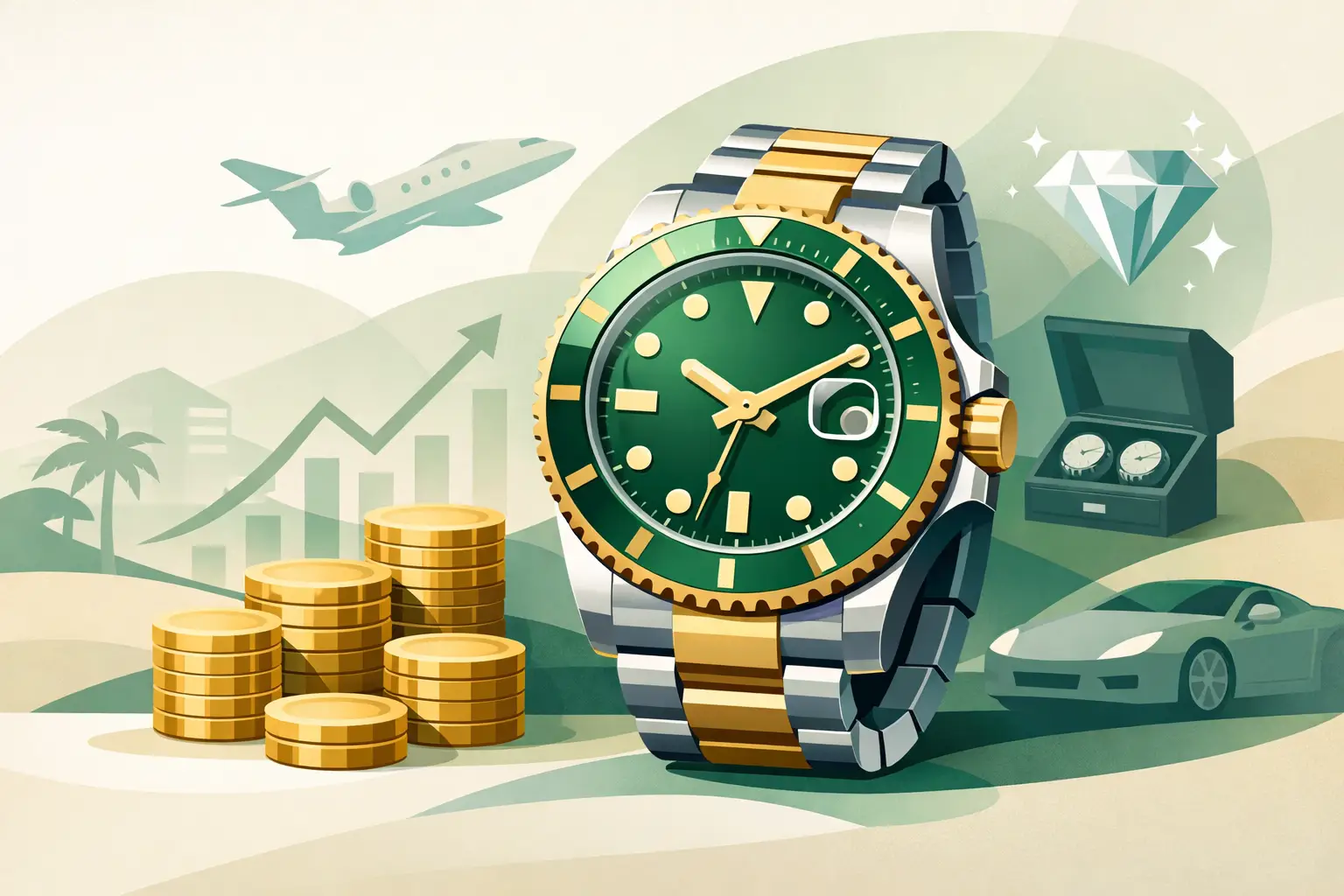
You can buy a perfectly decent watch for a few hundred dollars, so the first time you see a Rolex priced in the thousands, the reaction is usually the same: what exactly am I paying for? That question – why are Rolex watches expensive – has less to do with one single feature and more to do with how Rolex combines engineering, image, scarcity, and long-term desirability better than almost anyone else.
The short answer is that Rolex is not selling only a way to tell time. It is selling precision manufacturing, premium materials, elite brand recognition, and a product that holds cultural weight far beyond the wrist. Some of that price is tied to tangible quality. Some of it is tied to perception. In luxury watches, those two things are never fully separate.
Why are Rolex watches expensive in the first place?
Rolex sits in a rare position. It is widely recognized by non-watch people, respected by enthusiasts, and still relevant to buyers who simply want one great watch that says something about their taste. That broad appeal gives Rolex pricing power few brands can match.
But branding alone does not explain everything. Rolex also invests heavily in manufacturing, testing, metallurgy, movement development, and quality control. The brand makes an enormous number of watches compared with smaller high-horology names, yet it still maintains a level of consistency that is unusually high. That scale does not make Rolex cheap. If anything, it allows the company to control more of the process and maintain a strict standard.
Materials are better than they look at first glance
To the untrained eye, stainless steel is stainless steel. With Rolex, that is not really the case. The brand is known for using 904L stainless steel, which it calls Oystersteel. It is more corrosion-resistant than the 316L steel used by many watch brands, and it can take on a particularly rich finish when polished. That may sound minor, but when you handle a Rolex in person, the difference in case and bracelet finishing becomes easier to appreciate.
The same logic applies to gold, platinum, ceramic bezels, sapphire crystals, and bracelet construction. Rolex does not treat these as decorative extras. They are part of the durability story. A Submariner, GMT-Master II, or Datejust is expected to look strong after years of wear, not just under jewelry store lighting.
That said, better materials do not automatically justify every dollar in the retail price. Plenty of luxury products use excellent materials. With Rolex, the premium comes from the full package, not any one component.
The movements are built for reliability, not flash
A lot of first-time buyers assume the most expensive watch must have the most complicated movement. That is not really Rolex’s game. The brand is not usually chasing theatrical complications or open-worked dials designed to show off technical acrobatics. Instead, Rolex focuses on robust, precise, serviceable automatic movements that can perform day after day for decades.
This matters more than many buyers realize. A watch can be beautifully styled and still be disappointing if the movement is fragile, inaccurate, or expensive to maintain. Rolex movements are designed to be dependable in real life. They feature in-house development, chronometer-certified performance, and a reputation for longevity that supports the brand’s price.
Rolex also tests its watches to standards beyond basic Swiss chronometer certification. The company positions its finished watches as Superlative Chronometers, with tight accuracy tolerances and extensive internal checks. That level of testing costs money, and it reinforces the idea that a Rolex is built to be worn, not just admired.
Production is industrial, but it is not careless
One reason Rolex pricing confuses people is that the brand is neither a tiny artisan workshop nor a mass-market factory label. It operates at scale, but with obsessive control. Cases, bracelets, dials, and movements are manufactured under strict internal systems, and quality control is famously rigorous.
There is a misconception that hand-made always means better and machine-made always means cheaper. In watchmaking, that is too simple. Rolex uses advanced manufacturing because precision matters. Machines can produce extraordinary consistency when they are backed by strong engineering and inspection standards. Human finishing, assembly, testing, and regulation still play an important role, but the real value comes from how tightly the whole process is managed.
For the buyer, this translates into confidence. When someone spends serious money on a watch, they want clean tolerances, solid bracelet action, crisp bezel clicks, and a movement that performs the way it should. Rolex delivers that with remarkable consistency.
Brand prestige is part of the price, whether people like it or not
If you are asking why are Rolex watches expensive, you cannot ignore the logo on the dial. The crown carries status in a way few products do. Even people who know almost nothing about watches understand that Rolex signals success, achievement, and arrival.
That prestige did not appear overnight. Rolex spent decades building a reputation around exploration, sport, durability, and luxury. It became associated with divers, racers, executives, athletes, and cultural icons. Over time, that kind of recognition becomes a pricing asset.
Some buyers resent paying for brand equity. Others see it as the point. A Rolex does not just tell time well. It communicates something about the person wearing it. Whether that matters depends on the buyer, but it absolutely affects the price.
Scarcity keeps prices high, even at retail
Rolex is difficult to buy in the exact way many people want to buy it. Popular models often have waiting lists, limited dealer availability, or immediate resale premiums on the secondary market. That gap between demand and supply has a major impact on how the brand is perceived.
Part of the appeal comes from the feeling that not everyone can walk in and get one. Scarcity makes the watch feel more desirable, and desirability makes buyers more willing to pay. This is especially true for stainless steel sports models like the Submariner, Daytona, and GMT-Master II, which have become status objects as much as luxury tools.
There is room for debate here. Some of Rolex’s scarcity is a function of genuine demand and careful production. Some of it is amplified by dealer networks, buying patterns, and hype. Either way, the effect is real. When a watch is hard to get, its price power grows.
Resale value changes the buying equation
A Rolex is expensive up front, but many buyers justify the cost because the watch tends to hold value better than most luxury goods. That does not mean every Rolex is an investment, and it certainly does not mean prices always go up. Watch markets move, trends cool off, and condition matters.
Still, compared with many luxury purchases, Rolex has a strong reputation for value retention. That reputation lowers the psychological risk of buying one. A buyer may be more willing to spend $10,000 on a Rolex than on a lesser-known brand if they believe the Rolex can be resold more easily later.
This is one of the brand’s biggest pricing advantages. You are not only paying for the watch itself. You are paying for liquidity, recognition, and demand in the secondhand market.
Rolex is expensive because it sits at the intersection of utility and status
Some luxury watches lean heavily into artistry. Others lean into pure image. Rolex sits in a particularly powerful middle ground. Its watches are attractive, but not fragile. Prestigious, but still practical. Recognizable, but usually restrained enough to wear daily.
That balance is hard to replicate. A lot of men shopping for a first serious luxury watch do not want something overly niche or overly flashy. They want a watch with timeless style, real durability, and immediate credibility. Rolex answers that brief almost perfectly, which is why it remains such a dominant choice.
Of course, this also means part of the price is emotional. A Rolex often marks a milestone – a promotion, a wedding, a personal win, or the moment someone decides to buy one watch instead of several lesser ones. Emotional value is still value, even if it cannot be measured with a caliper.
Are Rolex watches worth the money?
That depends on what you want from a watch. If your goal is simply accurate timekeeping, then no, a Rolex is not a rational purchase. Far less expensive watches can do that job well. If you care about craftsmanship, heritage, finishing, prestige, and long-term ownership appeal, the calculation changes.
Rolex is also not automatically the best choice for every buyer. Some men would be better served by Omega, Tudor, Grand Seiko, or even a strong sub-$2,000 automatic watch if their priorities are value and personal style rather than brand recognition. Paying more only makes sense when the extra qualities actually matter to you.
The smart way to view Rolex is this: you are paying for a high-quality object, but also for everything that surrounds it – the reputation, the design continuity, the durability, the resale strength, and the feeling it gives on the wrist. For some buyers, that is absolutely worth the premium. For others, it is simply too much money tied to a name.
If you are considering one, the best question is not just why Rolex is expensive. It is whether those reasons line up with what you want your watch to do for your style, your lifestyle, and your wallet.