
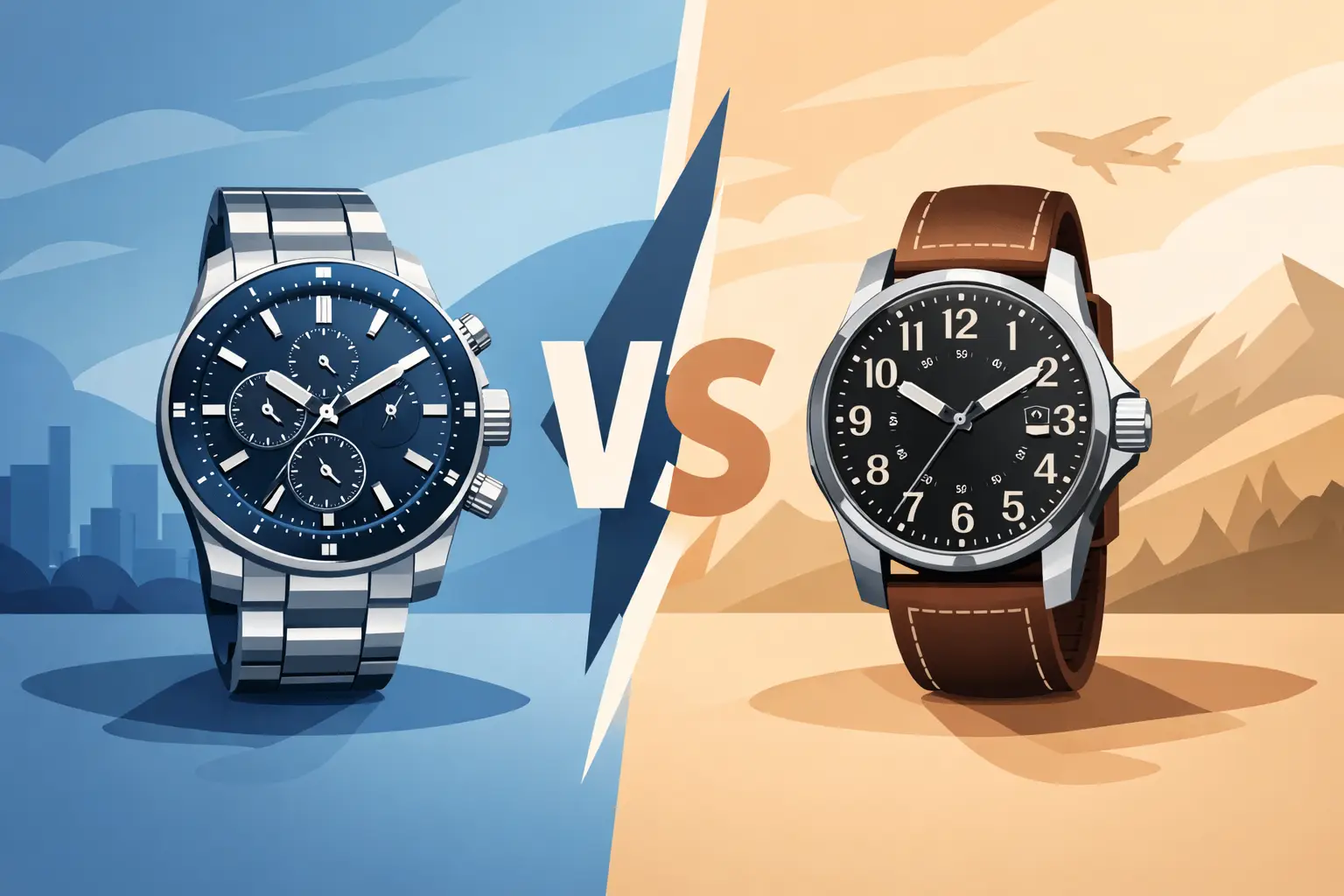
A black-dial Tissot PRX can make a sharp first impression at the office. A Hamilton Khaki Field can make the same statement on a weekend in denim and boots. That contrast is the heart of the Tissot vs Hamilton watches decision: these are closely priced Swiss brands with real mechanical credibility, but they project very different versions of good taste.
Both belong in the sweet spot for a man buying his first serious Swiss watch or building a collection beyond entry-level quartz. You get respected heritage, dependable movements, sapphire crystals on many key models, and designs that feel intentional rather than disposable. The better choice comes down to whether your lifestyle leans polished and versatile or rugged and character-driven.
Tissot vs Hamilton Watches at a Glance
Tissot is the broader, more contemporary brand. Its catalog moves comfortably from integrated-bracelet sport watches and clean dress pieces to dive watches, chronographs, and tactile watches such as the T-Touch. It is especially strong for buyers who want maximum versatility from one watch.
Hamilton has a narrower but more distinctive personality. Its best-known watches draw on military field-watch heritage, mid-century American design, aviation, and Hollywood visibility. A Hamilton often feels less like a safe default and more like a watch chosen because you know exactly what you like.
Neither brand is objectively more prestigious than the other. Both are Swiss-made brands within the Swatch Group, and both offer an excellent bridge between fashion watches and the more expensive world of luxury Swiss horology. The difference is in the design language, not the legitimacy.
Heritage and Brand Identity
Tissot: Swiss versatility since 1853
Founded in Le Locle, Switzerland, in 1853, Tissot has built its reputation on making Swiss watchmaking accessible without making it feel ordinary. It has a long history of innovation, from early dual-time watches to modern touch-screen technology, but its current appeal is rooted in wearable, well-priced classics.
The PRX has become the brand’s modern calling card. Its slim profile, integrated bracelet, and 1970s-inspired shape offer a refined sport-watch look that works with a polo, a tailored jacket, or a crisp white shirt. The Gentleman, Le Locle, Seastar, and Chrono XL families show how wide Tissot’s range can be.
For a buyer who wants one Swiss watch that can cover work, dates, weddings, and everyday wear, Tissot makes a very persuasive case. Its designs tend to feel clean, composed, and slightly more metropolitan.
Hamilton: American roots, Swiss execution
Hamilton was founded in Lancaster, Pennsylvania, in 1892 and later became part of the Swiss watch industry. That American origin still defines the brand. Hamilton watches have supplied railroads, the military, aviation, and more than a few memorable films, giving them a practical, cinematic appeal few competitors can match.
The Khaki Field is the obvious example. Its highly legible dial, military proportions, and no-nonsense layout appeal to men who value function as much as style. The Murph, inspired by Interstellar, has become a favorite among enthusiasts because it pairs a genuine pop-culture story with a restrained, handsome design.
Hamilton also makes dressier watches in the Jazzmaster collection and bolder pieces such as the Ventura, an unmistakable asymmetrical design associated with Elvis Presley. The catalog is varied, but the brand retains a stronger sense of personality. Hamilton is for the buyer who wants his watch to carry a little more story.
Design: Clean Refinement or Rugged Character?
If visual impact is your priority, this comparison becomes clearer quickly. Tissot generally favors symmetry, polished surfaces, contemporary colors, and elegant proportions. Even its sportier watches often look at home near a cuff. The PRX is particularly strong for men who want the integrated-bracelet aesthetic without stepping into a much higher price category.
Hamilton leans toward texture and utility. Field-watch dials, cathedral hands, vintage numerals, railroad minute tracks, and aged-leather straps give many Hamilton models an established, masculine character. They often look better with casual layers than formal tailoring, though a simple Jazzmaster can easily handle business attire.
There are exceptions. Tissot’s Seastar is more overtly sporty than a typical Hamilton dress watch, while the Ventura is far more daring than the conservative image of either brand suggests. Still, the broad rule holds: choose Tissot for cleaner modern versatility and Hamilton for heritage-rich individuality.
Movements and Everyday Performance
At this price level, both brands offer quartz and automatic watches. Quartz remains the sensible choice for accuracy, low maintenance, and grab-and-go convenience. It is not a lesser choice if you want a reliable daily watch without the ritual of winding, setting, or servicing a mechanical movement.
For enthusiasts, the automatic models are the main attraction. Tissot’s Powermatic 80 and Hamilton’s H-10 movements are closely related Swiss automatic calibers with an extended power reserve of roughly 80 hours in many versions. In practical terms, you can take the watch off Friday evening and often put it back on Monday morning without resetting it.
The movements are dependable and offer strong value, but this is where realistic expectations matter. They are built for efficient, modern ownership, not for the hand-finished artistry found in watches several times the price. Service options, regulation, and exact specifications can vary by model, so buy the watch for its complete package rather than chasing movement terminology alone.
Water resistance also depends on the individual watch. A Tissot Seastar is designed for active water use, while a Hamilton Khaki Field Mechanical may be better treated as a land-based daily companion. Never assume that a military-inspired or sport-styled watch is automatically suitable for swimming. Check the stated water-resistance rating before making it part of your travel or gym routine.
Value: Where Your Money Goes Further
Tissot and Hamilton usually compete in a similar price territory, often beginning around the mid-hundreds for quartz and reaching into the low four figures for more complex automatic, chronograph, or GMT models. Sale pricing can overlap heavily, which means brand name alone should not decide the purchase.
Tissot often feels like the stronger value when you compare visible specification. You may find a polished bracelet, sapphire crystal, automatic movement, and a design inspired by much more expensive sport watches in a single package. It is a compelling formula for someone making a style upgrade without stretching into luxury-watch financing territory.
Hamilton’s value is more emotional, though no less real. You are often paying for an established design with depth, not just a list of features. A Khaki Field is not trying to mimic a luxury icon. It has its own identity, and that makes it easier to wear for years without feeling tied to a passing trend.
Resale should not be the deciding factor for either brand. Both hold enough recognition to remain desirable on the pre-owned market, especially popular models in excellent condition, but neither should be treated as an investment. Buy the watch that will earn wrist time.
Which Brand Fits Your Style?
Choose Tissot if you want a refined all-rounder, a sleek bracelet watch, or a versatile piece for office wear. It is also the better starting point if you are unsure of your personal watch style and need something that can adapt as your wardrobe improves. A PRX, Gentleman, or Le Locle can give a young professional a more considered look without appearing overly formal.
Choose Hamilton if you are drawn to field watches, vintage cues, leather straps, aviation references, or watches with a more casual confidence. The Khaki Field line is one of the strongest entry points into mechanical watches because it is legible, durable-looking, and stylish without trying too hard. For a man who already owns a dressy watch, Hamilton may bring more character to the collection.
For gifting, consider the recipient’s wardrobe before the specifications. A man who wears tailored clothing, minimalist sneakers, and polished casual outfits will likely connect with Tissot. A man who lives in chinos, boots, denim, and weekend jackets may wear a Hamilton more often.
The Better First Swiss Watch
For most buyers, Tissot wins the first-watch argument by a narrow margin because its catalog offers more visual flexibility. It is easy to find a Tissot that looks right in nearly every setting, and that matters when one watch must do most of the work.
Hamilton wins when personality matters more than universal appeal. Its best watches feel authentic, and authenticity has a longer shelf life than trend-driven design. If a Khaki Field or Murph immediately feels like your watch, trust that instinct. The right choice is the one that makes you look down at your wrist a little more often, even when you do not need to know the time.