
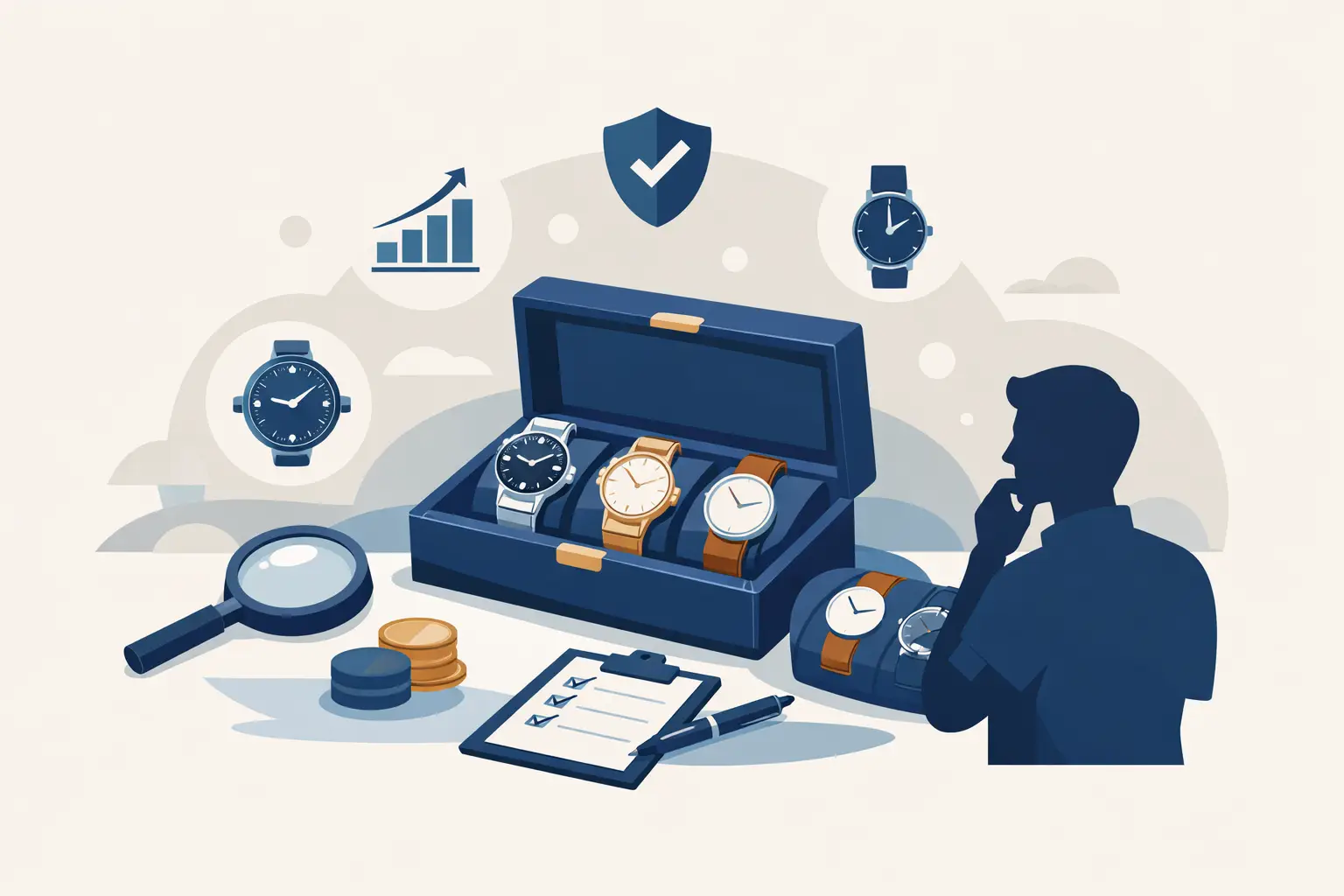
The fastest way to ruin a good watch budget is to buy five watches before you know what you actually like. If you’re figuring out how to start watch collection habits that feel intentional rather than random, the goal is not to buy more. It is to build a lineup that reflects your style, fits your life, and still feels worth wearing a year from now.
A strong collection starts with taste, not price. Plenty of men assume collecting begins when you buy a Swiss automatic or chase a recognizable luxury name. It can, but it does not have to. A well-chosen Casio, Seiko, Timex, or Citizen can teach you just as much about preferences, proportions, and daily wear as a much more expensive piece.
How to Start Watch Collection Goals Before You Buy
Before you compare brands or movements, decide what kind of collector you want to be. That sounds lofty, but it is practical. Some men want three watches that cover every situation. Others want to explore tool watches, vintage-inspired pieces, dive watches, or one brand in depth. Those are very different paths, and they lead to very different spending habits.
Start by asking what matters most to you. Is it craftsmanship, versatility, heritage, status, value retention, or pure style? If you buy as if all of those matter equally, you will end up overpaying for features you do not care about. If you know your priorities, your collection starts to look coherent.
It also helps to think in terms of wear frequency. A watch can be beautiful and still be the wrong buy if it does not fit your real wardrobe. The watch that works with your office clothes, weekend outfits, and travel routine often teaches you more than a specialist piece you wear twice a year.
Start With a Budget That Leaves Room to Learn
Most first-time collectors make one of two mistakes. They either buy too cheaply and end up with disposable watches that never satisfy them, or they spend too much too early on a watch they chose for reputation rather than fit. The smarter move sits in the middle.
Set a total collection budget for your first year, not just a budget for one watch. That shifts your mindset from impulse buying to curation. If you have $1,000 to spend, for example, you might be better off with two or three strong pieces across different styles than one watch that forces every other choice to wait.
There is no universal entry point, but there are sensible ranges. Under $300, focus on reliability, design, and wearability. Between $300 and $1,000, you can start accessing stronger finishing, respected entry-level automatics, and more distinct design language. Above that, brand heritage, movement quality, and long-term collectibility become bigger parts of the conversation.
The trade-off is simple. Lower-priced watches let you experiment. Higher-priced watches can feel more special, but they reduce your margin for error.
Learn the Core Styles First
A beginner does not need every category. He does need to understand what each category says and how it wears.
A dress watch is clean, restrained, and easy to pair with business attire or evening wear. A dive watch brings sportiness, durability, and everyday versatility. A field watch is rugged and understated. A chronograph adds visual complexity and a stronger mechanical feel. A GMT is useful if you travel or simply like the look of an extra hand and bezel.
Most men starting out should build around versatility first. That usually means an everyday sports watch, then a cleaner option for more polished settings, then a more personality-driven third piece once preferences become clearer. If your first three watches are all black-dial dive watches from different brands, you are not collecting so much as repeating yourself.
Case size matters here too. Many new buyers chase what looks impressive in photos, then discover it wears too large for the wrist or too thick for a shirt cuff. For many men, the sweet spot is somewhere between 38mm and 41mm, but wrist shape, lug length, and case thickness matter just as much.
Quartz or Automatic?
This is one of the first real decisions in how to start watch collection planning, and there is no need to make it ideological. Quartz is accurate, affordable, and easy to live with. Automatic watches carry more romance, mechanical interest, and collector appeal. Both deserve a place in the conversation.
If you are buying your first serious watch, quartz can be a smart move. It lets you focus on design, fit, and daily wear without dealing with time drift, servicing concerns, or the novelty of setting the watch after it stops. If you are drawn to the craft side of horology, though, an automatic often creates a stronger emotional connection.
The right answer depends on why you are collecting. If you care most about convenience and value, quartz makes sense. If you want to appreciate movement finishing, sweeping seconds, and mechanical heritage, automatic is where many enthusiasts eventually land.
Buy Brands With a Point of View
A good starter collection does not need famous names only. It needs brands that know what they are. Seiko has range and deep watch culture credibility. Casio offers unbeatable utility and iconic digital design. Timex brings accessible heritage and everyday style. Citizen excels in practical technology. Hamilton, Tissot, Orient, Bulova, and Certina also sit in that attractive space between attainable and respected.
The key is avoiding watches that feel generic. When a brand has a clear identity, your purchase tends to age better because it stands for something beyond trend. That matters when your taste matures.
This is also where newer collectors can get sidetracked by hype. A watch that dominates social media is not automatically the right addition to your box. Hype can point you toward strong models, but it can also flatten your own taste if you let it make every decision for you.
New vs. Pre-Owned
Buying new gives you peace of mind, a manufacturer warranty, and a clean starting point. Buying pre-owned can stretch your budget into better brands, stronger specifications, or discontinued models with real character. Both are valid.
For beginners, new is usually easier unless you are buying from a highly trusted source and know exactly what to check. Pre-owned watches can offer excellent value, but condition, service history, authenticity, and replacement parts all matter. A bargain is not a bargain if the watch needs expensive work right away.
If you do go pre-owned, be conservative. Choose well-documented models from brands with established reputations and avoid anything that feels vague, overly customized, or suspiciously cheap.
Build a Small Collection With Real Range
A satisfying early collection usually covers different moods and occasions. Think less about quantity and more about roles. One watch should be the reliable daily piece you can wear without thinking. Another should lean cleaner and more refined. A third can be where your personality shows up more strongly, whether that means a bold chronograph, a colorful dial, a vintage-inspired field watch, or a digital icon.
That kind of spread gives you room to learn. It also stops every purchase from competing with the last one. The best collections, even modest ones, feel edited.
Try not to buy too fast. Wear each watch long enough to notice what you enjoy and what starts to bother you. You may discover that bracelet comfort matters more than dial color, or that you prefer simple three-hand layouts over busier complications. Those lessons are valuable because they make your next purchase sharper.
Avoid the Beginner Traps
The biggest mistake is buying for the idea of collecting instead of the reality of wearing. If a watch only makes sense as part of a fantasy version of your lifestyle, it will not hold your interest for long.
Another common trap is overvaluing specifications. Sapphire crystal, 200 meters of water resistance, ceramic bezels, in-house movements – all of these can matter. None of them guarantee that a watch will feel right on your wrist or suit your personal style. Technical merit and emotional appeal should work together.
It is also wise to ignore pressure to move upscale too quickly. Prestige has its place, and iconic brands earn their reputation for a reason. But collecting is more enjoyable when each step feels earned. A man who understands why he likes a certain case shape, dial layout, or movement type will make a much better luxury purchase later.
Let Your Taste Get More Specific
The early stage of collecting is broad. You are learning categories, brands, and what feels right. The next stage gets more personal. Maybe you realize you gravitate toward Japanese tool watches, mid-century dress designs, or motorsport chronographs. That is where a collection starts to look like yours rather than a checklist copied from the internet.
That process takes time, and that is part of the appeal. Watches are one of the few style purchases that sit at the intersection of utility, design, engineering, and identity. When your collection grows well, it says something about how you move through the world – not just what you can afford.
If you want a useful rule to keep in mind, make every new watch answer a question the last one did not. That is how a collection gains shape, and it is also how it stays enjoyable long after the first purchase.