
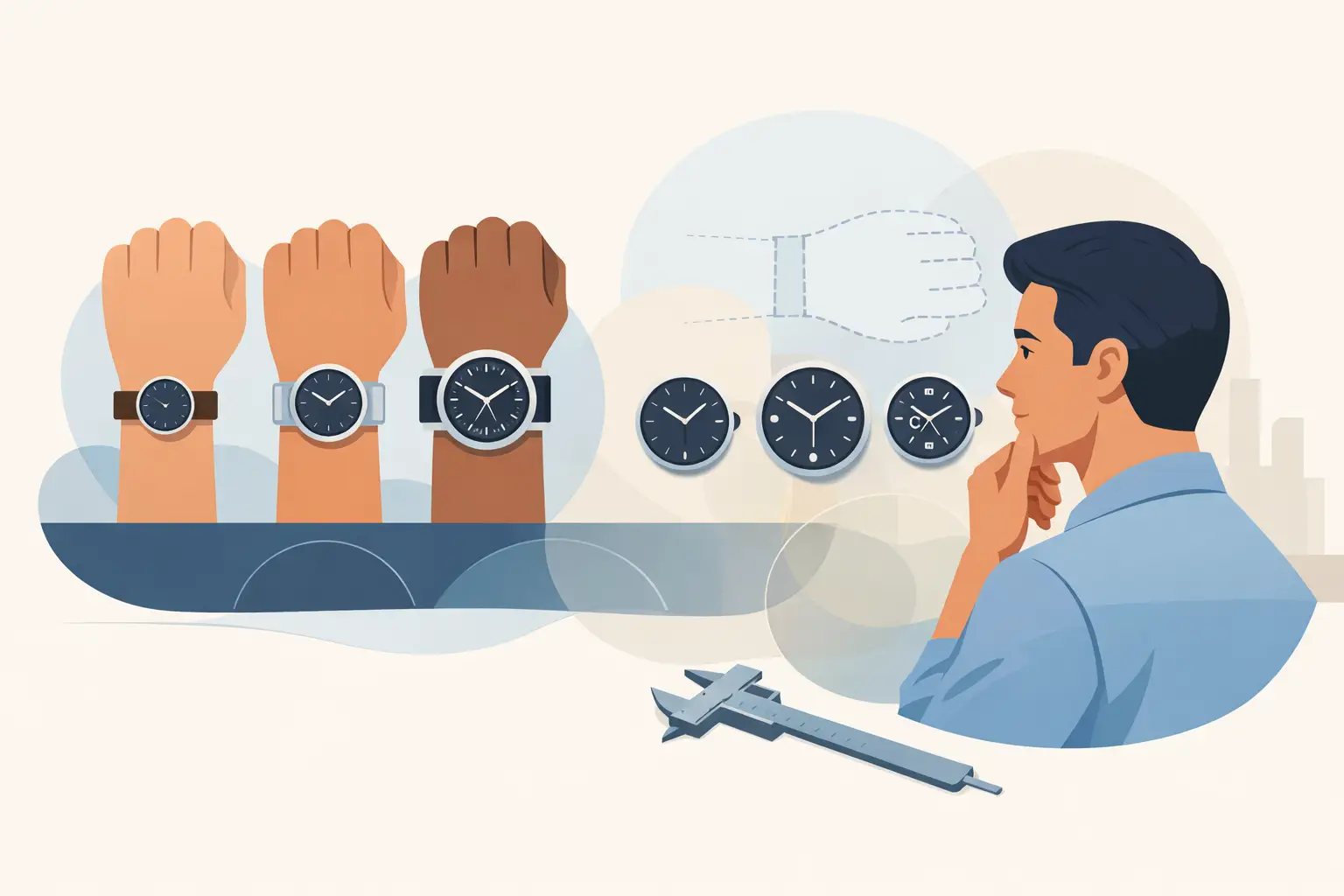
A watch can have the right brand, the right movement, and the right dial color, then still feel wrong the second you put it on. Most of the time, that comes down to proportion. If you are wondering how to choose watch size, the answer is not just case diameter. It is how the entire watch sits on your wrist, works with your style, and feels after a full day of wear.
A lot of men buy too big because oversized watches photograph well and sound more impressive on paper. Others play it too safe and end up with something that disappears on the wrist. The right size sits in the middle – confident, balanced, and intentional.
How to Choose Watch Size Starts With Your Wrist
The first thing to know is your wrist size. Not your guess, your actual measurement. Use a flexible tape measure and wrap it around the spot where you wear your watch. If you do not have a tape measure, use a strip of paper or string and measure that against a ruler.
For most men, wrist size falls somewhere between 6 and 8 inches. That alone gives you a useful starting point. If your wrist is around 6 to 6.5 inches, smaller and mid-size watches usually look more proportional. If you are in the 6.75 to 7.25-inch range, you can wear a wide range comfortably. Once you get into 7.5 inches and above, larger cases often look more natural.
Still, wrist circumference is only part of the picture. Wrist shape matters too. A flat wrist can wear a larger watch more easily than a round wrist of the same circumference because there is more surface area for the case to sit on.
Case Diameter Matters, but It Is Not Everything
Case diameter gets the most attention because it is the easiest spec to compare. It is the width of the watch case, usually measured in millimeters, not including the crown.
As a general guide, 36mm to 38mm wears classic and restrained. This range is ideal if you like vintage proportions, dress watches, or understated everyday pieces. The 39mm to 41mm range is the modern sweet spot for many men because it feels versatile without looking exaggerated. Once you move into 42mm to 44mm, the watch starts making more of a statement and often suits sports watches, dive watches, or larger wrists.
But diameter can be misleading. A 40mm dress watch can wear smaller than a 40mm dive watch because the dial opening, bezel width, and case shape change the visual footprint. That is why two watches with the same published size can feel completely different.
Lug-to-Lug Length Is the Spec Most Men Miss
If there is one measurement that deserves more attention, it is lug-to-lug. This is the distance from the top of the upper lug to the bottom of the lower lug. In plain terms, it tells you how much wrist the watch actually covers.
A watch can have a reasonable 40mm case diameter but wear too large because the lugs stretch too far across your wrist. If the lugs overhang the edges of your wrist, the watch will look awkward and usually feel unstable.
For a clean fit, the lug-to-lug length should stay within your wrist width. That one detail often matters more than a millimeter or two of case diameter. It is also why compact watches with short, curved lugs can feel excellent even when the specs look slightly larger than expected.
Thickness Changes the Whole Feel
Thickness gets overlooked until the watch catches on your cuff or feels top-heavy. A thicker watch tends to wear larger, especially on slimmer wrists. It also changes the mood of the piece.
Slim watches, often around 10mm or less, look refined and slide easily under a dress shirt. Mid-range thickness works well for daily wear, especially in sports and field watches. Once you get into thicker chronographs and dive watches, the watch starts to project more presence and tool-watch character.
That is not a bad thing. A robust diver is supposed to feel more substantial than a thin dress piece. The key is matching that thickness to your wrist and wardrobe. A thick case on a small wrist can feel all watch and no balance.
Strap Width and Bracelet Style Affect Visual Size
A watch is not just the case. The strap or bracelet changes the way it wears and the amount of presence it has on the wrist.
A metal bracelet usually gives a watch more visual weight and a more substantial feel. Leather can make the same watch look slimmer and more elegant. Rubber keeps things sporty and casual. NATO straps can make a watch wear a bit taller while also adding a rugged, practical character.
Strap width matters too. A wider strap can make a watch feel more planted and bold. A narrower strap can tone down the watch visually. This is one reason vintage-inspired pieces often feel more restrained even when their dimensions are not dramatically smaller.
Match the Size to the Type of Watch
This is where good taste beats spec-sheet shopping. Different categories have different visual expectations.
Dress watches usually look best on the smaller side. There is a reason classic dress pieces often live in the 36mm to 39mm range. They are meant to feel elegant, discreet, and proportionate with tailoring.
Dive watches and chronographs can comfortably wear larger because they are built around utility, legibility, and wrist presence. A diver at 41mm or 42mm often feels perfectly normal. A pilot watch can also wear larger because the design language historically favors easy reading.
Field watches sit in a flexible middle ground. They are often compact, practical, and highly wearable across different wrist sizes.
So when thinking about how to choose watch size, do not ask only what size fits. Ask what size fits the style of watch you are buying.
Your Personal Style Should Influence the Answer
Watch size is not purely technical. It is aesthetic. A man who wears tailored jackets, fine knits, and leather shoes may prefer a watch that feels restrained and polished. A man whose wardrobe leans casual, athletic, or workwear may want a little more presence.
Neither approach is more correct. The mistake is choosing a watch that fights the rest of your style. A massive sports watch with a suit can work in some settings, but it usually looks less refined than a properly sized dressier piece. In the same way, a tiny minimalist watch might feel too delicate if your preference is rugged denim, boots, and utility outerwear.
This is also where confidence matters. If you keep checking your wrist because the watch feels oversized, it probably is. If it disappears to the point that it never feels intentional, it may be too small for the look you want.
A Better Size Guide by Wrist Measurement
There is no universal formula, but these ranges help most men narrow the field.
If your wrist is under 6.5 inches, 34mm to 38mm is usually a strong range, with some compact 39mm models still working well if the lug-to-lug is short. For wrists between 6.5 and 7 inches, 38mm to 40mm is often the sweet spot. If your wrist is 7 to 7.5 inches, 40mm to 42mm tends to feel balanced. Above 7.5 inches, 42mm and up can work naturally, though many men in this range still prefer 40mm to 41mm for a cleaner look.
Use these as guides, not rules. A slim 42mm pilot watch may wear beautifully on a 6.75-inch wrist, while a slab-sided 40mm square watch might feel larger than expected.
Try the Mirror Test, Not Just the Wrist Shot
When you try on a watch, do not judge it from six inches away. That close-up angle makes every watch look bigger than it really does. Stand in front of a mirror and look at your full proportions. That gives you a more realistic sense of balance.
Pay attention to three things. First, whether the lugs stay inside your wrist. Second, whether the watch head looks stable rather than top-heavy. Third, whether the size suits the role you want the watch to play – everyday essential, office piece, weekend sports watch, or statement buy.
If you are shopping online, compare the watch to others you already own. Check diameter, lug-to-lug, and thickness side by side. That is often more useful than reading a size recommendation in isolation.
The Best Watch Size Is the One You Will Keep Wearing
There is a difference between a watch that technically fits and a watch that earns wrist time. The best size is the one that feels comfortable at lunch, under a cuff, behind the wheel, and after ten hours on your wrist. It should complement your build, your wardrobe, and the kind of impression you want to make.
At Watches for Men, the smartest watch choices usually come down to balance rather than extremes. Go too large and the watch wears you. Go too small and it can lose presence. Get the proportions right, and even an affordable watch looks sharper, more considered, and far more expensive than it is.
If you are between sizes, lean slightly smaller. A well-proportioned watch has a timeless kind of confidence, and that never goes out of style.