
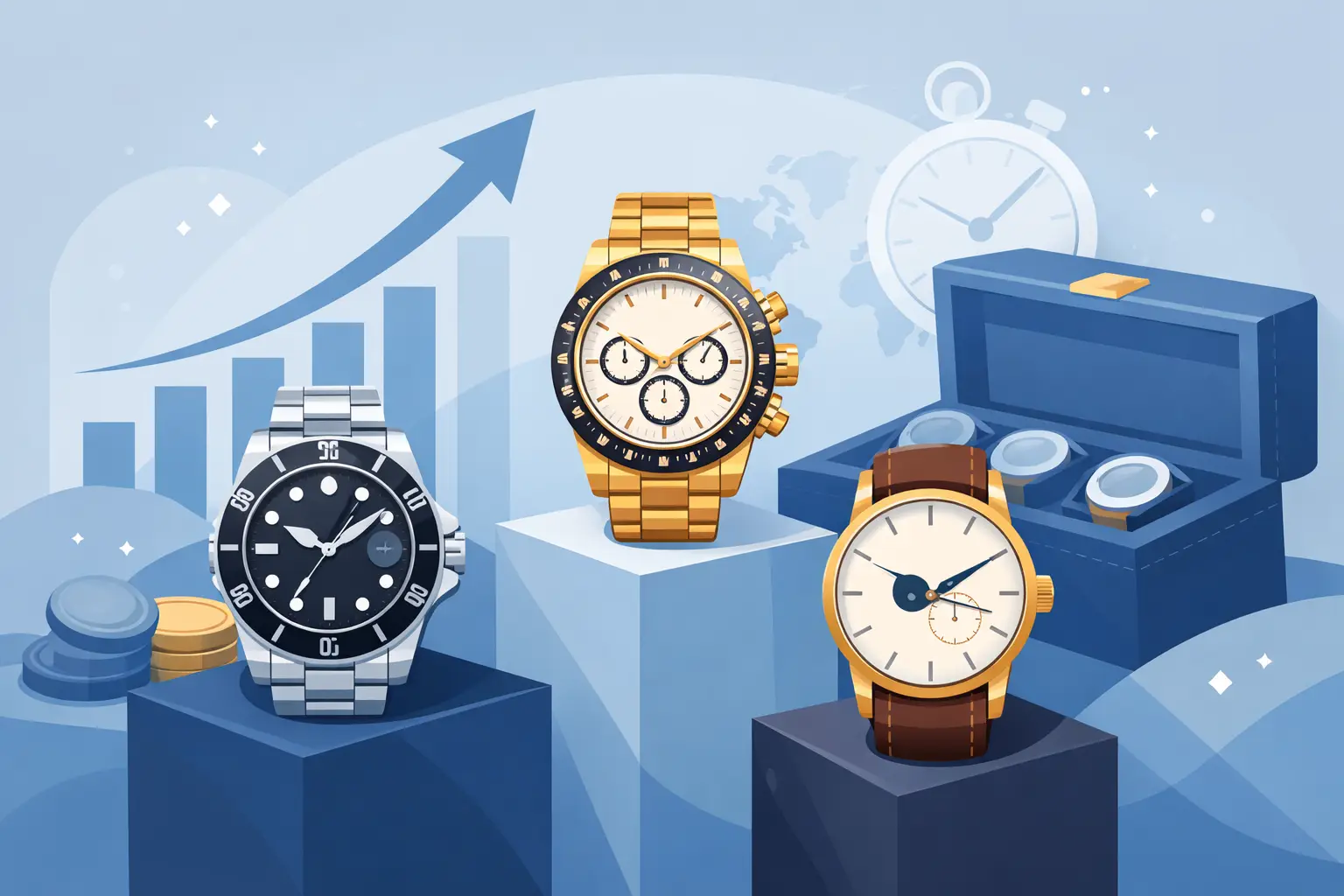
The difference between a smart watch buy and an expensive mistake often shows up years later, when you try to sell it. Some watches that hold value become easy-to-move assets with steady demand. Others lose a painful chunk of their price the moment the box is opened.
If you are buying with resale in mind, the goal is not to treat every watch like a stock certificate. It is to understand which brands, models, and market signals tend to protect your money better than the rest. That matters whether you are buying your first serious Swiss piece, stepping into luxury, or trying to build a collection with fewer regrets.
What makes watches that hold value different?
Value retention in watches comes down to a few simple forces: brand strength, model desirability, production volume, condition, and timing. That sounds obvious, but the market is not always rational. A beautifully made watch can still underperform if nobody is looking for it on the secondary market.
The strongest value performers usually come from brands with real cultural weight and clear model recognition. Rolex is the obvious example, but it is not the only one. Omega, Cartier, Tudor, and certain Grand Seiko models have built loyal followings that keep resale demand healthy. Buyers know what these watches are, what they represent, and roughly what they should cost. That familiarity matters.
Design stability also plays a major role. Watches with long-running case shapes, recognizable dials, and consistent identities tend to age better than trend-driven releases. A Submariner still looks like a Submariner. A Speedmaster still looks like a Speedmaster. That continuity gives buyers confidence.
Then there is supply. Scarcity alone does not guarantee strength, but controlled production paired with strong demand usually helps. On the other hand, heavily discounted watches from fashion-oriented or overdistributed brands often struggle because buyers know they can find them cheaper later.
The brands most associated with watches that hold value
Rolex still sets the standard. It has the strongest combination of prestige, broad recognition, model consistency, and resale liquidity. Sports models like the Submariner, GMT-Master II, Explorer, and Daytona are in a class of their own, though not every Rolex is a guaranteed win at every price.
Omega is often the more attainable play. The Speedmaster Professional has long been one of the safest modern luxury buys, thanks to its history, timeless design, and wide collector interest. Certain Seamaster models also do well, especially the more classic references rather than the more polarizing limited editions.
Cartier deserves more attention than it gets in value-retention conversations. Tank and Santos models benefit from iconic design and strong cross-generational appeal. They are not hype pieces in the same way as a steel sports Rolex, but they tend to remain desirable because the design language is so well established.
Tudor has become one of the strongest modern value propositions in watches. Black Bay models, Pelagos references, and Ranger variations often offer better price stability than similarly priced watches from less focused luxury brands. Tudor benefits from Rolex adjacency, but it also has its own clear identity now.
Grand Seiko is more complicated. From a craftsmanship standpoint, it is exceptional. From a resale standpoint, results are mixed. Certain standout references with strong enthusiast demand can perform well, but many Grand Seiko watches still depreciate more than buyers expect. This is a good example of why watch quality and resale strength are not the same thing.
Specific models that tend to hold their value
If you want a practical shortlist, a few names come up again and again for good reason. The Rolex Submariner remains one of the safest choices in all of watch collecting. It is versatile, durable, instantly recognizable, and consistently in demand.
The Rolex GMT-Master II has similar strengths with added travel appeal and collector energy. The Daytona, while harder to access at retail, is one of the strongest performers in the category when bought well.
From Omega, the Speedmaster Professional Moonwatch is the standout. It has heritage, style flexibility, and a buyer base that extends far beyond hardcore enthusiasts. That keeps resale relatively healthy even when the broader market softens.
The Cartier Santos is another strong option, particularly for men who want something more refined than a dive watch. It has presence, design history, and enough mainstream recognition to remain attractive on the pre-owned market.
Tudor Black Bay Fifty-Eight models also deserve mention. They sit in a sweet spot: respected brand, wearable proportions, vintage-inspired design, and pricing that feels realistic for buyers moving beyond entry-level watches.
Outside luxury, some Seiko watches hold value surprisingly well, especially limited-production Prospex models and cult favorites tied to enthusiast communities. But with Seiko, selectivity is everything. The average mall-case Seiko and the enthusiast-chased Seiko are two very different resale stories.
Why some expensive watches still lose money
A higher price tag does not automatically mean stronger resale. In fact, many luxury watches lose value precisely because they were bought at full retail in categories with weak secondhand demand.
Two-tone models can be a good example. Some are excellent watches, but they do not always move as easily as stainless steel sports models. Large case sizes can also date quickly. So can aggressive designs that feel tied to one era.
Brand position matters too. A company may make technically impressive watches, but if it lacks mainstream recognition or if it floods the market with too many similar references, resale usually suffers. This is why some beautifully finished pieces from respected Swiss makers can take a bigger hit than a more basic but more recognizable Rolex or Cartier.
Limited editions are another trap for casual buyers. A watch marked limited is not automatically collectible. If the design is niche, the brand lacks heat, or the release feels manufactured for marketing rather than genuine demand, the resale premium often never shows up.
How to buy watches that hold value without overpaying
The best value-retention strategy usually starts before checkout. Buying pre-owned can protect you from the first wave of depreciation, especially with brands that soften once they leave the dealer. That does not mean every used watch is a bargain. Condition, service history, original box and papers, and seller reputation still matter.
Timing matters as well. Buying at the peak of a hype cycle can erase the very resale advantage you were chasing. The watch market has already shown that even highly desirable models can cool off after a rush. Paying a sensible price is part of the value equation.
It also helps to stick with timeless references over flashy variations. Black dials, classic steel cases, wearable proportions, and core collection models usually have broader resale appeal than trendy colors or experimental case materials. The more universal the watch, the larger the pool of future buyers.
And yes, condition counts. A watch worn carefully with sharp edges, clean crystal, complete accessories, and no questionable modifications will almost always be easier to sell. Polish jobs, aftermarket parts, and missing documentation can drag down value faster than many first-time buyers expect.
Should you buy a watch as an investment?
Usually, no – at least not in the strict financial sense. Most watches should be bought because you want to wear them, enjoy them, and live with them. Resale strength is best treated as downside protection, not a guaranteed return.
That said, there is a practical middle ground. If you are already planning to spend serious money on a watch, choosing one with proven demand and stable resale can be the smarter move. It gives you flexibility. Maybe your taste changes, maybe you want to trade up, or maybe you simply do not want to lose half your money on a watch that looked better in the showroom than it does five years later.
For most men, the sweet spot is buying a watch you genuinely like from a brand and model family the market already trusts. That balance between personal taste and market reality is where smart buying happens.
The real takeaway on watches that hold value
The best watches that hold value usually share the same core traits: they come from trusted brands, they have recognizable designs, and they stay desirable long after the launch window closes. That does not mean you have to chase hype or spend Rolex money to buy intelligently. It means paying attention to demand, not just craftsmanship, and choosing a watch with lasting appeal instead of short-term excitement.
If you buy with clear eyes, good taste, and a realistic sense of the market, your next watch can do more than look right on the wrist. It can remain a piece you are proud to own, and one that still makes sense if you ever decide to let it go.