
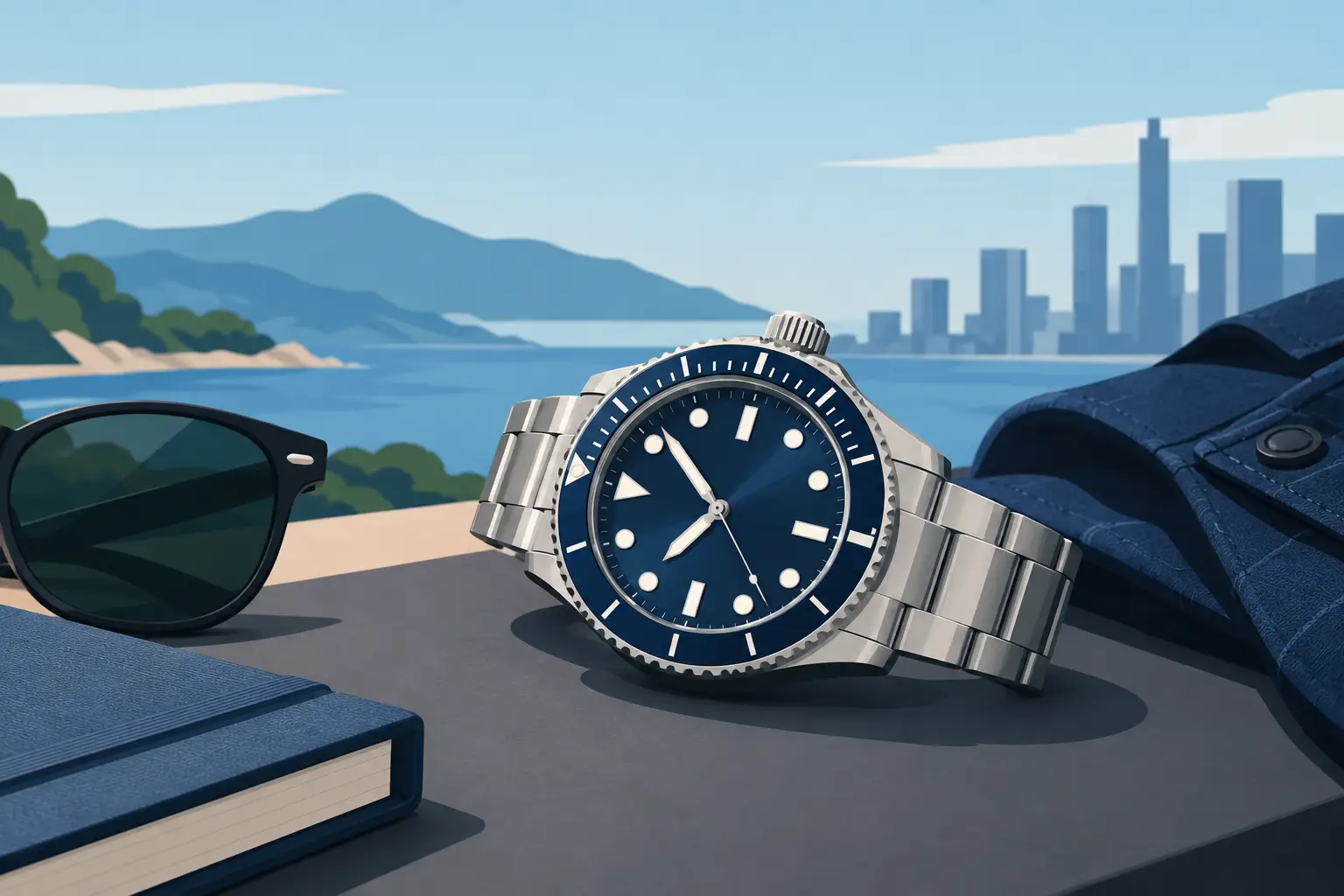
A diver’s watch was built for a job most owners will never perform: keeping time clearly and reliably beneath the surface. Yet that purpose is exactly why diver watches have become one of the smartest categories a man can buy. They are tough without looking tactical, sporty without feeling disposable, and versatile enough for a T-shirt, an oxford shirt, or a tailored jacket.
The appeal is not just the rotating bezel or the reassuring weight on the wrist. A good diver carries a sense of capability. It suggests you chose a watch with a real history, useful engineering, and enough visual presence to become part of your personal style. The key is knowing which specifications matter, which ones are mostly marketing, and what will actually suit your wrist and routine.
What Defines a Proper Diver Watch?
The modern blueprint comes from the ISO 6425 standard, a demanding set of tests created for watches intended for scuba diving. Not every watch called a diver is ISO-certified, and that does not automatically make it a poor choice. But understanding the standard helps separate a water-ready tool watch from a watch that simply borrows the look.
At its core, a proper dive watch needs meaningful water resistance, a unidirectional rotating bezel, strong low-light visibility, and a design that remains easy to read at a glance. The bezel is more than decoration. A diver aligns its zero marker with the minute hand before descending, then reads elapsed time from the bezel. Because it rotates only counterclockwise, an accidental knock can make remaining air time appear shorter, never longer.
For daily wear, 100 meters of water resistance is a sensible floor. It is generally enough for swimming, rain, and casual time around the water. A 200-meter rating adds greater confidence and is common on serious entry-level divers. At 300 meters and beyond, you are buying more capability than most people require, but also often getting a sturdier case, screw-down crown, and a stronger tool-watch identity.
Water resistance ratings assume the crown is fully secured and seals are in good condition. A 200-meter watch with an open crown is no more protected than any other watch with an open crown. If you swim regularly, have pressure testing and seal inspections performed periodically, especially after a battery replacement or a hard impact.
Choosing Diver Watches for Your Wrist
A dive watch should look purposeful, not like it was strapped to you by mistake. Case diameter is the first number most shoppers see, but lug-to-lug length and thickness often determine comfort more accurately.
Men with average wrists usually find the sweet spot between 38mm and 42mm. A 40mm or 41mm model offers classic proportions and enough dial space for bold markers. Larger watches in the 43mm to 46mm range can work well on broader wrists or for buyers who want a more contemporary, assertive look, but thickness becomes a concern. A tall case can catch on shirt cuffs and make an otherwise handsome watch feel cumbersome at a desk.
Pay close attention to lug-to-lug measurement, the distance from one end of the case to the other. Around 46mm to 49mm works for many wrists, while a watch above 51mm can wear much larger than its diameter suggests. Short, curved lugs can make a 42mm diver surprisingly manageable. Long flat lugs can make a 40mm watch feel oversized.
Color also changes how a watch wears. Black and blue dials are the enduring choices because they pair with almost anything. Green, gray, and burgundy introduce personality without sacrificing maturity. Bright orange or yellow details have legitimate diving roots, but they are best for the man who wants his watch to be the focal point of an outfit.
Movement: Quartz, Automatic, or Mechanical Prestige?
The movement should match how you live, not an internet checklist. Quartz diver watches are accurate, low-maintenance, and often the best value in the category. They are especially compelling for an active owner who wants to grab a watch, set it once, and wear it without concern. Casio and Citizen have built reputations on this kind of dependable utility, while solar-powered quartz adds years of convenient operation with light as its energy source.
Automatic watches offer a more emotional experience. Their mechanical movements are powered by the motion of your wrist, and the sweeping seconds hand gives the dial a distinct sense of life. Seiko remains a natural starting point for affordable mechanical divers, while brands such as Longines, Omega, Tudor, and Rolex take the formula into increasingly refined territory.
That refinement comes with trade-offs. Automatics cost more, are less accurate than quartz in everyday use, and eventually need service. They also may stop after a few days off the wrist unless stored on a winder. For many enthusiasts, those compromises are part of the appeal. A mechanical diver is a small machine with a visible connection to decades of watchmaking tradition.
If you want one watch to wear hard and forget about, choose quartz or solar. If you enjoy the ritual of setting a watch and appreciate craftsmanship beyond pure efficiency, an automatic is usually worth the premium.
The Details That Separate a Good Diver From a Great One
A rotating bezel should have crisp action, minimal play, and markings that are easy to read. Sixty or 120 clicks are typical. More clicks can allow finer alignment, though the tactile feel matters more than the count. Ceramic bezel inserts resist scratches and retain their color exceptionally well, while aluminum inserts are less costly and develop a more vintage character over time.
Legibility is non-negotiable. Look for high-contrast hands, distinct hour markers, and luminous material that lasts through the night. A date window is useful for daily life, but it can interrupt a clean dial. This is a matter of preference rather than quality. The same goes for a cyclops magnifier, which makes a date easier to read but gives the watch a stronger visual signature.
Bracelets deserve more scrutiny than they receive. A solid stainless-steel bracelet with a secure clasp makes a watch feel complete and can add considerable value. On-the-fly micro-adjustment is particularly useful because wrists expand in heat and contract in colder weather. If a bracelet feels heavy or pinches, a rubber strap can transform the experience. Fabric straps suit the casual, military-inspired side of the genre, but they should be rinsed after saltwater use.
Sapphire crystal is the preferred choice for scratch resistance. Mineral crystal is acceptable on affordable watches, particularly from respected brands, but it will show wear sooner. Acrylic crystal scratches most easily, although it offers charming vintage warmth and can often be polished.
Budget Tiers That Make Sense
Under $200, focus on reliable quartz or digital options, practical water resistance, and a case size you will actually wear. This is an excellent range for Casio and Timex, particularly if your priority is durability rather than prestige. Avoid chasing unnecessary automatic complications at this price unless you are comfortable with less consistent finishing and accuracy.
From roughly $200 to $700, the market opens up considerably. You can find respected Seiko divers, Citizen Promaster models, Orient mechanical watches, and well-made microbrand options. This is often the value sweet spot: real tool-watch specifications, recognizable design language, and enough quality to serve as a long-term daily watch.
Between $700 and $2,500, finishing, bracelet quality, movement performance, and brand heritage become more noticeable. Certina, Mido, Tissot, Hamilton, and Longines offer compelling paths depending on whether you want modern engineering, vintage-inspired charm, or Swiss prestige.
Above that level, a diver can become both a serious instrument and an enduring luxury object. Omega Seamaster, Tudor Black Bay, Rolex Submariner, and Blancpain Fifty Fathoms models each bring distinct history and status. The right choice is not automatically the most expensive one. A luxury diver should earn its place through design, comfort, personal meaning, and how often you will reach for it.
Wear It Like a Tool Watch, Not a Costume
The best diver watch has enough character to stand on its own, so the rest of your outfit can stay simple. Pair a steel diver with denim, knitwear, polos, overshirts, and casual tailoring. A black or navy dial on a bracelet is the most versatile version, while rubber gives the watch a sharper weekend attitude.
There is no rule against wearing one with a suit, but proportion matters. A slim, understated 39mm or 40mm diver can look confident with business attire. A thick, brightly colored 45mm model usually belongs with more relaxed clothing. Let the watch add edge to the outfit rather than compete with it.
Choose the diver that makes you want to put it on Monday morning, take it to the pool on Saturday, and keep it on for dinner afterward. That is where this category earns its timeless appeal: not in how deep it can go, but in how naturally it fits the life you already lead.