
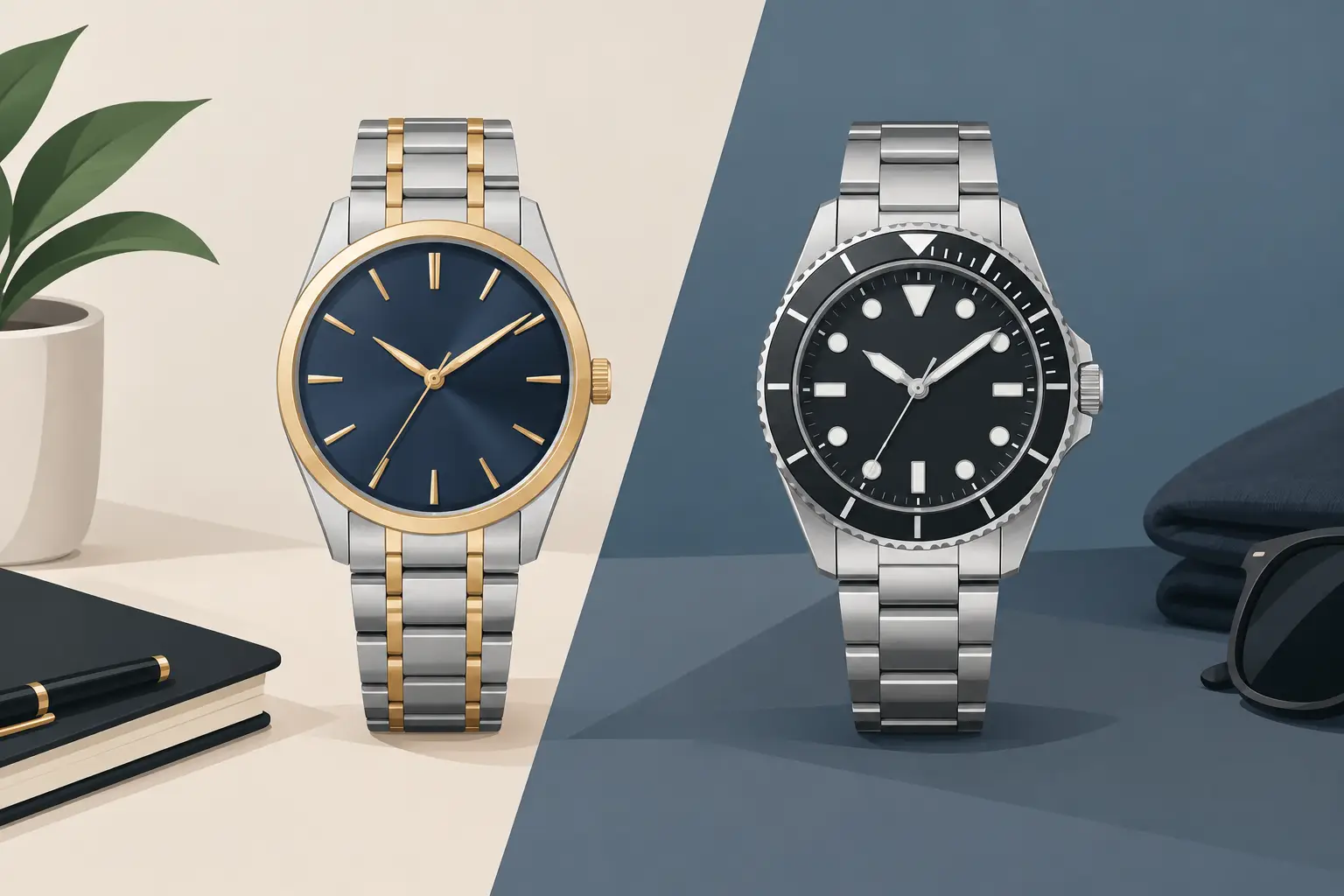
A watch can say “I pay attention” long before it says anything about price. That is why the Bulova vs Seiko watches debate remains so relevant for men shopping below the luxury tier. Both brands bring real heritage, recognizable design, and plenty of substance to the wrist. The difference is in the kind of statement you want to make: Bulova leans polished, distinctly American, and boldly styled, while Seiko offers Japanese engineering, deep enthusiast credibility, and exceptional range.
Neither brand is automatically better. The right choice depends on whether you value mechanical watchmaking, quartz precision, a dressier profile, outdoor capability, or a piece with a story worth telling.
Bulova vs Seiko Watches: The Brand Personality
Bulova was founded in New York in 1875, and that American identity still shapes its appeal. Even when its watches are made for a global market, the brand tends to favor confident case shapes, polished finishes, and designs that work naturally with business attire, evening wear, and modern casual looks. A Bulova often feels like an easy style upgrade: more character than a generic department-store watch, without requiring the owner to become a watch specialist.
The brand also has a genuine place in American watch history. Its connection to space exploration through the Lunar Pilot, its archival-inspired models, and its long relationship with precision timekeeping give it more depth than its accessible pricing might suggest. Bulova is now owned by Citizen, which gives it access to proven manufacturing resources while allowing it to keep its own visual identity.
Seiko began in Japan in 1881 and carries a different kind of prestige. It is one of the few major brands that has built watches across nearly every category, from affordable quartz pieces to serious divers, refined mechanical dress watches, high-accuracy quartz models, and high-end Grand Seiko creations. For collectors, Seiko is not merely an entry point. It is a brand with a permanent place in a well-rounded watch box.
That breadth is its strength, but it can also make shopping more complicated. A Seiko 5 Sports, a Presage, a Prospex diver, and an Astron are made for very different men and moments. Bulova’s lineup is generally easier to read at a glance.
Movement Matters More Than the Logo
Movement preference is often where the decision becomes clear. Seiko has a major advantage for buyers who want a mechanical watch. Its automatic movements power many of its most desirable models, including watches in the Seiko 5 Sports, Presage, and Prospex families. They are not all finished to luxury standards, and entry-level calibers can run outside the tighter accuracy expectations of Swiss chronometers. Still, they offer an authentic mechanical experience at a price that remains realistic for a first serious watch.
A Seiko automatic is ideal for the man who enjoys the small rituals of ownership: feeling the rotor move, setting the time after a few days off the wrist, and appreciating a movement that runs on springs and gears rather than a battery. A display caseback on many models adds to the appeal.
Bulova offers automatic watches as well, including handsome vintage-inspired and open-heart options. However, its strongest technical calling card is quartz. The Precisionist movement, used in select models, vibrates at a far higher frequency than conventional quartz and delivers outstanding accuracy with a smooth-sweeping seconds hand. For a wearer who wants precision, low maintenance, and a watch that is ready every morning, that is a compelling advantage.
The Lunar Pilot deserves its own mention. Its high-performance quartz movement, historical NASA association, and distinctive chronograph layout give it collector appeal without the maintenance demands of a mechanical chronograph. It is a conversation piece, but not a fragile one.
If your first priority is an automatic movement, Seiko usually offers more attractive choices. If you want exceptional accuracy and a refined daily watch that asks very little of you, Bulova makes a stronger case.
Style and Design: Dressy Confidence or Tool-Watch Character?
Bulova frequently wins on immediate visual impact. Many of its watches use polished stainless steel, applied markers, textured dials, Roman numerals, and clean bracelet designs that look especially sharp beneath a cuff. Collections such as the Classic line suit the younger professional building a work wardrobe, while marine-inspired and chronograph models provide more casual presence.
Its designs can be assertive. Larger cases, shiny surfaces, and decorative dial details are common, particularly in fashion-forward models. For the man who wants his watch to be noticed at a dinner, wedding, or client meeting, that confidence is part of the appeal. The trade-off is that some Bulovas may feel less understated than a watch enthusiast prefers.
Seiko is more varied, but its strongest designs often reflect function. The brand’s dive watches, field-inspired pieces, and GMT models have a purposeful, capable feel. A Seiko Prospex Turtle or Samurai looks at home on a weekend trip, at the gym, or with denim and boots. Meanwhile, Presage models bring richer dials, classic proportions, and a more reserved elegance for the office.
Seiko also excels at dials. Sunburst finishes, textured patterns, subtle color shifts, and crisp handset design give many watches a level of visual interest that exceeds their price. If you prefer a watch that reveals its character gradually rather than announcing itself across the room, Seiko is often the better fit.
Durability and Everyday Wear
Both brands make reliable daily watches, but you should buy according to your actual routine rather than a marketing label. A water-resistant Bulova dress watch may be perfect for commuting, office wear, and occasional travel, yet it is not the watch to wear while swimming or doing yard work. The same caution applies to many Seiko Presage models, which prioritize elegance over hard-use capability.
For active ownership, Seiko has the deeper bench. Its Prospex collection is built around divers, solar watches, field-ready models, and rugged sports designs. Many feature screw-down crowns, substantial water resistance, luminous hands and markers, and cases designed to take regular knocks. They can be thicker and heavier, but that is often the price of real-world durability.
Bulova’s sportier offerings can certainly handle daily wear, and its quartz movements are especially practical for a grab-and-go rotation. Still, Seiko is the more natural choice for a man who needs one watch for travel, weekends, water, and outdoor use. Check the exact water-resistance rating, case dimensions, and crystal type before buying. Brand reputation cannot replace model-specific specifications.
Value: Where Your Money Goes Further
At comparable prices, Bulova can feel more luxurious on the wrist. You may get a brighter polish, a more decorative dial, a chronograph, or a bracelet that looks tailored for dressier settings. Bulova is often the better value when the goal is to look polished without pushing into premium Swiss pricing.
Seiko delivers value differently. A modestly priced Seiko can connect you to a much broader watchmaking tradition, especially in the mechanical and tool-watch categories. Its enthusiast following also creates a healthy market for straps, modifications, and pre-owned models. That matters if collecting is part of the plan rather than a passing interest.
Resale should not be the main reason to buy either brand. Most mainstream Bulova and Seiko watches are purchases to wear, not investments. Seiko’s iconic models and limited editions tend to hold stronger interest among collectors, while Bulova’s Lunar Pilot and select heritage releases have a loyal audience. Buy the watch that will earn wrist time, not the one you hope will become scarce.
Which Brand Should You Choose?
Choose Bulova if you want a watch that looks polished immediately, prefer worry-free quartz accuracy, or need a confident dress watch for work and social occasions. The brand is especially strong for men who see a watch as a finishing detail in a well-considered outfit. A Classic model can anchor a business-casual wardrobe, while the Lunar Pilot gives you a more distinctive option with real historical weight.
Choose Seiko if you want to explore automatic watches, need genuine sport-watch capability, or appreciate design with strong collector roots. It is the more versatile long-term brand for someone building a small rotation: a Seiko 5 Sports for everyday wear, a Presage for the office, and a Prospex for active weekends can cover almost every situation without feeling repetitive.
For a single watch, consider your wardrobe first. Tailored shirts, leather shoes, and a polished professional look point toward Bulova. Denim, sneakers, travel, and a preference for functional style point toward Seiko. If you split your time between both worlds, a refined Seiko Presage or a restrained Bulova automatic can bridge the gap.
The best watch is not the one with the loudest reputation. It is the one that suits your wrist, works with your life, and still looks right when you glance down at it months after the first excitement has passed.