
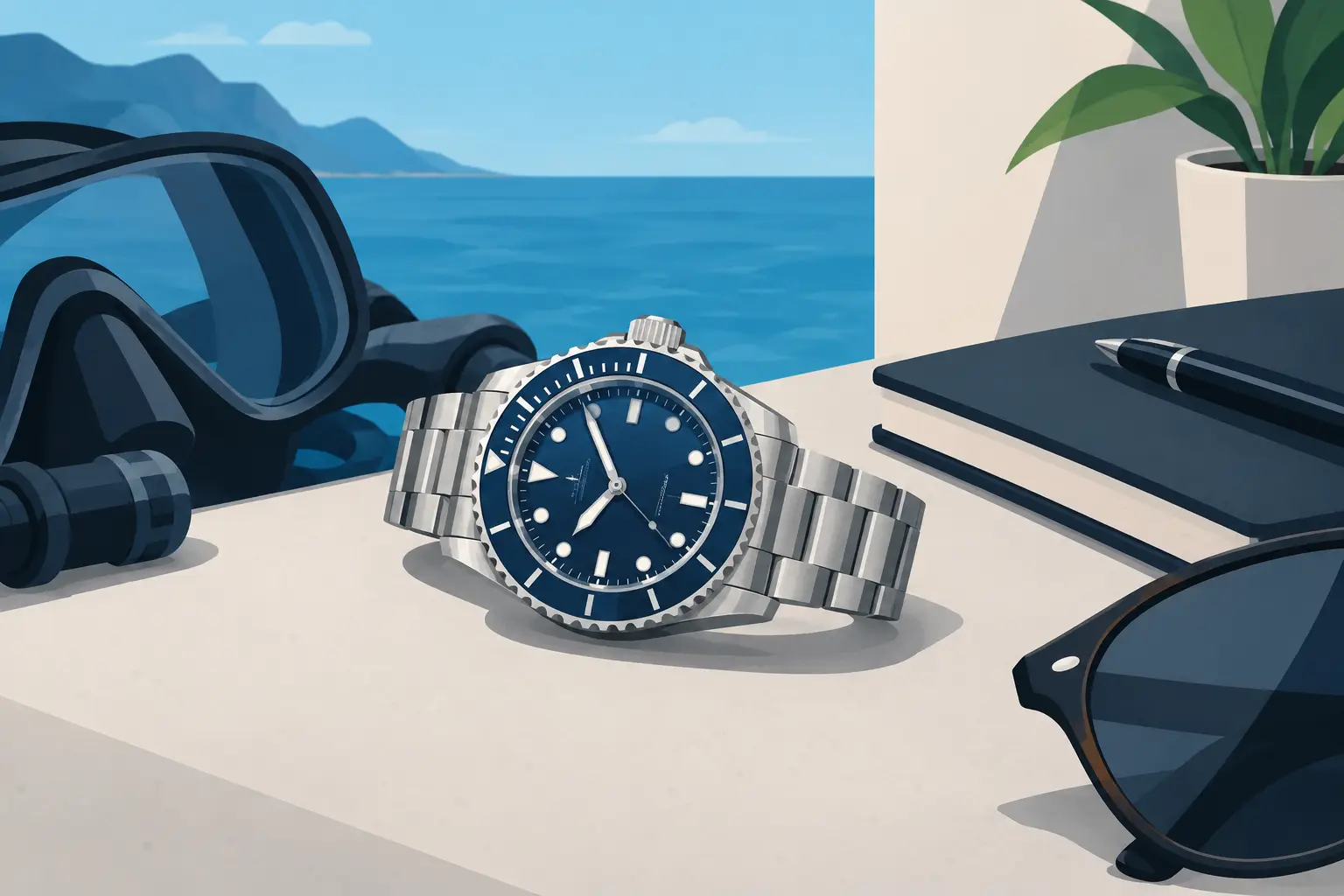
A black dial, a crisp bezel, and a steel case can make a simple T-shirt look more intentional. That is the enduring appeal of dive watches: they were designed as serious underwater equipment, yet they have become one of the most versatile style choices a man can make. The best ones carry real engineering behind their good looks, which is why they feel just as appropriate at a desk, on a weekend trip, or beside a pool.
For a first serious watch, the dive category is hard to beat. It offers legibility, durability, and a casual confidence that a thin dress watch cannot always deliver. Still, not every model with a rotating bezel deserves the label, and the right choice depends on how you dress, what you plan to spend, and whether you value mechanical character or grab-and-go convenience.
What Makes a Watch a True Dive Watch?
At its core, a dive watch is built to remain readable and reliable under water. Its defining feature is water resistance, but that figure alone does not tell the whole story. A watch marked 100 meters is generally suitable for swimming and surface water sports, while 200 meters provides a more reassuring baseline for people who want the traditional dive-watch experience. Professional-grade models often reach 300 meters or more.
A purpose-built diver also uses a unidirectional rotating bezel. Before entering the water, a diver aligns the bezel’s zero marker with the minute hand. As time passes, the bezel shows elapsed minutes. Because it turns in only one direction, an accidental knock can shorten the displayed remaining time but cannot falsely suggest more air or time is available. It is a practical safety feature, not just a visual signature.
Clear luminous material is equally central. Hands, hour markers, and the bezel pip should remain visible in low light, whether that means murky water, a dim cabin, or an early morning commute. Add a secure screw-down crown, a solid caseback, and a bracelet or strap that can handle moisture, and you have the basic architecture of a capable diver.
Water Resistance Is Not a Lifetime Guarantee
Even the most capable dive watch needs sensible care. Gaskets age, crowns can be damaged, and a pressure rating applies only when the watch is properly maintained. If you regularly swim or travel with your watch, have its water resistance checked periodically, especially after a battery change or a hard impact.
Never operate a screw-down crown under water, and rinse the watch with fresh water after ocean swimming. Salt, sunscreen, and pool chemicals are not kind to bracelets, bezels, or rubber straps over time. These are small habits, but they protect a watch that may stay in your rotation for decades.
Why Dive Watches Work So Well Off Duty
The category has moved far beyond wetsuits for a reason. A dive watch has visual weight, but it is not fussy. Its bezel adds texture, its luminous markers give the dial purpose, and its case is usually strong enough to look masculine without relying on oversized dimensions or flashy finishes.
A steel diver is a natural partner for denim, boots, polos, knitwear, and an unstructured blazer. A black or navy dial is the safest all-around choice, while blue offers a little more personality without becoming difficult to wear. Green has become a popular modern option, particularly for men who already own a black everyday watch. White and silver dials can look sharp and slightly more refined, though they tend to show the sportier elements of the design more clearly.
The trade-off is formality. A thick 42mm diver on a chunky bracelet can overwhelm a tailored cuff, even if the watch itself is handsome. If you wear suits frequently, consider a slimmer case, a 38mm to 40mm diameter, and a cleaner dial. A vintage-inspired diver often bridges the gap better than a large, highly technical model.
Choosing the Right Size and Fit
Specifications matter, but comfort decides whether a watch becomes a daily favorite. Diameter gets most of the attention, yet lug-to-lug length and case thickness often matter more. A 40mm watch with long lugs can wear larger than a compact 42mm model with short, curved lugs.
For many men, 39mm to 41mm is the sweet spot. It retains the presence expected from a diver while fitting a broad range of wrists. A 36mm to 38mm model can look exceptionally polished on smaller wrists or for buyers who prefer vintage proportions. Watches above 43mm make sense for larger wrists, heavy outdoor use, or anyone who simply likes a bolder tool-watch stance, but they are less adaptable with business-casual clothing.
Bracelet quality deserves close attention. Look for a secure clasp, solid links, and some form of on-the-fly micro-adjustment if possible. Wrists expand in heat, and a bracelet that fits perfectly in an air-conditioned office can become uncomfortable outside. Rubber is an excellent warm-weather alternative, while nylon straps make a diver feel more relaxed and field-ready. A watch with standard strap sizing gives you more freedom to change its character over time.
Automatic, Quartz, or Solar?
The movement should suit your habits rather than an idea of what a serious watch must be. Automatic dive watches appeal because they are mechanical objects. Their sweeping seconds hand, rotor-powered movement, and serviceable construction create a connection to traditional watchmaking. Brands such as Seiko, Omega, Tudor, and Rolex have helped make the automatic diver an enduring collector category.
That charm comes with practical considerations. Mechanical watches are less accurate than quartz, need periodic servicing, and may stop if left unworn for several days. For enthusiasts, those are acceptable parts of ownership. For a buyer who wants precision and zero fuss, quartz is often the smarter choice.
Solar-powered quartz adds another compelling option. It delivers quartz accuracy while reducing battery changes, making it especially well suited to travel, swimming, and active weekends. Citizen and Casio have long made practical solar divers, while Seiko offers strong choices across both automatic and solar-powered lines. A watch does not need a mechanical movement to be meaningful, stylish, or built for serious use.
Where Your Budget Makes the Biggest Difference
At accessible price points, expect dependable quartz movements, mineral crystals, simpler bracelets, and sometimes 100 meters of water resistance. These watches can still be excellent daily companions, especially from established names such as Casio, Timex, Citizen, and Orient. The key is to prioritize a trustworthy brand, a clear dial, and dimensions you will actually wear.
Moving into the midrange typically brings sapphire crystal, better lume, stronger bracelet construction, ceramic bezel inserts, and more refined automatic movements. This is where many buyers find the best balance of craftsmanship and value. Seiko, Hamilton, Tissot, and Certina are often part of this conversation, depending on the model and current pricing.
At the luxury end, you are paying for more than water resistance. Finishing, movement engineering, bracelet comfort, brand heritage, resale demand, and the intangible pull of an iconic design all enter the equation. An Omega Seamaster or Rolex Submariner can be a genuine lifelong watch, but prestige alone should not be the deciding factor. A less expensive diver that fits your wrist and lifestyle perfectly will deliver more satisfaction than a status piece that spends most of its time in a drawer.
Details That Separate a Smart Buy From a Regret
Before committing, spend a few minutes looking beyond the headline specifications. Four details are particularly revealing:
- Crystal material: Sapphire resists scratches better than mineral crystal, though it can reflect more light unless treated with anti-reflective coating.
- Bezel action: A precise bezel with little play feels better to use and signals stronger overall execution.
- Lume performance: Bright lume is useful at night and speaks to the functional spirit of the category.
- Date placement: A date is practical, but its position should not disrupt a dial you otherwise love.
Also consider service access. A straightforward quartz watch may be easy and inexpensive to maintain almost anywhere. A Swiss automatic from a luxury brand can require more specialized service and a larger long-term ownership budget. Neither route is wrong, but knowing the difference prevents surprises.
The best dive watch is not necessarily the one rated for the deepest descent or worn by the most famous name. It is the one you reach for without thinking: capable enough for the water, composed enough for dinner, and personal enough to feel like part of your signature style.