
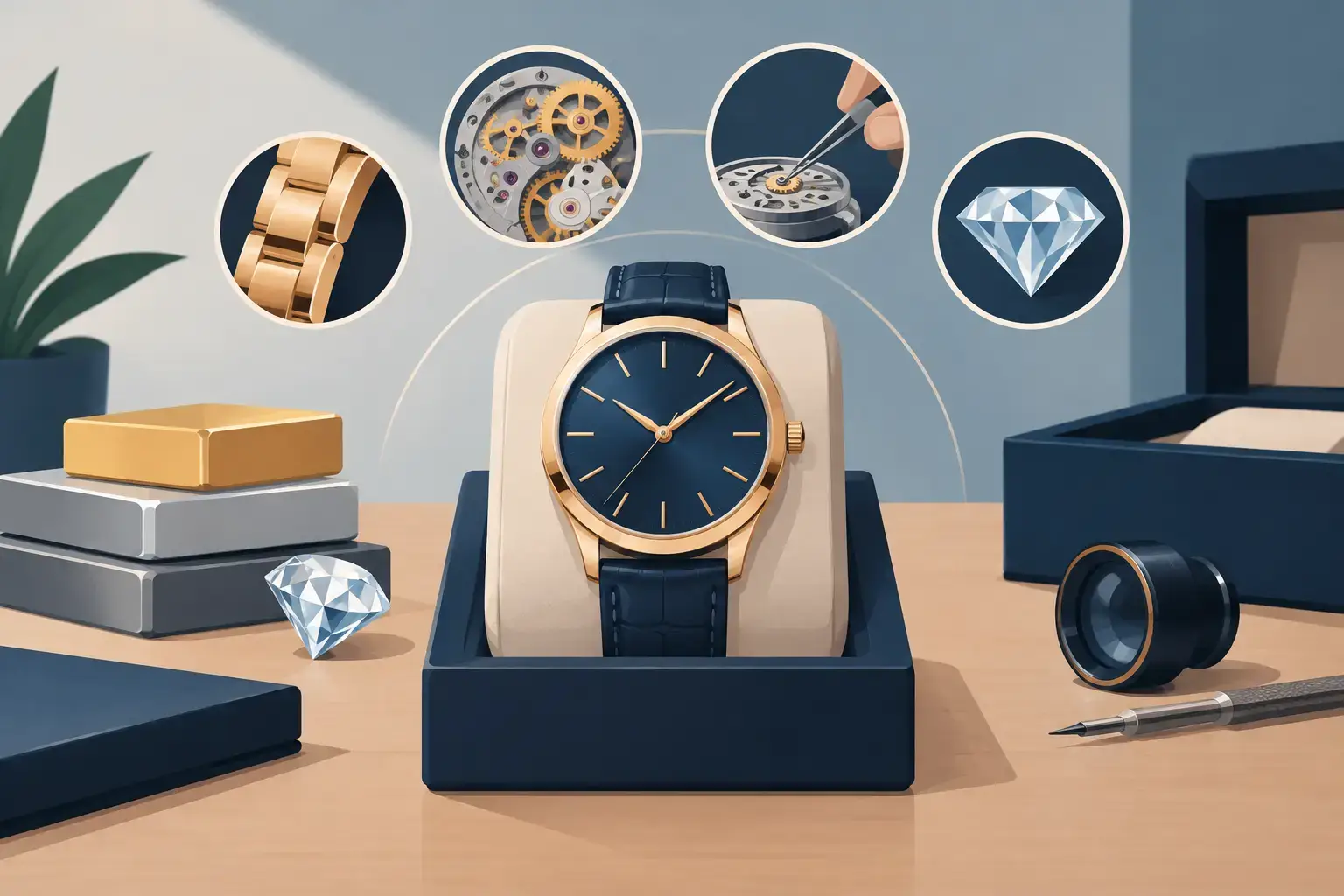
A $150 watch and a $15,000 watch can both tell accurate time, survive a rainy commute, and look sharp under a cuff. So what makes watches expensive? The answer is rarely one thing. Price reflects a mix of mechanical complexity, materials, labor, finishing, brand equity, production volume, and the less tangible appeal of wearing an object with history on its side.
For a man buying his first serious watch, the key is separating real value from pure theater. A higher price can buy remarkable engineering and lasting style. It can also buy a famous name, a limited run, or a precious-metal case that does little to improve daily timekeeping. Knowing the difference makes it easier to spend with confidence.
What Makes Watches Expensive Beyond the Logo
The logo matters, but it is only part of the calculation. A watch is a small machine worn in public, expected to operate reliably for years while making a visual statement. Building that combination well is demanding, particularly when a brand produces components in-house or finishes them to a collector-level standard.
A serious watch price often reflects the cost of making a product slowly and precisely rather than at scale. It also reflects where the brand sits in the market. Rolex, Omega, Cartier, and Patek Philippe carry decades of design language, cultural recognition, and resale demand. That prestige is real, even if it is not the same thing as technical superiority.
The movement is the engine
The movement is usually the most meaningful starting point. Quartz watches use a battery and crystal-regulated electronic movement. They are exceptionally accurate, affordable to make, and practical for daily use. A great quartz watch from Seiko, Citizen, Casio, or Bulova can be an extremely smart purchase, but it generally will not command the price of a finely made mechanical watch.
Mechanical movements run on springs, gears, levers, and a balance wheel. An automatic movement winds itself through the motion of the wearer’s wrist, while a manual movement is wound by hand. Both involve many tiny parts working under controlled tolerances. More labor, adjustment, and quality control generally mean more cost.
Not every mechanical movement is equally expensive. Many excellent watches use reliable third-party calibers from makers such as Sellita or ETA. Others use in-house movements designed and assembled by the brand itself. Developing an in-house caliber requires major investment, skilled watchmakers, testing, and long-term parts support. That can justify a higher price, although an in-house movement is not automatically better for every buyer.
Complications add another level. A date display is common. A chronograph, GMT function, annual calendar, moonphase, or perpetual calendar introduces extra mechanisms and greater assembly difficulty. A well-made mechanical chronograph, for example, is far more involved than a simple three-hand watch. The trade-off is that complications can mean a thicker case, higher servicing costs, and more to go wrong over decades of ownership.
Craftsmanship You Can See and Feel
Luxury is often visible in the details that are easy to overlook in a product photo. Look closely at the dial printing, the alignment of hour markers, the sharpness of case edges, and the way light moves across brushed and polished surfaces. Fine finishing takes time because it cannot be rushed without losing the crisp, elegant result buyers expect.
On higher-end mechanical watches, movement finishing becomes part of the appeal. Geneva stripes, polished bevels, blued screws, perlage, and engraved rotors may not make a watch more accurate, but they reveal care in areas the owner may see only occasionally. For enthusiasts, that hidden craftsmanship is part of the point.
Bracelets are another major tell. A cheap bracelet may rattle, pinch, or use folded metal links. A well-executed bracelet feels solid but flexible, has cleanly finished edges, and closes with confidence. The same is true of leather straps, clasps, crowns, and bezel action. These touchpoints shape how expensive a watch feels every day.
Materials raise the baseline cost
Material choices can move a watch into a completely different price category. Stainless steel remains the standard for good reason: it is durable, versatile, and relatively attainable. Yet even steel varies. Some brands use specialized alloys or put more effort into machining and hand-finishing their cases.
Titanium is lighter and corrosion-resistant but can be more challenging to finish. Ceramic is highly scratch-resistant and visually distinctive, though it requires specialized manufacturing and can be brittle under a hard impact. Sapphire crystal costs more than mineral glass but provides superior scratch resistance, which is why it is common on better watches.
Then there are precious metals. Gold, platinum, and high-grade diamonds materially increase the price before watchmaking even enters the conversation. They also change the watch’s character. A steel sports watch tends to be easier to wear anywhere; a gold dress watch makes a bolder statement and demands a higher level of care. Expensive materials create value, but they do not necessarily create a better all-purpose watch.
Heritage, Design, and the Price of Recognition
Some watches cost more because they occupy a lasting place in design history. The Rolex Submariner, Omega Speedmaster, Cartier Tank, and Jaeger-LeCoultre Reverso are more than collections of parts. Their proportions and visual signatures have been refined across generations. Buyers are paying for an instantly recognizable design that has already proven it can outlast changing trends.
Heritage can also mean a brand has spent decades building a reputation for reliability, sport, exploration, or formal elegance. That reputation gives a buyer confidence and gives a watch social currency. A recognizable Swiss watch can signal achievement in a boardroom or at a wedding in a way an unknown brand may not, even if the unknown watch is technically impressive.
Still, prestige has diminishing returns. A $6,000 watch may offer a dramatic step up in finish, brand stature, and movement quality from a $600 watch. The leap from $20,000 to $60,000 is often more about rarity, handwork, precious materials, and collector desirability than day-to-day performance. That is not a flaw. It simply means luxury is emotional as well as practical.
Scarcity, Distribution, and Collector Demand
Limited production can make watches expensive because low-volume manufacturing spreads costs across fewer units. Independent brands may produce only a few hundred pieces annually, often with extraordinary hand-finishing. Major luxury brands also limit certain references, creating waiting lists and a powerful secondary market.
Scarcity can be genuine, such as a complex watch made by a small team. It can also be carefully managed marketing. A numbered limited edition is not automatically collectible, and it should not be bought solely because the dial says one of 500. The more useful question is whether the design, movement, and brand story would still appeal if the watch were readily available.
Resale value is part of this equation, but it deserves realism. A few models from Rolex, Patek Philippe, Audemars Piguet, and select independents can trade above retail, especially in strong markets. Most watches do not. Like cars, many lose value once purchased new. Buy with resale in mind if it matters, but buy primarily because you want to wear the watch.
How to Decide Whether an Expensive Watch Is Worth It
Value depends on what you want from the watch. If accuracy, toughness, and low maintenance are your priorities, a quality quartz or solar watch can outperform a far more expensive mechanical piece. If you appreciate engineering, enjoy the ritual of winding a watch, or want a polished heirloom you can keep for decades, mechanical luxury becomes easier to justify.
Before stretching your budget, consider the whole ownership experience. Mechanical watches need periodic servicing, and service on a Swiss luxury chronograph can cost hundreds or even thousands of dollars over its lifetime. Check warranty coverage, local service options, water resistance, bracelet fit, and whether the design suits your actual wardrobe. The right watch should feel natural with your work clothes, weekend gear, and the occasions that matter to you.
A smart collection does not need to begin with a luxury icon. A dependable Seiko, Hamilton, Tissot, or Citizen can teach you what you value: a clean dial, a rotating bezel, a GMT hand, a compact case, or the feel of an automatic movement. Those preferences are worth learning before committing several months of discretionary income.
The best expensive watch is not the one with the loudest name or the longest waiting list. It is the one whose craft, character, and purpose still feel convincing each time you fasten it to your wrist.