
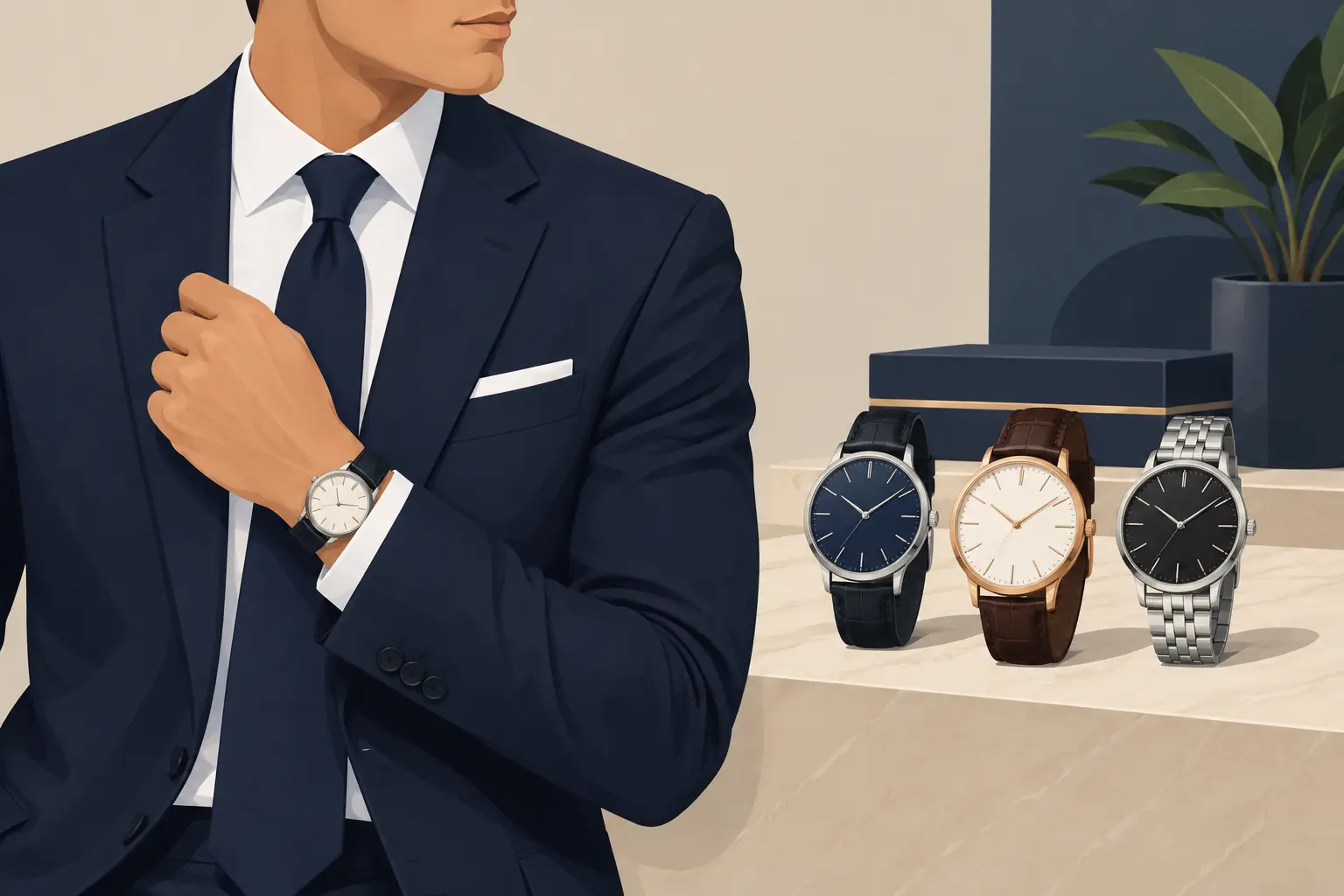
A good suit can be undermined by the wrong watch. A bulky diver peeking from beneath a cuff or a digital sports watch at a formal dinner sends a mixed message. Dress watches solve that problem with restraint: slim cases, clean dials, refined straps, and proportions designed to complement tailoring rather than compete with it.
That does not mean a dress watch has to be delicate, expensive, or reserved for black-tie events. For most men, it is the watch that makes a navy suit look sharper, gives an office outfit more authority, and adds intent to a button-down and loafers. The best choice comes down to knowing which details create genuine elegance and which ones merely look formal in a product photo.
What Defines a Dress Watch?
A dress watch is built around visual discipline. Its job is to sit discreetly under a shirt cuff while adding a quiet note of craftsmanship to the outfit. Traditional examples tend to have a round, relatively thin case, a simple two- or three-hand display, and a leather strap. The dial is usually uncluttered, with applied baton markers, Roman numerals, or understated Arabic numerals.
Classic proportions matter more than any single feature. A 36mm to 40mm case will suit most wrists and formal wardrobes, while a case thickness under 11mm is especially useful with fitted shirts and tailored jackets. Larger watches can work, particularly on broad wrists, but 42mm cases and thick bezels often shift the look from polished to overtly sporty.
The absence of complications is part of the appeal. A date window is practical and widely accepted. Small seconds can add vintage character. Beyond that, chronographs, rotating bezels, and multiple subdials usually dilute the clean, composed look that makes a dress watch effective.
A simple dial carries more authority
For a first dress watch, white, silver, champagne, black, or deep navy dials are the safest choices. White and silver are the most versatile with business attire, while black creates a more formal evening presence. Blue offers a little personality without sacrificing refinement, especially when paired with a dark brown or black leather strap.
Texture deserves attention too. A sunburst dial can catch the light beautifully, but a matte, brushed, or subtly grained finish often feels more timeless. What matters is legibility. If the dial demands attention from across the room, it is probably not behaving like a dress watch.
How to Choose Dress Watches for Your Wardrobe
Start with the situations in which you will actually wear it. If you need one watch for office meetings, weddings, interviews, and dinners, choose versatility over ceremony. A steel case, silver or white dial, and dark brown leather strap will work with gray, navy, and brown tailoring. It will also look natural with chinos, knitwear, and a crisp Oxford shirt.
If the watch is primarily for formal events, a black leather strap and a clean white or black dial feel more traditional. This is the closest thing to a dedicated suit watch. It is elegant, but less adaptable with casual clothing than a brown-strap model.
Match leather thoughtfully, but do not turn it into a rigid rule. Black straps pair naturally with black shoes and more formal evening wear. Brown straps complement tan, burgundy, and brown footwear, and they are usually easier to wear during the day. A quality strap can also change the character of the same watch dramatically, making a versatile watch more useful than its original configuration suggests.
Case metal and finishing set the mood
Stainless steel is the practical default. It is durable, works with nearly every color palette, and delivers a crisp contemporary look. Yellow gold or gold-tone cases have undeniable allure with navy, charcoal, and brown tailoring, but they ask for more confidence and can look overly flashy if the rest of the outfit is already loud.
Rose gold is warmer and less expected, though it is best with subdued dials and simple clothing. For many buyers, a restrained gold-tone watch from a respected accessible brand is a better style purchase than an overly ornate imitation of a luxury piece. The goal is polish, not costume jewelry.
Pay close attention to finishing. A fully mirror-polished case can feel formal but may show scratches quickly. Brushed surfaces are more forgiving and bring a slightly modern edge. A combination of brushed and polished finishing often offers the best balance for a daily office watch.
Mechanical, Automatic, or Quartz?
Movement choice is where personal priorities matter. An automatic dress watch has romance: it is powered by the motion of your wrist, often carries a display caseback, and gives the owner a closer connection to traditional watchmaking. Seiko, Tissot, Hamilton, Orient, and Citizen all offer credible entry points, while brands such as Longines, Omega, Cartier, and Jaeger-LeCoultre raise the level of finishing, heritage, and prestige.
Automatic watches also require some tolerance for ownership. They may gain or lose a few seconds per day, need periodic service, and stop when left unworn for long enough. Those are not flaws for an enthusiast, but they are real trade-offs for someone who wants grab-and-go convenience.
Quartz is the smarter answer for many first-time buyers. It is accurate, thin, affordable, and low-maintenance. A well-designed quartz watch from Timex, Citizen, Seiko, Bulova, or Tissot can look just as composed beneath a cuff as a mechanical model. Nobody at a wedding or boardroom table will judge the movement before they notice the watch’s proportions and finish.
Manual-wind watches are the most traditional option. Winding one before an important event can feel deliberate and satisfying, but it is a ritual rather than a necessity. Choose it because you enjoy the interaction, not because it is automatically more sophisticated.
The Details Worth Paying For
Price alone does not determine whether a watch looks refined. A modestly priced model with a well-proportioned case, crisp printing, sapphire crystal, and a convincing leather strap can look far better than a larger, cluttered watch with a recognizable logo.
Sapphire crystal is a valuable upgrade because it resists scratches better than mineral glass. It is particularly worthwhile if the watch will be worn regularly at work. Water resistance is less central to a dress watch, but 30 meters offers basic peace of mind against rain and handwashing. Fifty meters is even more practical, provided the case remains slim.
A bracelet can work, especially on contemporary dress-casual designs, but leather remains the most reliable choice for formal use. Avoid thick, heavily padded straps unless the watch is deliberately vintage-inspired. A slimmer, smooth calfskin strap or a lightly textured grain tends to look cleaner and lets the dial remain the focal point.
Do not overlook the date placement, handset, and marker alignment. These small details separate a watch that feels considered from one that feels mass-produced. Applied indices, sharp dauphine hands, and a neatly framed date window can add visual depth without making the dial busy.
Building a Smart Dress Watch Collection
You do not need several formal watches at once. Begin with one adaptable model that works with the clothes you already own. A 38mm steel watch with a white or silver dial and brown leather strap is hard to beat as a foundation. Add a black strap later, and it can cover most formal occasions.
Once that role is filled, a second watch can be more expressive: a gold-tone case, sector dial, Roman numerals, small seconds, or an ultra-thin profile. This is where personal taste becomes more valuable than generic rules. A vintage-inspired piece may suit a man who wears textured sport coats, while a minimalist Bauhaus-style watch may better fit a cleaner, modern wardrobe.
Avoid buying a dress watch solely because it resembles a famous luxury model. The most satisfying purchase is one that looks right on your wrist, works with your lifestyle, and feels honest at its price. Brand recognition has value, especially if you appreciate heritage, but proportion and design will determine whether you enjoy wearing it.
A dress watch should make getting dressed easier. Choose one with enough restraint to honor the occasion, enough quality to reward a closer look, and enough versatility that it earns more than a few appearances each year.