
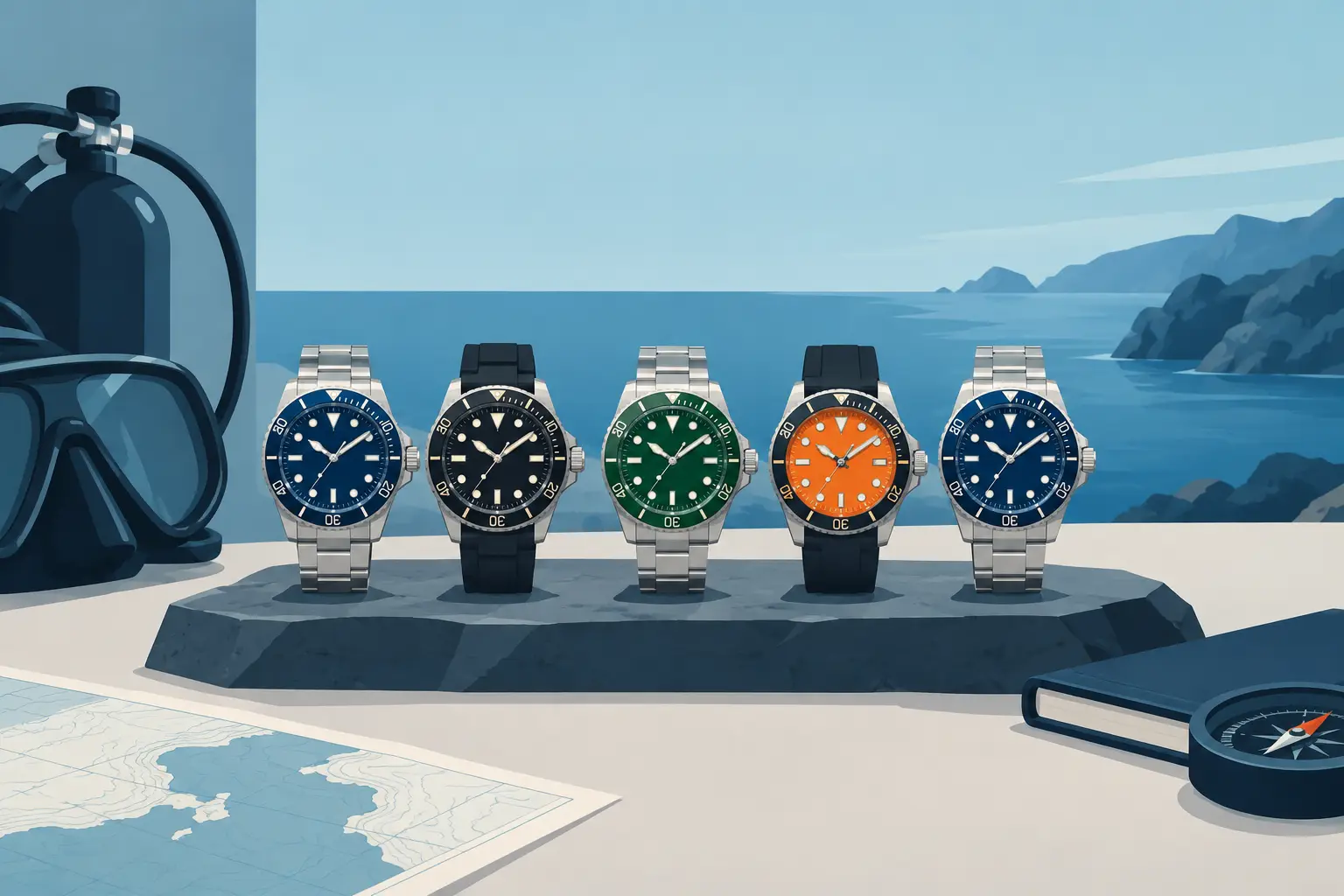
A scratched aluminum bezel, a faded NATO strap, and a case that still looks right with a navy blazer – that is the appeal of a properly chosen diver watch collection. These watches were built for timing underwater, but their real staying power comes from their confident proportions, practical durability, and unmistakably masculine style.
For many men, a dive watch is the easiest entry point into serious watch ownership. It can handle a weekend by the water, a long workday, and a dinner reservation without looking out of place. The mistake is buying several versions of the same black-dial steel diver. A collection becomes more interesting when every piece earns a distinct role.
What Makes a Diver Watch Worth Collecting?
A true dive watch is more than a watch with a rotating bezel. At minimum, look for meaningful water resistance, a unidirectional timing bezel, strong luminous material, and a case built to take everyday knocks. ISO-rated divers add further assurance, but an ISO certification is not mandatory for every buyer. If your watch will spend more time near a pool than on a scuba tank, a well-made 100-meter or 200-meter model may be all the capability you need.
The best examples balance tool-watch credibility with visual character. A clean black bezel and oyster-style bracelet project classic restraint. A cushion case, colorful dial, or vintage-inspired domed crystal gives the watch a more expressive personality. This is why the category rewards careful collecting: the basic formula is familiar, yet details in size, finishing, movement, and heritage can make two divers feel entirely different on the wrist.
Start With the Daily Wearer
The first piece should be the one you can wear without managing it. For most men, that means a stainless steel diver between 38mm and 42mm, with at least 100 meters of water resistance and a dependable bracelet. Black, navy, charcoal, and deep green are easy choices because they work with denim, tailoring, and casual weekend clothes.
An automatic Seiko, Citizen, Orient, Tissot, or Hamilton can make an excellent foundation, depending on budget and preferred styling. Quartz deserves equal consideration here. A solar-powered Citizen or a dependable Casio can be a smarter daily choice for a man who values accuracy, low maintenance, and a watch he can grab after weeks in a drawer. Mechanical romance is real, but convenience has its own appeal.
Fit matters more than a spec sheet suggests. A 42mm watch with short lugs may wear comfortably on a medium wrist, while a slim 40mm case with a long lug-to-lug measurement can feel larger than expected. Before moving up in price, learn what case shape, thickness, and bracelet weight you actually enjoy wearing.
Add Color or Vintage Character Next
Once the dependable black or blue diver is covered, add a watch that changes the mood. This is where a green sunburst dial, a white or silver dial, gilt accents, or a burgundy bezel can bring range to the collection. Color does not have to mean loud. A muted blue-gray dial or aged lume effect can feel sophisticated while still standing apart from the standard tool-watch look.
Vintage-inspired divers are especially useful here. They often feature slimmer cases, boxed crystals, smaller dimensions, and less aggressive bezel profiles. That softer presentation pairs well with knit polos, suede jackets, and business-casual clothing. The trade-off is that vintage styling sometimes comes with less lume, lower water resistance, or a more delicate crystal. Buy it for the look and wearing experience, not because you expect it to replace a hard-use sports watch.
A strap change can stretch this category further. Keep the steel bracelet for a polished everyday look, then use a rubber strap for travel and water, or a fabric strap for a relaxed, military-inspired edge. A good diver should not be trapped on one bracelet simply because that is how it arrived.
Build a Diver Watch Collection Across Price Levels
A thoughtful collection does not require buying only at one price point. In fact, mixing accessible watches with one aspirational purchase often creates a more satisfying lineup than chasing several similar luxury models. Affordable divers let you experiment with colors, case designs, and straps without anxiety. Higher-end pieces bring finer finishing, more refined bracelets, stronger movements, and, in certain cases, serious brand heritage.
The key is to avoid buying prestige alone. A luxury diver should offer something tangible beyond a famous logo: exceptional comfort, a distinctive design language, superior finishing, a co-axial or in-house movement, historically meaningful details, or a level of confidence that makes you reach for it repeatedly. A Rolex Submariner, Omega Seamaster, Tudor Black Bay, or TAG Heuer Aquaracer can be a landmark purchase, but only if its character suits your life and personal style.
Know Where Your Money Goes
At entry level, expect capable movements, solid water resistance, and finishing that prioritizes value over finesse. You may find stamped clasps, mineral crystal, or basic bracelet adjustment systems. None of those are automatic deal-breakers. A watch that wears well and keeps good time can still deliver years of enjoyment.
In the mid-range, upgrades become easier to feel. Sapphire crystals, ceramic bezel inserts, improved lume, better bracelet taper, machined clasps, and more careful case finishing all improve daily ownership. This range is often the sweet spot for men who want a watch to feel special without treating it like a museum piece.
At the luxury level, diminishing returns are unavoidable. The jump in price is not always matched by a jump in water resistance or accuracy. What you are buying is often design heritage, finishing, movement architecture, service support, and emotional pull. That can be worth it, but it is a personal value decision, not a universal one.
Avoid the Most Common Collection Mistakes
The first mistake is buying duplicates. Three black-dial divers on steel bracelets may look different in online photos, but they can offer nearly identical wrist time. Before purchasing, ask what the new watch does that your current one cannot. It might be smaller, more refined, genuinely water-ready, historically important, brighter in color, or simply more comfortable. If there is no clear answer, wait.
The second mistake is treating water resistance as a promise without context. A watch rated to 50 meters is not automatically a swimming watch, and even a 200-meter diver needs properly maintained gaskets and a secured crown. Rinse a watch after saltwater exposure, avoid operating the crown while wet, and have pressure testing performed periodically if you regularly use it in water.
The third is overlooking service and ownership costs. An inexpensive quartz diver may need only a battery and occasional gasket check. A Swiss automatic luxury diver will eventually require professional servicing, and polished surfaces can show desk-diving marks faster than expected. A collection should fit your long-term budget, not only the price you can pay today.
Let Your Wrist Time Guide the Next Purchase
The strongest collections are not assembled overnight. Wear each watch long enough to notice what you miss when it is off your wrist. Maybe you want a lighter titanium case for travel, a smaller 39mm profile for the office, a no-date dial for clean symmetry, or a true saturation-style statement piece for weekends.
That approach turns collecting into a matter of taste rather than accumulation. Choose the diver that makes you dress with a little more intention, take the long way home near the water, or glance at your wrist just because the design still feels right. That is the watch worth adding next.