
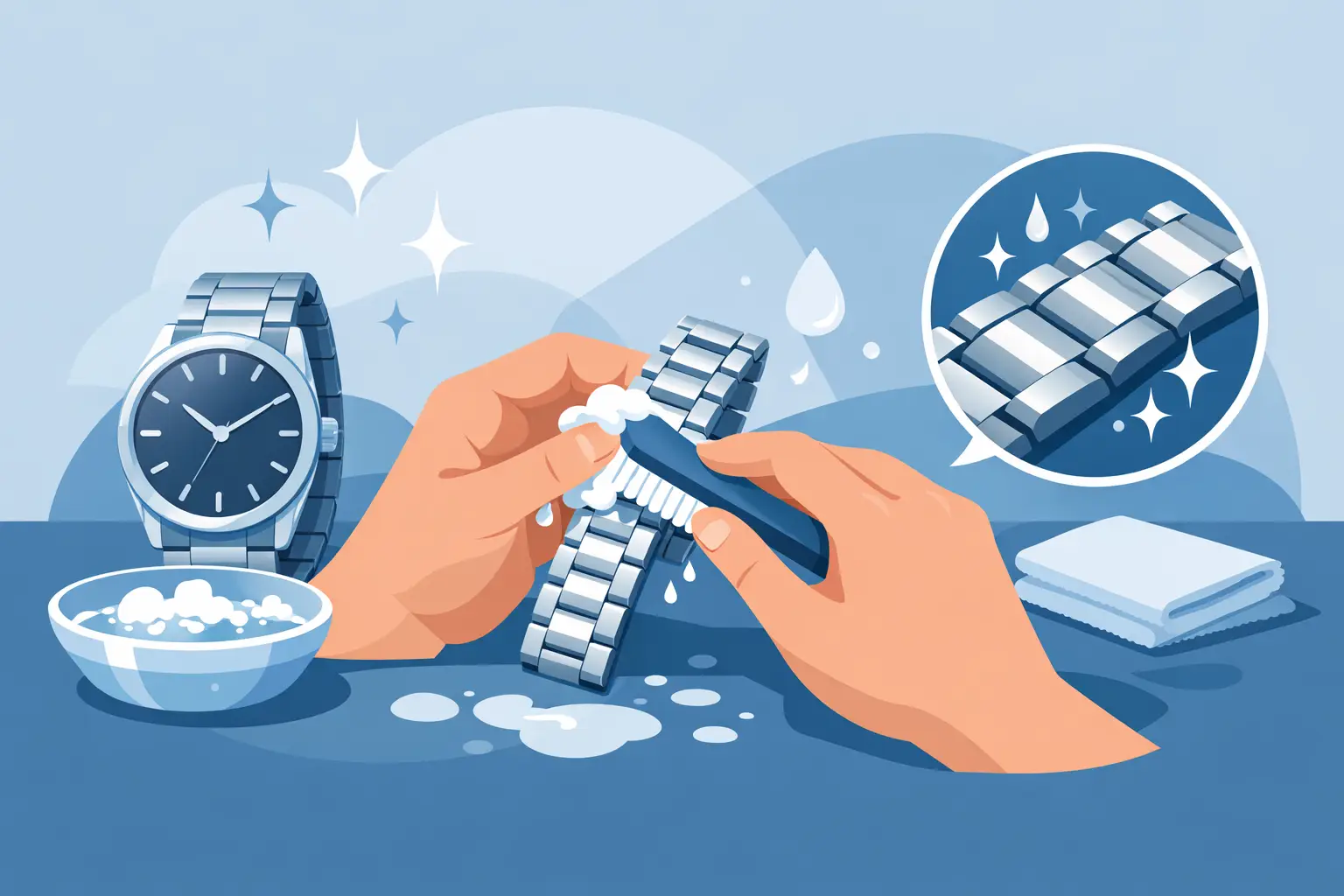
A watch bracelet can make a well-chosen timepiece look neglected long before the case or crystal does. Skin oils, sunscreen, soap residue, dust, and everyday grime settle between its links, dulling the metal and leaving an unpleasant feel on the wrist. Knowing how to clean watch bracelet properly restores its sharp, tailored look without risking the finish, pins, clasp, or movement.
The right method depends on the material and on whether the bracelet is attached to the watch. A stainless steel sports watch can tolerate more than a vintage gold piece, while leather should never be treated like metal. Start conservatively, use minimal moisture around the watch head, and let the bracelet’s construction dictate the cleaning process.
Before You Clean a Watch Bracelet
First, identify what you are cleaning. Most modern bracelets are stainless steel, but titanium, gold, two-tone metal, ceramic, rubber, and leather all need different handling. If the watch is new to you, check the manufacturer’s care instructions before using any cleaning solution.
Water resistance is not a blanket permission slip to soak the entire watch. A watch rated to 100 meters may handle swimming, but a worn crown gasket, a loose crystal, or an aging caseback seal can change the equation. Vintage watches deserve extra caution, especially if their pressure resistance has not been tested recently.
Removing the bracelet from the case is the cleanest approach when you have the right spring-bar tool and feel comfortable using it. It lets you wash the bracelet thoroughly while keeping moisture away from the movement. If you are unsure, leave it attached and clean it in place with a barely damp cloth and soft brush. Scratching a lug or bending a spring bar is an expensive way to save five minutes.
Set up a soft microfiber towel on a flat surface. It protects the watch from small slips and gives you a clean place to lay out any removable links or spring bars. Avoid paper towels, which can leave lint behind and may be surprisingly abrasive on polished surfaces.
How to Clean a Stainless Steel Watch Bracelet
For most stainless steel bracelets, warm water, a small amount of mild dish soap, and a soft-bristled toothbrush are all you need. Use a clean brush with very soft bristles, not an old toothbrush loaded with whitening toothpaste or residue.
If the bracelet has been removed, place it in a shallow bowl of warm, soapy water for five to ten minutes. This softens buildup inside the links and around the clasp. Then brush gently along the bracelet, paying attention to the underside, the end links, clasp mechanism, and the narrow spaces where each link meets the next.
There is no need to scrub hard. The goal is to lift grime, not polish the steel. Aggressive brushing can soften the crisp contrast between brushed and polished finishing, a detail that gives watches from Seiko to Omega much of their visual character.
Rinse the bracelet under clean lukewarm water, then pat it dry with a microfiber cloth. Work the clasp open and closed a few times while drying, and gently shake out trapped water. Leave it open on the towel for an hour or two before reattaching it to the watch.
When the bracelet remains on the watch, dip the toothbrush in the soapy water, shake off most of the moisture, and work in short, controlled strokes. Wipe the area immediately with a separate damp microfiber cloth, then dry it thoroughly. Keep the crown pushed in and avoid directing water toward case openings.
A useful finishing step for brushed and polished links
Once dry, use a fresh microfiber cloth to buff away fingerprints. Follow the grain of brushed sections rather than rubbing in circles. Polished center links will show marks more easily, so a light touch is the refined choice. Clean metal should look crisp and bright, not artificially mirror-polished.
Cleaning Gold, Titanium, and Two-Tone Bracelets
Gold bracelets require a lighter hand than steel. Solid gold is soft, and gold-plated or gold-tone bracelets are even more vulnerable because abrasive cleaning can wear through the surface layer. Use a damp microfiber cloth with a trace of mild soap, followed by a clean damp cloth and careful drying. Skip prolonged soaking and do not use polishing compounds unless a watchmaker specifically recommends one for that finish.
Titanium is lightweight, strong, and a favorite for everyday tool watches, but it can show rub marks differently from steel. Clean it with the same mild soap-and-water approach, using only a soft cloth or brush. Do not chase every mark. A little honest wear often suits a titanium field or dive watch better than an overworked finish.
For two-tone bracelets, treat the gold sections as the limiting factor. A gentle wipe and soft brushing around the steel links is safer than a deep soak. If grime is packed into a complicated bracelet or beneath a folding clasp, professional cleaning is the better call.
What About Ceramic, Rubber, and Leather?
Ceramic bracelets are highly scratch resistant, but their links and hardware can still be damaged by impacts or harsh chemicals. Wipe them with a damp microfiber cloth and mild soap, then dry completely. Avoid dropping the watch into a sink or bowl, since ceramic’s strength does not make it immune to cracking.
Rubber and silicone straps are simple to maintain. Wash them with warm water and mild soap, especially after workouts, swimming, or hot weather. Sunscreen and sweat can leave a cloudy film, so clean the underside and buckle holes carefully. Dry the strap before wearing it again to prevent moisture from lingering against the skin.
Leather is not a bracelet, technically, but it is often included in the same care question. Never soak a leather strap or use dish soap on it. Wipe it with a dry or barely damp cloth, let it air dry away from direct heat, and use a leather conditioner sparingly if the strap maker permits it. A worn leather strap can develop handsome character; a water-stained, cracked one simply needs replacement.
Products and Methods to Avoid
Household cleaners are usually too aggressive for watches. Bleach, ammonia, acetone, alcohol-heavy disinfectants, toothpaste, baking soda, and abrasive pads can discolor coatings, weaken adhesives, strip plating, or leave fine scratches across polished links.
Ultrasonic cleaners are another case where restraint matters. They can be effective on a removed, all-metal bracelet, but the vibration may loosen stones, damage delicate plating, or stress older components. Never place the complete watch in an ultrasonic cleaner. For a high-value, vintage, or complicated bracelet, a professional watchmaker has safer tools and a better eye for potential issues.
Keep the Bracelet Cleaner Between Washes
A quick wipe after a hot day, a workout, or time at the beach prevents the kind of buildup that demands a deep clean. If you rotate watches, wipe the bracelet before putting it back in the box. Salt, sweat, and moisture do more harm when they sit undisturbed in the clasp and link joints.
A monthly light clean works well for a watch worn most days. Deep cleaning every few months is usually enough, though an active lifestyle, humid climate, or frequent use of sunscreen may call for more attention. The goal is not obsessive maintenance. It is preserving the comfort, finish, and quiet prestige that made you choose the watch in the first place.
A clean bracelet changes how a watch wears. The clasp closes more confidently, the links sit more comfortably, and the metal catches light the way its designers intended. Give it a few careful minutes, and even a dependable daily wearer regains the polish of a considered style choice.