
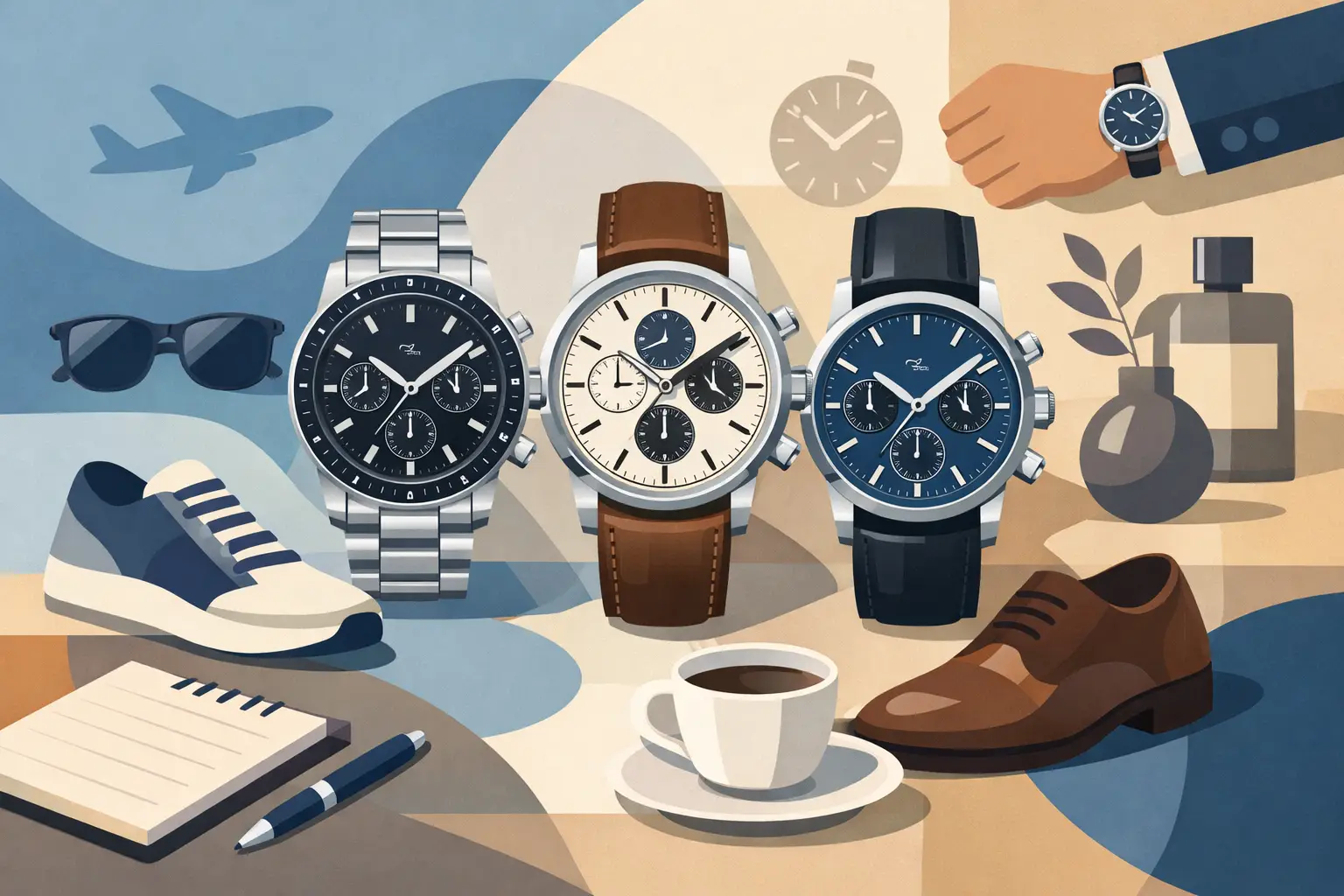
A chronograph can make a simple outfit feel more considered. The pushers, subdials, and tachymeter scales bring visual energy that a plain three-hand watch cannot replicate. But knowing how to buy a chronograph means looking beyond that motorsport-inspired appeal. The best choice is one that suits your wrist, your routine, and the level of craftsmanship you expect for the money.
For some men, that means a dependable quartz chronograph worn to the office and on weekends. For others, it means the mechanical theater of a chronograph movement, complete with a sweeping seconds hand and a caseback worth admiring. Start with what you want the watch to say, then make sure the specifications support the look.
Decide What You Want Your Chronograph to Do
A chronograph is a watch with a stopwatch function. The central seconds hand usually stays still until you press the pusher at 2 o’clock, then starts timing. A second pusher, typically at 4 o’clock, stops and resets it. Subdials track elapsed minutes, hours, running seconds, or sometimes a 24-hour display.
The complication was built for timing, and it is still useful for workouts, parking meters, cooking, meetings, and travel. Realistically, many buyers wear a chronograph because it looks purposeful. That is perfectly valid. A chronograph has a masculine, technical character that works especially well with denim, leather jackets, tailored casualwear, and business-casual wardrobes.
Before comparing models, choose your lane. A racing chronograph tends to be sporty, often with a tachymeter scale and contrasting subdials. A pilot chronograph favors high legibility and a more instrument-like dial. A dress chronograph is thinner, cleaner, and restrained enough for a suit. Diver-inspired chronographs offer water resistance and a tougher presence, although their busy dials can feel less elegant.
Choose Quartz or Mechanical
This is the decision that shapes price, maintenance, thickness, and personality more than any other.
Quartz Chronographs Offer Value and Convenience
Quartz chronographs run on a battery and use an electronic oscillator for highly accurate timekeeping. They are generally more affordable, lighter on maintenance, and easy to live with. At the entry level, brands such as Seiko, Citizen, Timex, Bulova, and Casio offer strong options that deliver classic chronograph styling without demanding a collector-level budget.
A quartz movement is not a compromise if your priorities are reliability and everyday practicality. It is often the smart choice for a first chronograph, especially if you want features such as solar charging, alarm functions, high water resistance, or a compact case. The trade-off is emotional rather than practical: the pusher action and seconds-hand motion do not have the same mechanical charm as a traditional chronograph caliber.
Mechanical Chronographs Bring Craftsmanship
Mechanical chronographs use a complex system of gears, levers, and clutches. Pressing the pusher engages a miniature machine on your wrist, and that tactile experience is a large part of the appeal. Automatic versions wind themselves through wrist movement; manual-wind versions require a daily ritual but are often slimmer and more connected to vintage watchmaking.
Expect to pay more. A quality mechanical chronograph usually begins in the four-figure range, though certain entry-level mechanical options can cost less. Service is also part of ownership. Mechanical chronographs have more moving parts than standard watches, so a proper overhaul can be more expensive when the time comes.
If you appreciate heritage, engineering, and the pleasure of ownership, a mechanical chronograph is worth considering. If you mainly want a sharp-looking watch that keeps excellent time, quartz offers better value.
Get the Case Size Right Before Falling for the Dial
Chronographs wear larger than their diameter suggests. Pushers, a thicker movement, and multiple subdials create more visual mass, so a 42mm chronograph can feel substantially bigger than a 42mm three-hand watch.
For many men, 38mm to 40mm is a versatile range that works with casual and tailored clothing. A 41mm to 43mm case brings more sporting presence and can suit larger wrists or bolder personal style. Above 44mm, fit becomes more specific. These watches can look commanding, but they may overwhelm an average wrist or disappear under a shirt cuff.
Diameter is only one measurement. Check lug-to-lug length, which is the distance from the top to the bottom of the case. A watch with long lugs can wear larger than its listed diameter. Case thickness matters, too. Chronographs are naturally thicker, but anything around 14mm or more may feel top-heavy unless you prefer a substantial tool-watch profile.
The cleanest test is simple: the lugs should not extend beyond the edges of your wrist, and the watch should feel balanced when you move your arm. Do not buy a chronograph solely because its specifications sound impressive. Wearability is what determines whether it becomes a daily favorite or stays in a drawer.
Read the Dial Like a Buyer, Not Just an Admirer
A good chronograph dial rewards a closer look, but it should not make you work to tell the time. Start by checking contrast. Light hands against a dark dial, or dark hands against a light dial, are usually the easiest to read. Applied markers, luminous material, and a well-defined minute track improve utility without sacrificing sophistication.
Then look at the subdial arrangement. A three-register layout is the classic choice, with subdials positioned at 3, 6, and 9 o’clock or at 3, 6, and 9-adjacent positions. It is balanced, familiar, and inherently sporty. Two-register chronographs often feel cleaner and more vintage. A crowded dial with a date, day, 24-hour indicator, power reserve, and multiple scales can be impressive, but it may lose the crisp elegance that makes a chronograph timeless.
Be clear about what the scales do. A tachymeter measures average speed over a known distance. A telemeter estimates distance based on the speed of sound. A pulsometer can help calculate heart rate. These scales add authentic character, even if you rarely use them, but they should not be mistaken for essential features.
Match Materials to Your Lifestyle
Stainless steel is the default for good reason. It is durable, versatile, and works with almost anything. A brushed steel case feels athletic and understated, while polished surfaces add a dressier touch. Titanium reduces weight and offers a modern, technical feel, though it can look less traditionally luxurious than steel.
For the crystal, sapphire is the premium standard. It is highly resistant to scratches and especially valuable on a watch you plan to wear frequently. Mineral crystal is common on affordable models and can be perfectly acceptable, but it will show wear sooner. Acrylic has a warm vintage look and can be polished when scratched, though it is less resistant to impact.
Straps change the personality of a chronograph quickly. A steel bracelet is the most versatile single choice and makes the watch feel more substantial. Leather introduces vintage refinement and pairs naturally with dressier clothes. Rubber suits active use and warmer weather. If you are buying one chronograph to cover most occasions, a steel bracelet with the option to add a leather strap later is hard to beat.
Set a Budget That Includes the Whole Ownership Experience
You can buy a convincing quartz chronograph for well under $500, and there are excellent options in this range. Between $500 and $1,500, finishing, sapphire crystals, solar technology, and brand heritage become more available. This is a strong category for buyers who want a refined daily watch without stepping into luxury pricing.
From roughly $2,000 upward, mechanical chronographs become a serious part of the conversation. Here, you are paying for movement architecture, case finishing, design history, and often Swiss manufacturing. At higher luxury levels, the purchase becomes more personal. Brand prestige, resale behavior, and collector interest may matter, but they should not replace genuine enjoyment.
Avoid stretching for a mechanical chronograph if it means accepting a watch that fits poorly or leaves no room for maintenance. A well-chosen $400 quartz model will give more pleasure than an expensive watch you feel anxious about wearing.
How to Buy a Chronograph With Confidence
Before you commit, inspect the details that separate a lasting purchase from an impulse buy. The pushers should feel precise, the crown should operate smoothly, and the dial printing should be crisp. On a mechanical model, start, stop, and reset the chronograph several times. The central hand should reset cleanly to zero.
Check water resistance realistically. A rating of 30 meters is best treated as splash resistance. Fifty meters handles everyday exposure, while 100 meters is a more comfortable target if you swim or spend time around water. A chronograph with pushers should not be operated underwater unless the manufacturer specifically says it is safe.
Finally, buy the watch you will actually wear. A chronograph does not need to be the most expensive piece in the room to project taste. When its proportions fit, its dial is legible, and its design reflects your style, it becomes more than a stopwatch. It becomes the watch you reach for when you want to look prepared without looking like you tried too hard.