
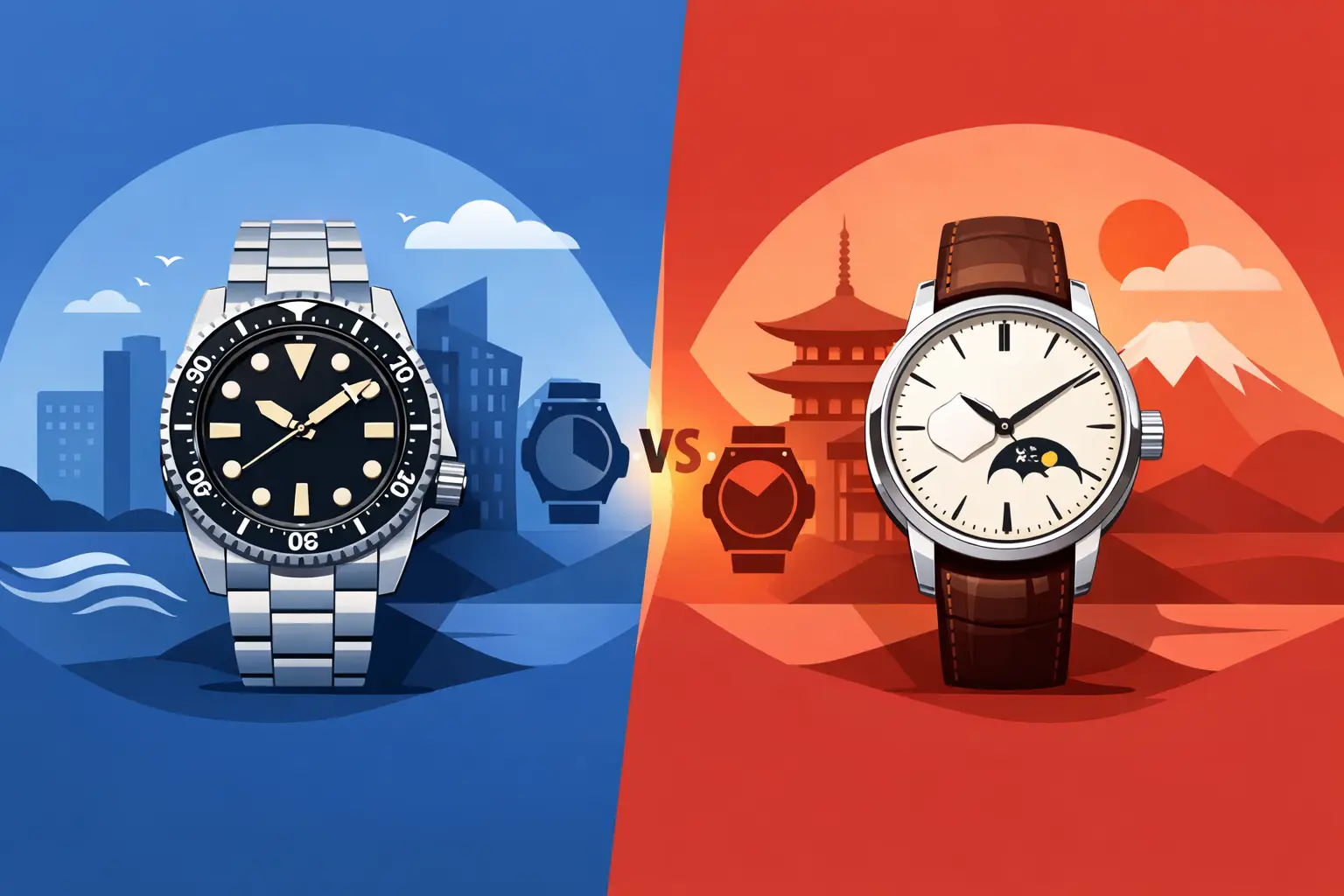
A $300 automatic watch can feel like a stepping stone or a long-term keeper. That distinction is where the Seiko vs Orient watches debate gets interesting. Both Japanese brands deliver mechanical character, dependable engineering, and far more presence than their price tags suggest, but they appeal to different instincts. Seiko offers greater range and cultural weight. Orient makes a focused case for classic mechanical value.
For the man buying his first serious automatic, choosing a daily watch that can handle work and weekends, or building a thoughtful collection on a sensible budget, the answer is less about which logo is better. It is about what you want the watch to say on your wrist.
Seiko vs Orient Watches at a Glance
Seiko is the larger and more influential name. Its catalog stretches from affordable field watches and dive watches to solar chronographs, quartz dress pieces, premium Presage models, and serious enthusiast lines. It has a deep history of innovation, including landmark quartz technology, and a level of recognition that gives even an entry-level Seiko a certain credibility.
Orient is more specialized. The brand is best known for mechanical watches with traditional styling: dress watches, divers, and everyday sport models powered by in-house automatic movements. It operates under the broader Seiko Epson group, but Orient remains a distinct brand with its own designs and movement heritage.
In practical terms, Seiko gives you more choices. Orient gives you fewer distractions. A Seiko can suit nearly any lifestyle or aesthetic, while an Orient often feels designed for the buyer who specifically wants an automatic watch with a clean, classic personality.
Movement Quality and Mechanical Appeal
For many buyers, this is the deciding category. Both brands have earned loyalty because they build their own movements rather than relying entirely on generic outsourced calibers.
Seiko’s entry-level automatics commonly use the 4R family of movements, including the 4R35, 4R36, and GMT-capable 4R34. These movements are practical, hand-windable, and usually feature hacking seconds, meaning the second hand stops when you pull out the crown to set the time precisely. They are not usually decorated for display, but they are known for being durable, easy to service, and well suited to regular wear.
Orient’s F6-series movements compete directly in this space. They also typically offer hand-winding and hacking, with solid reliability for the price. On paper, there is no decisive movement advantage for either brand at the entry level. Both can run outside luxury-grade accuracy standards, and a watch that gains or loses a handful of seconds each day is normal in this category.
The difference is in the experience around the movement. Seiko uses its calibers across an enormous range of designs, from rugged divers to polished cocktail watches. Orient builds more of its identity around the pleasure of owning an accessible mechanical watch. If you want a visible balance wheel, an open-heart display, or a power-reserve indicator without spending heavily, Orient often offers more romance per dollar.
That said, Seiko has more movement variety. If solar power, quartz precision, a chronograph, or a GMT function matters more than the sweep of a mechanical second hand, Seiko is the clear choice.
Design, Style, and Wrist Presence
Seiko is one of the rare watch brands that can look equally at home with a canvas jacket, a navy suit, or a polo shirt on a summer trip. The breadth of its design language is a major strength. The Seiko 5 Sports family brings youthful, sport-driven energy. The Presage collection leans refined, often using textured dials, rich colors, and dressier proportions. Seiko divers have their own unmistakable tool-watch appeal, built on decades of heritage.
Orient generally takes a more traditional route. The Bambino remains one of the most convincing affordable dress watches available, with domed crystals, applied markers, and vintage-inspired dial layouts that look more expensive than they are. The Kamasu and Mako divers add sportier options, but even these tend to feel more restrained than many Seiko divers.
For office wear, date nights, weddings, and business-casual wardrobes, Orient has a strong advantage in effortless elegance. A Bambino on leather can make a young professional look considered without trying too hard. Seiko is better for a man who wants one brand that can cover more moods, from a rugged weekend watch to a polished conversation piece.
Fit matters here. Many Seiko sports models have substantial cases and a distinctly masculine, tool-oriented stance. Orient offers plenty of capable watches, though its dress models often wear slimmer and more traditionally. Neither approach is automatically better. A larger wrist may appreciate the visual authority of a Seiko diver, while a slim wrist can benefit from the balanced proportions of an Orient dress watch.
Value for Money: Where Orient Often Wins
Orient has built much of its reputation on exceptional value. At similar prices, an Orient often includes details that enthusiasts notice: a sapphire crystal, a more refined bracelet or leather strap, a dressier dial treatment, or a complication such as a power reserve. The Kamasu, for example, is frequently praised because it combines a capable automatic movement, 200 meters of water resistance, and sapphire crystal at a price that remains approachable.
Seiko’s value equation is more complicated. You may pay a little more for brand recognition, a particular design legacy, or access to an icon such as the Seiko 5 Sports or one of the brand’s dive-inspired silhouettes. On some entry-level models, Seiko uses Hardlex mineral crystal where Orient may offer sapphire. Hardlex is tougher than standard mineral glass and can handle daily use well, but sapphire is more resistant to scratches.
Still, value is not only a specification sheet. A watch with a design you genuinely enjoy will see more wrist time than one that merely wins on paper. Seiko’s historic designs, wide aftermarket support, and stronger resale interest can justify the premium for the right buyer.
Durability, Water Resistance, and Daily Use
Both brands make watches built for real life, but you should judge the individual model rather than the name on the dial. A 30-meter dress watch is not a swimming watch, regardless of how sturdy its movement may be. For regular pool use, beach trips, or outdoor weekends, look for at least 100 meters of water resistance and a screw-down crown where possible.
Seiko has a particular edge in the tool-watch category. Its dive watch heritage is extensive, and many models are designed with legible lume, substantial cases, rotating bezels, and rugged bracelets. They make excellent daily companions for men who are hard on their gear or simply prefer a watch with presence.
Orient’s divers are also highly capable and often offer standout specifications for the money. The key difference is emotional: a Seiko diver feels like a piece of established dive-watch culture, while an Orient diver feels like a smart insider purchase. One carries more broad recognition; the other can feel more satisfying when you know exactly what you are getting.
Which Brand Fits Your Buying Style?
Choose Seiko if versatility is your priority. It is the stronger option for buyers who want solar convenience, quartz accuracy, a chronograph, a GMT, a field watch, or an iconic sports watch. It also makes sense if brand legacy matters to you and you want a watch that is instantly recognizable to fellow enthusiasts.
Choose Orient if you want the most traditional automatic watch experience for your money. It is especially compelling for a first mechanical dress watch, a refined everyday piece, or a value-focused diver. Orient delivers a level of classic charm that can make a modest purchase feel remarkably elevated.
A practical collection can easily include both. An Orient Bambino handles formal occasions and quieter professional settings with timeless style. A Seiko 5 Sports or dive watch brings casual confidence, durability, and a little more edge for the rest of the week.
The Better Choice Is the One You Will Wear
Seiko is the more expansive brand, with deeper name recognition and more ways to express your style. Orient is the more concentrated proposition, offering mechanical substance and classic design at a price that leaves room for a second watch. Try to look beyond the movement specifications and ask which watch belongs in the moments you care about: your first promotion, a wedding, a weekend away, or an ordinary Tuesday when you want to look sharper. That is the watch worth buying.