
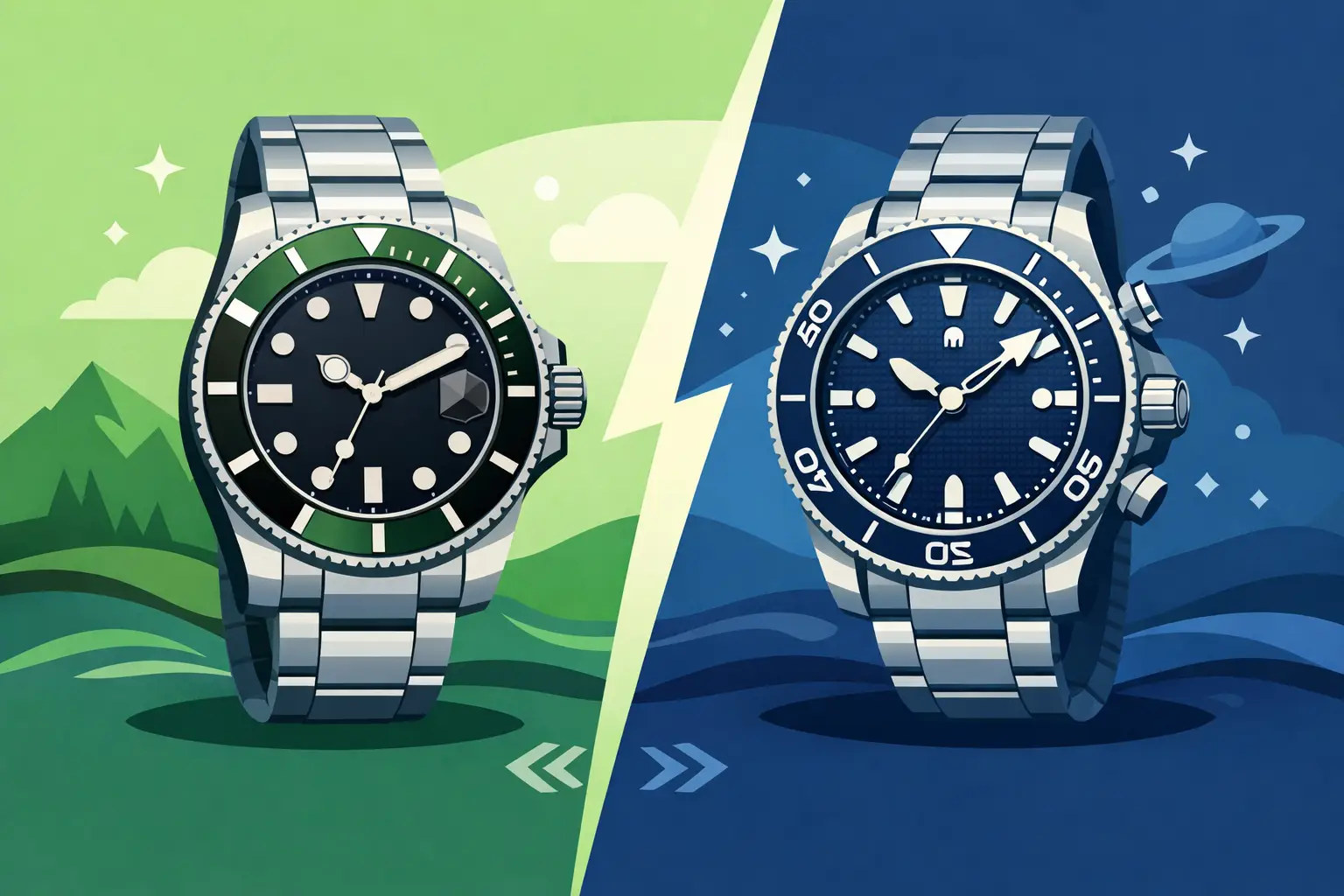
Plenty of watch buyers think they already know the answer before they start comparing. Rolex is the crown, Omega is the challenger, and that’s the whole story. But once you get serious about spending thousands on a watch, the Rolex vs omega watches debate gets more interesting – and a lot more personal.
These are two of the most respected names in Swiss watchmaking, yet they appeal to slightly different instincts. Rolex leans harder into prestige, consistency, and market power. Omega brings more variety, more visible technical innovation, and in many cases, a more approachable path into true luxury ownership. If you are deciding between them, the right choice has less to do with internet hype and more to do with what kind of watch buyer you are.
Rolex vs Omega watches: the core difference
At a high level, Rolex sells a tightly controlled vision of luxury. The brand is built on recognition, status, and design continuity. A Submariner still looks like a Submariner. A Datejust still looks like a Datejust. That consistency is part of the appeal. You are buying into one of the strongest identities in the entire watch world.
Omega has a broader personality. It has genuine icon status too, especially with the Speedmaster and Seamaster, but the brand feels more experimental within its own heritage. You see more variation in case shapes, dial layouts, materials, and movement technology. Omega often feels like the choice for someone who wants serious watchmaking credibility without choosing the most obvious luxury badge in the room.
That distinction matters. If your priority is instant recognition and long-term brand cachet, Rolex usually leads. If you want a watch with rich history, excellent finishing, and a slightly less predictable image, Omega makes a very compelling case.
Brand prestige and cultural pull
Rolex has an unmatched level of mainstream prestige. Even people who know almost nothing about watches recognize the name. That matters more than enthusiasts sometimes want to admit. For many buyers, a luxury watch is not just about movement specs or case tolerances. It is also about what the watch communicates when it is on your wrist.
Rolex communicates success in a direct, universal way. Whether that is a positive or a negative depends on your style. Some men want that clear signal. Others find it too loud, especially in environments where understated taste carries more weight than obvious status.
Omega is prestigious, but it speaks with a different accent. It has deep ties to space exploration, diving, and Olympic timekeeping, which gives it a more technical and heritage-driven identity. An Omega often says you care about watches, not just labels. That is not a rule, but it is part of the brand’s appeal.
If you want the strongest luxury symbol, Rolex is hard to beat. If you want a watch that still carries prestige while feeling a touch more personal, Omega often lands better.
Design language and wrist presence
Rolex design is famously disciplined. The brand rarely makes dramatic changes, and that restraint has paid off. Models like the Datejust, Explorer, GMT-Master II, and Submariner are clean, balanced, and immediately recognizable. They wear with confidence and versatility, especially if your wardrobe moves between office, travel, and smart casual settings.
Omega gives you more visual range. A Speedmaster Professional has a completely different energy from a Seamaster Diver 300M or an Aqua Terra. Some Omega models look more technical, some more athletic, and some more refined. That wider spread is useful if you know exactly what kind of watch personality you want.
There is a trade-off here. Rolex has fewer misses because it stays so close to a proven formula. Omega can be more exciting, but certain references feel busier or less timeless depending on your taste. If you prefer a watch that will look current for decades with minimal debate, Rolex tends to win. If you enjoy more character and detail, Omega may be more satisfying.
Movements and watchmaking substance
This is where Omega often closes the gap, and in some cases overtakes Rolex on paper. Omega has pushed hard on movement technology, especially with its Co-Axial calibers and Master Chronometer certification. Many modern Omega watches offer excellent anti-magnetism, strong accuracy standards, and impressive technical talking points for the money.
Rolex movements are less flashy in how they are marketed, but they are extremely well regarded for reliability, durability, and everyday performance. Rolex calibers are built with practical ownership in mind. They are designed to run consistently, handle regular wear, and require relatively straightforward servicing by luxury standards.
For a first-time buyer, the difference is this: Omega often feels more openly technical, while Rolex feels more quietly bulletproof. Neither approach is wrong. If movement innovation excites you, Omega has a stronger story. If you want proven mechanical confidence with little drama, Rolex remains one of the safest bets in the category.
Availability and the buying experience
This is one of the biggest real-world differences between the brands. Buying a Rolex at retail can be frustrating. Popular models are often difficult to get, and many buyers face waitlists, purchase history expectations, or vague timelines. That scarcity has become part of the Rolex mystique, but it also pushes some shoppers away.
Omega is typically more accessible. You can usually find a wider selection through authorized channels without playing the same games. That makes Omega especially attractive for buyers who want to enjoy the purchase process instead of chasing inventory.
Accessibility should not be dismissed as a small detail. A luxury watch purchase is emotional. If one brand makes you feel like you are asking for a favor and the other lets you choose confidently, that can shape the entire ownership experience.
Pricing and value
Rolex generally costs more at entry and much more once you move into high-demand sports models. On top of that, market pricing for certain Rolex watches can sit well above retail. You are paying for quality, yes, but also for brand strength and demand.
Omega usually offers more watch per dollar on a specifications basis. You can access strong finishing, advanced movement tech, and iconic history at prices that often feel more grounded. For many buyers, especially those purchasing their first serious Swiss luxury watch, Omega represents the smarter value proposition.
That said, value is not only about what is inside the case. Rolex offers a different kind of value through resale strength and market perception. If you think you may trade, upgrade, or rotate pieces later, Rolex often provides a financial cushion Omega cannot always match reference for reference.
So which is the better value? If you mean horological substance for the money, Omega often wins. If you mean asset resilience and brand equity, Rolex usually comes out ahead.
Best picks for different buyers
If you are buying one watch to wear everywhere, a Rolex Datejust or Explorer makes a strong case. They are versatile, mature, and easy to live with. A Submariner works too if you want more sport in the design.
If you want iconic history with enthusiast appeal, Omega is exceptionally strong. The Speedmaster Professional is one of the most respected chronographs ever made, and the Aqua Terra is one of the best luxury everyday watches in its lane. The Seamaster Diver 300M gives you a recognizable sports watch with a more contemporary edge than a Submariner.
For a younger professional building a wardrobe, Omega can be the more balanced move. It feels aspirational without being quite as loaded socially, and it often stretches your budget further. For the buyer who wants one of the clearest luxury symbols in men’s style, Rolex still holds a rare position.
Rolex vs Omega watches for long-term ownership
Long-term, both brands are strong choices, but they reward different mindsets. Rolex ownership is about consistency. The designs age well, the market stays interested, and the brand’s desirability remains remarkably stable. There is comfort in that.
Omega ownership can feel more enthusiast-friendly. You have more room to choose a watch that reflects your own taste rather than the market’s consensus. The brand also offers enough variety that many owners develop a stronger personal connection to specific models.
If you are buying your first luxury watch and want the least complicated answer, Rolex is the easy shorthand for success. If you are buying with a bit more nuance and care about getting a lot of substance without overpaying for pure status, Omega is often the sharper pick.
The smarter move is not choosing the brand that wins the loudest argument online. It is choosing the one that fits your wrist, your budget, and the version of yourself you actually want your watch to represent.