
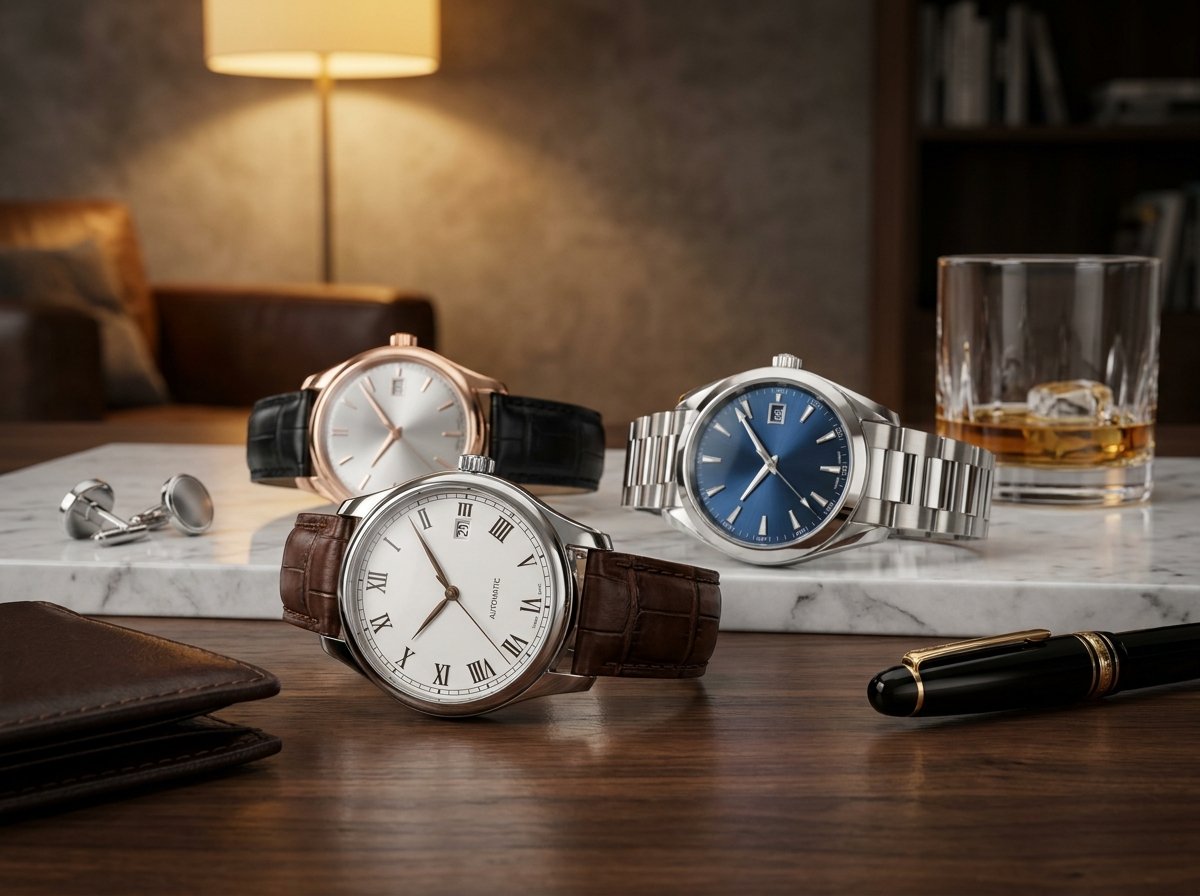
Your first serious watch should feel different the moment you put it on. Not louder, not flashier – just more considered. The best entry level luxury watches for men do exactly that. They bring better finishing, stronger brand heritage, more satisfying movements, and a sense that you have moved beyond disposable fashion watches into something with real staying power.
That shift matters because “entry level luxury” is a crowded category. Some watches are genuinely well made and offer a strong introduction to Swiss or Japanese craftsmanship. Others lean hard on branding and polished marketing while giving you very little in terms of movement quality, case finishing, or long-term value. If you are buying your first luxury watch, the goal is not just to spend more. It is to spend well.
What counts as entry level luxury watches for men?
In practical terms, this category usually starts around the upper hundreds and runs into the low thousands. That price band covers respected names like Tissot, Longines, Hamilton, Oris, TAG Heuer, and certain models from Seiko’s higher-end lines. You are typically paying for a combination of better materials, more refined casework, stronger bracelets, dependable automatic or quartz movements, and a brand story that carries actual weight.
It does not always mean handmade finishing or in-house calibers. At this level, compromise is part of the deal. You may get a terrific case and dial but a fairly standard movement. Or you may get a strong heritage brand with a simpler bracelet than you expected. That is normal. The smart move is to decide which compromise bothers you least.
The best first luxury watch is usually not the most expensive one
A lot of men shopping in this category assume the safest decision is to stretch the budget as far as possible. Sometimes that works. More often, the better first buy is the watch that fits your actual life.
If you wear a suit a few times a year but spend most days in business casual or denim, a versatile sports watch will earn more wrist time than a formal dress piece. If you want something for daily wear, 100 meters of water resistance and a sturdy bracelet may matter more than a display caseback. If this is a gift or a milestone purchase, brand recognition may carry more emotional value than marginal technical upgrades.
That is why the best entry point is usually a watch you can wear four or five days a week without thinking too hard about it. Luxury starts to feel justified when the watch becomes part of your routine rather than something that sits in a box waiting for the right occasion.
Brands that get entry level luxury right
Tissot is one of the safest places to start. The brand has real Swiss heritage, broad availability, and a lineup that makes sense for first-time buyers. Models in the PRX family have become especially popular because they blend current style with respectable build quality and strong value. The integrated-bracelet look feels modern, but the watch still has enough restraint to work in an office.
Hamilton also deserves a serious look, especially if you prefer something more rugged and less polished. The Khaki line has long been a favorite because it offers mechanical credibility without unnecessary fuss. Hamilton watches tend to wear like tools with taste, which is a strong formula for younger professionals or anyone who wants an everyday piece with character.
Longines sits a step above many first-buy brands and often feels more classically luxurious. The finishing is usually more refined, the dials often have a little more elegance, and the brand name carries a certain old-world prestige. If you want your first luxury watch to look unmistakably upscale, Longines makes a compelling case.
Oris is another smart option if your budget has room. It appeals to buyers who want enthusiast credibility with a more independent spirit. You may not get the same mainstream recognition as TAG Heuer, but you often get thoughtful design and strong mechanical appeal.
TAG Heuer remains relevant for men who want a recognizable Swiss luxury name with sporty styling. Not every model is the value leader in its class, but some make excellent first luxury watches because they balance status, wearability, and everyday versatility. If brand presence matters to you, it should not be dismissed as shallow. Watches are emotional purchases as much as technical ones.
Automatic vs quartz at this price
This is where many buyers get stuck, and the answer depends on what you actually want from ownership. Automatic watches have romance on their side. There is something satisfying about a movement powered by motion, especially if this is your entry into watch culture. You can see the mechanical appeal, feel the smoothness of the seconds hand, and enjoy the ritual of wearing something built around tiny moving parts.
Quartz is often the more practical choice. It is more accurate, usually more affordable, and generally easier to live with. In an entry-level luxury watch, a high-quality quartz movement can make a lot of sense if you want a slimmer case, grab-and-go convenience, and lower maintenance concerns.
The mistake is assuming automatic is always better. It is not. If you love the idea of craftsmanship and mechanical tradition, go automatic. If you care more about reliability and convenience, quartz can be the sharper buy. Prestige is part of luxury, but confidence in your purchase matters more.
What separates a good watch from a great first purchase
The dial should be the first thing you study. You will look at it every day, so balance matters more than spec-sheet bragging rights. Clean proportions, strong legibility, and good finishing often tell you more about overall quality than a long list of features.
Bracelets and straps matter almost as much. A watch can have a respectable movement and still feel disappointing on the wrist if the bracelet rattles or the clasp feels flimsy. In this category, brands separate themselves quickly through comfort and tactile quality. If possible, pay attention to how the bracelet tapers, how secure the clasp feels, and whether the watch sits flat on the wrist.
Case size is another area where many first-time buyers overshoot. Bigger does not mean more luxurious. Most men are better served by a watch in the 38mm to 41mm range, especially if versatility is the goal. That size works in more settings and tends to age better stylistically than oversized cases that chase trends.
Then there is service and long-term ownership. Luxury watches are not one-time transactions. Mechanical models will eventually need maintenance, and even quartz pieces may need battery service, pressure testing, or replacement parts over time. Established brands with strong service networks usually make ownership easier and less stressful.
Style matters more than most buyers admit
A first luxury watch is partly about craftsmanship, but it is also about image. That is not a bad thing. Watches sit at the intersection of utility and identity, which is why two similarly priced models can feel completely different.
A clean dress watch says restraint and polish. A dive watch suggests confidence and practicality. An integrated-bracelet sports watch feels modern and design-aware. A field watch reads understated and masculine. None of these is universally better. The right answer is the one that fits the way you dress and the version of yourself you want to project.
This is where many smart buyers make their best decision by being honest. If you want one watch for everything, avoid extremes. Go for a neutral dial, modest case size, solid water resistance, and a bracelet or strap setup that can move between office, weekend, and dinner out without looking out of place.
How to shop without overpaying
Start with a budget ceiling and a target use. That sounds basic, but it keeps you from drifting toward watches that impress you in theory and disappoint you in practice. A buyer who wants a daily office watch should not shop the same way as someone celebrating a promotion with a more statement-driven piece.
Focus on a few brands instead of the entire market. Compare finishing, movement type, dimensions, and how each watch wears stylistically. Do not get distracted by heritage alone. A famous name helps, but at this level, execution still matters more than mythology.
It also pays to think about your second watch before buying your first. If your long-term goal is a collection, your first luxury piece should leave room for variety later. A versatile steel sports watch is often a better foundation than a very formal piece or something overly trend-driven.
For readers who use sites like Watches for Men to narrow the field, that curation is part of the value. The market is full of respectable options, but only a smaller group really earns first-watch status.
A good first luxury watch should make you want to wear it, not just own it. Buy the one that fits your life, your style, and your standards now – and still feels right when the novelty wears off.