
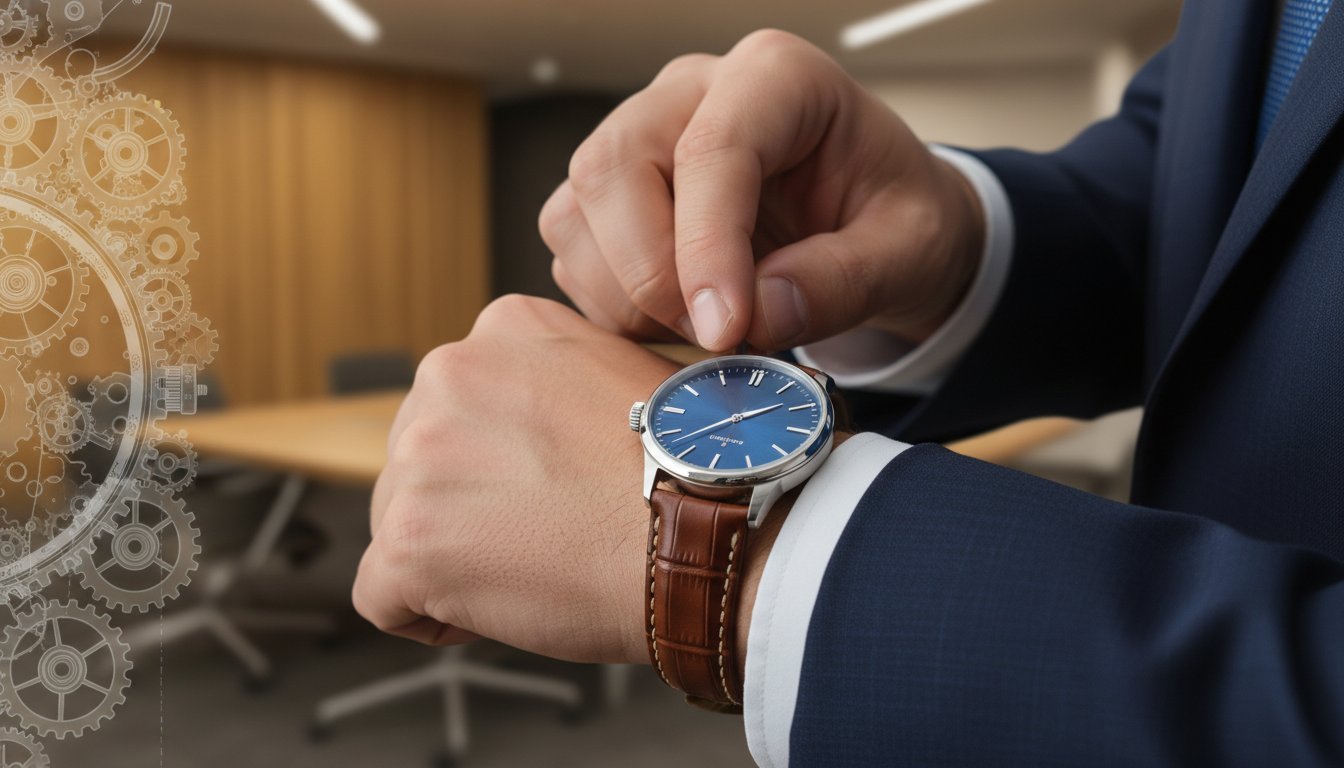
In an age where time is displayed on every screen, the decision to wear a wrist watch is a deliberate one. It’s a statement of style, an appreciation for craftsmanship, and a connection to a tradition of elegance. But for the uninitiated, the world of horology can feel complex and intimidating. This guide is here to demystify the world of men’s watches, helping you understand the styles, mechanics, and most importantly, how to choose a timepiece that tells your personal story.
More Than Just Time: The Anatomy of a Man’s Wrist Watch
A watch is far more than a simple time-telling device; it’s a piece of mechanical art and the ultimate expression of personal style. Understanding its core components is the first step toward appreciating the subtle details that distinguish an ordinary watch from an exceptional one. From the intricate engine that powers its hands to the crystal that protects its face, each element plays a crucial role in its function and aesthetic allure.
The Heart of the Watch: Understanding Movements
The movement, or calibre, is the internal mechanism that powers the watch. It is the single most important component, defining not just how the watch keeps time, but also its character and the experience of owning it. For a deeper look at how these types compare, our guide on Seiko Quartz vs. Automatic can be a great resource.
- Quartz: A quartz movement is powered by a battery. It is incredibly accurate, requires very little maintenance beyond a battery change every few years, and is generally more affordable. This makes it a practical and reliable choice for an everyday watch.
- Automatic: A marvel of micro-engineering, an automatic movement harnesses the energy from the natural motion of your wrist to wind itself. It requires no battery and features a smooth, sweeping seconds hand that is prized by enthusiasts. The craftsmanship involved makes it a true piece of mechanical art.
- Mechanical (Hand-Wound): The most traditional type of movement, a mechanical watch must be wound by hand, typically every day, via the crown. This creates a daily ritual and a tangible connection between the wearer and their timepiece, celebrating the very origins of watchmaking.
The Face of the Watch: Dials, Hands, and Crystals
The face is where a watch’s personality truly shines. It’s the first thing you and others notice, and its design elements work in harmony to create a specific look, whether it’s sporty, sophisticated, or utilitarian.
- The Dial: This is the canvas of your watch. It can be minimalist and clean, or complex with multiple sub-dials and textures. The color, finish, and design of the dial are fundamental to the watch’s overall style.
- Hands & Markers: The hands and hour markers (the numerals or indices) are critical for legibility. Their shape, size, and whether they are coated with luminous material for low-light visibility all contribute to the watch’s function and aesthetic.
- Crystal: The transparent cover that protects the dial. Most watches use either mineral crystal, which is affordable and scratch-resistant, or sapphire crystal, which is virtually scratch-proof and a hallmark of higher-quality timepieces.
See also The Best Seiko Watches: Our Top Picks for Every Style and Budget
The Foundation: Case and Strap Materials
The case houses the delicate movement, while the strap secures the watch to your wrist. The materials used here define the watch’s durability, weight, and how it feels to wear.
- The Case: Most watch cases are made from stainless steel for its durability and corrosion resistance. Other popular choices include lightweight titanium, classic gold, and unique materials like bronze or ceramic.
- The Strap: The choice of strap can completely change a watch’s character. A leather strap offers a classic, formal look; a stainless steel bracelet is robust and versatile; and a fabric NATO strap provides a casual, military-inspired vibe.
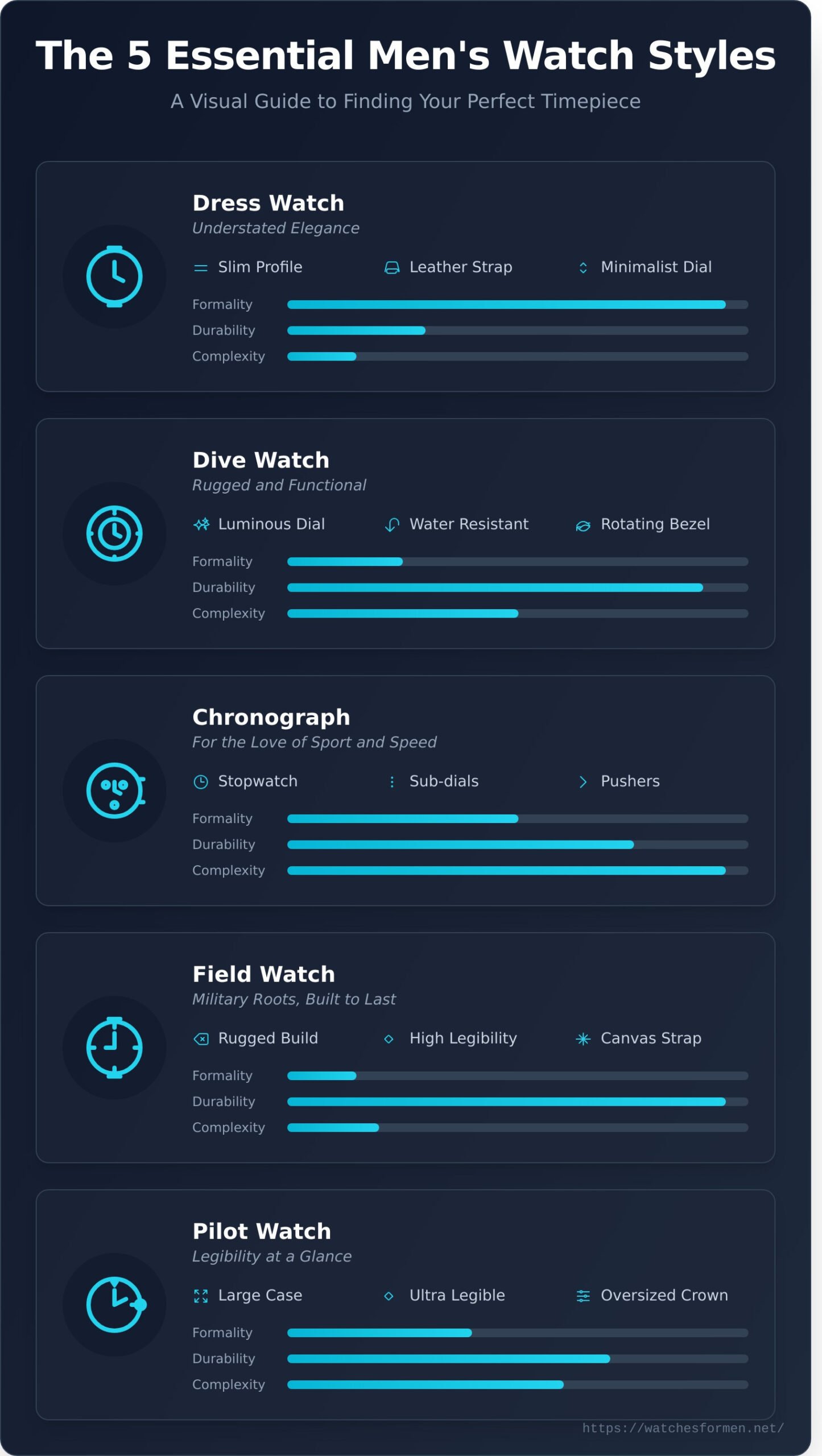
Finding Your Style: The 5 Essential Types of Men’s Watches
Matching your watch to your lifestyle and wardrobe is the key to effortless style. Each category of watch was born from a specific purpose, and understanding these origins helps you choose a timepiece that not only looks good but also feels authentic to you. Each style tells a different story, from the boardroom to the open ocean.
The Dress Watch: Understated Elegance
Characterized by its simplicity, a dress watch is the epitome of sophistication. It typically features a slim profile to slide easily under a shirt cuff, a clean and uncluttered dial, and a classic leather strap. It’s the perfect companion for formal events, business meetings, and any occasion that calls for a touch of refined class. To understand the nuances of this style, explore our guide on what defines a dress watch. A stellar example is the Orient Bambino, celebrated for its timeless design and exceptional value.
The Dive Watch: Rugged and Functional
Born from the needs of underwater explorers, the dive watch is built for durability. Its key features include high water resistance, a rotating bezel to track elapsed time, and bold, luminous dials for readability in low light. Its robust and versatile nature has made it a favorite for everyday wear, pairing just as well with a t-shirt as it does with business casual attire. The iconic Seiko SKX007 is a legendary starting point for any dive watch collection.
The Chronograph: For the Love of Sport and Speed
A chronograph is simply a watch with a built-in stopwatch function, typically controlled by two pushers on the side of the case. This “complication” results in a sporty, often complex dial with multiple sub-dials to measure seconds, minutes, and hours. Originally linked to motorsports and aviation, the chronograph has a dynamic and technical appeal. The Citizen Nighthawk is a fantastic example of a feature-packed, aviation-inspired chronograph.

See also Bulova 96B107 Review & Specs — Slim Rectangular Dress Watch
The Field Watch: Military Roots, Built to Last
The field watch has its origins in military history, designed for soldiers who needed a reliable and highly legible timepiece in harsh conditions. These watches are typically straightforward, rugged, and easy to read at a glance, often featuring a high-contrast dial and a durable canvas or leather strap. It’s the perfect casual, no-fuss option for weekend adventures. The Hamilton Khaki Field Automatic is arguably the benchmark for this entire category.
For those quieter weekend moments, perhaps spent with a coffee and a crossword puzzle, having the right tools is just as important. Online resources like Solution Mots can offer a helping hand when you’re truly stumped.

The Pilot (Aviator) Watch: Legibility at a Glance
Like field watches, pilot watches were designed for pure function. Early aviators needed large, ultra-legible dials to read the time quickly during flight. These watches are characterized by their large case sizes, clean dials with bold numerals, and often an oversized “onion” crown that could be operated while wearing gloves. They blend serious functionality with a classic, bold aesthetic that makes a statement.
How to Choose the Perfect Wrist Watch: A 4-Step Guide
Selecting a watch is a deeply personal journey, but it doesn’t have to be a difficult one. By focusing on a few key factors, you can narrow down the vast world of options to find a timepiece that you’ll be proud to wear for years to come. This simple framework will guide you toward making a confident and informed choice.
Step 1: Define Your Budget
The beauty of watches is that great style and quality craftsmanship exist at every price point. Before you begin your search, decide on a budget you are comfortable with. Whether you’re looking for an affordable workhorse or a significant investment piece, setting a price range will help focus your search and prevent you from feeling overwhelmed. Discover our guides to affordable elegance, including our curated lists of the best watches under $500 and the best men’s watches under $1000.
Step 2: Consider Your Lifestyle
Think honestly about when and where you will wear your new watch. Will it be a daily companion for the office and weekends, or reserved for special occasions? Your answer will guide your choice. A durable, water-resistant dive watch might be perfect for an active lifestyle, while a delicate, polished dress watch is best saved for more formal settings. The goal is to match the watch’s durability and function to your real-world activities.
Step 3: Find the Right Size and Fit
A watch that is too large or too small for your wrist can look out of place. The most important measurement is the case diameter, measured in millimeters. For most men, a case size between 38mm and 42mm is a safe and versatile sweet spot. Pay attention to the lug-to-lug distance as well—this is the measurement from the top of the case to the bottom, and it often matters more than diameter for determining if a watch will wear comfortably.
See also Swiss Watches for Men: The Ultimate 2025 Buying Guide
Step 4: Trust Your Personal Taste
Ultimately, the best watch for you is the one you simply love to look at and wear. Trends will come and go, but a watch that truly speaks to your personal style will bring you joy for a lifetime. Don’t be swayed by what others think is popular or prestigious. Choose the dial color, case shape, and strap style that resonates with you. Your watch is an extension of your personality, so let it be a reflection of who you are.
This focus on personal expression isn’t limited to what we wear; it’s also about what we create. For those inspired by the craftsmanship and artistry discussed here, exploring a new creative skill can be a rewarding journey. The online Acrylic Painting School offers a great starting point for anyone looking to delve into the world of painting.
Frequently Asked Questions
Navigating the world of watches can bring up many questions. Here are answers to some of the most common ones we hear.
- How much should a man spend on his first watch?
There is no magic number. You can find fantastic, reliable, and stylish watches for under $200 from brands like Seiko, Orient, and Citizen. The best advice is to spend what you are comfortable with on a watch that you’ll genuinely enjoy wearing. - What are the best entry-level watch brands for men?
For those starting their collection, Japanese brands like Seiko, Citizen, and Orient offer unbeatable value, quality, and variety. Timex is another excellent choice for classic, affordable designs. - Is it okay to wear a dive watch with a suit?
While traditionalists might say no, this rule has become very flexible. A classic, refined dive watch (like a Tudor Black Bay or Rolex Submariner) is now widely accepted with a suit in most business settings. It’s a matter of personal style and confidence. - What’s the difference between an automatic and a quartz watch?
A quartz watch is battery-powered and highly accurate. An automatic watch is powered by the motion of your wrist and has a smooth, sweeping seconds hand. Quartz is about practicality, while automatic is about appreciating mechanical craftsmanship. - How do I take care of my new wrist watch?
Keep it clean with a soft cloth, avoid exposing a leather strap to water, and have it serviced by a professional every 5-7 years (for automatic/mechanical watches). Avoid dropping it or exposing it to strong magnetic fields. - What does water resistance (ATM) actually mean?
This rating can be confusing. 3 ATM (30 meters) is splash-resistant only. 5 ATM (50 meters) is suitable for showering. 10 ATM (100 meters) is fine for swimming. 20 ATM (200 meters) or more is required for serious diving.
A wrist watch is one of the few accessories that is both deeply personal and universally recognized as a mark of style and substance. It’s a conversation starter, a potential heirloom, and a daily reminder to appreciate the moments that make up our lives. Armed with this knowledge, you are now ready to begin the rewarding journey of finding the perfect timepiece that reflects your character and accompanies you on your own story. Explore our expert buying guides to find your perfect watch and discover a world of timeless elegance.