
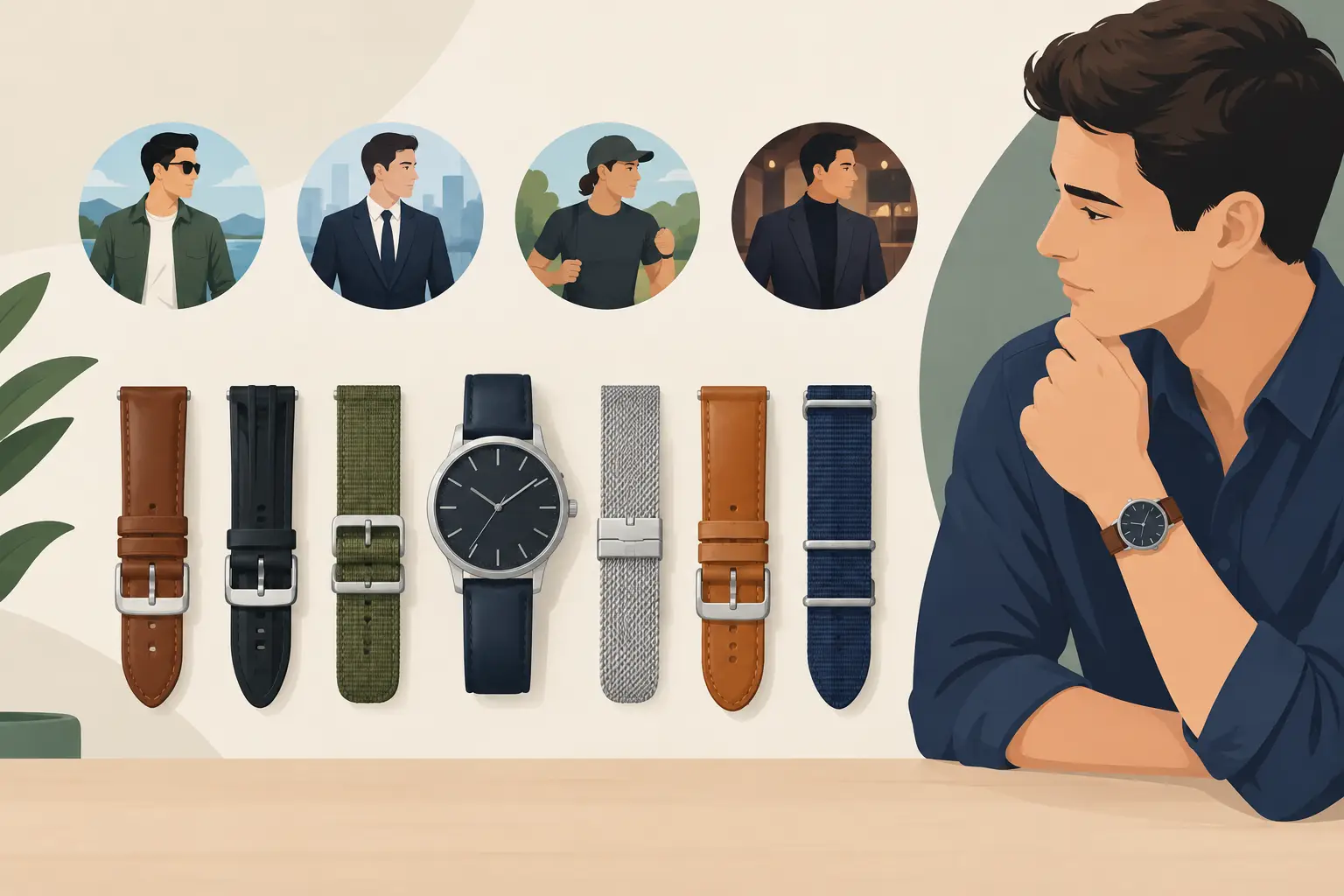
A watch can look entirely different before you ever buy another timepiece. Put a worn leather strap on a polished dress watch and it loses some of its authority. Fit the same watch with a crisp new strap or a well-chosen bracelet, and it feels considered again. Learning how to choose a watch strap is one of the simplest ways to make a favorite watch work harder for your wardrobe.
The right choice is not only about appearance. A strap changes comfort, durability, water resistance, and even the visual size of the case on your wrist. Start with what your watch is meant to do, then let your personal style settle the finer details.
Start With the Watch, Not the Strap
Every good strap choice respects the character of the watch. A slim rectangular dress watch calls for restraint: fine leather, a narrow profile, and understated hardware. A 42mm dive watch can carry a substantial rubber strap, a steel bracelet, or a rugged nylon option without looking overbuilt. An aviation or field watch usually has more latitude, but it still benefits from a strap that feels purposeful rather than random.
Consider the dial, case finish, and overall era of the design. A vintage-inspired Seiko or Hamilton often looks at home on textured leather, suede, or canvas. A modern GMT with polished center links may suit a bracelet for travel and a smooth leather strap for evenings. If the watch has gold-tone accents, brown, black, dark green, or burgundy leather tends to create a richer pairing than bright synthetic materials.
A simple rule helps: let the strap support the watch’s identity. It should give the design a new setting, not force it into a role it was never built to play.
Get the Fit Right Before Choosing a Material
The most stylish strap in the world is a poor purchase if it does not fit your watch. Measure the lug width, which is the distance between the two points where the strap attaches to the case. Most men’s watches use widths from 18mm to 22mm, though larger sport watches may use 24mm or more. A 20mm strap will not properly fit 22mm lugs, and forcing it in creates unsightly gaps and unnecessary wear.
You should also check the strap’s length. Standard straps work well for many wrists, but men with larger wrists often need a long size, while slimmer wrists may benefit from a short size to avoid excess tail extending beyond the keepers. A well-fitted strap should sit securely without pinching, with the buckle landing near the middle adjustment holes rather than at either extreme.
Thickness matters too. A thick, padded strap can overpower a thin dress case, while a very slim strap can make a broad chronograph look top-heavy. As a guide, match slim cases with straps around 2mm to 3mm thick and sportier watches with options around 4mm to 6mm. The taper is equally influential. A strap that narrows from 20mm at the lugs to 16mm at the buckle looks refined; a straight-cut strap feels more casual and robust.
Check the attachment system
Most traditional watches use standard spring bars, making strap changes straightforward. Quick-release straps include a small lever on the underside, allowing you to swap them without tools. They are especially useful if you rotate between leather for work, rubber for weekends, and nylon for travel.
Not every watch accepts every strap. Integrated bracelets, curved end links, proprietary lug designs, and certain smartwatches may require model-specific options. Before ordering, inspect the case closely rather than relying on case diameter alone.
Choose Strap Materials by Lifestyle
Material is where style meets real-world use. A strap should suit the conditions you actually encounter, not just the outfit you imagine wearing once.
Leather for polish and versatility
Leather remains the strongest all-around option for men who want their watch to look more elevated. Smooth calfskin is clean and adaptable, pairing naturally with business casual clothing, tailoring, and a sharp dinner jacket. Dark brown leather brings warmth to silver, blue, green, and cream dials; black leather is the classic choice for formal events and black footwear.
For more character, consider suede, nubuck, or grained leather. These finishes make a watch feel relaxed without becoming careless. They pair well with field watches, vintage chronographs, knitwear, denim, and casual jackets. The trade-off is durability: leather does not enjoy sweat, rain, or repeated exposure to water. Save it for dry days and rotate it when necessary.
Steel bracelets for daily durability
A stainless steel bracelet gives a watch presence. It is hard-wearing, water-friendly, and often the most practical choice for a single everyday watch. Oyster-style three-link bracelets feel sporty and versatile, while five-link designs bring a more polished, jewelry-like finish. Mesh bracelets offer a distinctive mid-century look and can make a simple watch feel more sophisticated.
The key is fit. A bracelet should be sized so the watch stays centered on the wrist without sliding loosely toward the side. Micro-adjustment holes or an on-the-fly clasp make a noticeable difference when your wrist expands in warm weather. Bracelets can feel heavier than leather or fabric, but that weight is part of their appeal for many buyers.
Rubber for water, heat, and active wear
Rubber is the sensible match for dive watches, gym sessions, beach trips, and hot summers. Quality rubber is soft, flexible, and far more refined than the stiff plastic straps many men associate with inexpensive sport watches. Look for ventilation channels, a tapered shape, and a secure buckle or deployant clasp.
Black is the safest choice, but navy, dark gray, olive, and deep orange can complement the right tool watch. Bright colors are best treated as a second strap, not the one you expect to wear with everything.
Nylon and canvas for casual character
Nylon straps are lightweight, inexpensive, and easy to change. They suit field watches, divers, and military-inspired designs particularly well. A striped nylon strap can add personality to a plain black or navy dial, while solid khaki, charcoal, and navy remain easy to wear.
Canvas offers a similar rugged appeal with a slightly more substantial, textured feel. Neither nylon nor canvas is the most formal choice, and both can retain moisture after a long day outdoors. Still, they are excellent when comfort and a laid-back look matter more than boardroom polish.
Match Color and Hardware to Your Wardrobe
If you are buying your first extra strap, choose versatility over novelty. Dark brown leather is arguably the most useful starting point for a man who wears blue jeans, chinos, navy tailoring, and earth tones. Black leather earns its place if your wardrobe is more monochrome, formal, or centered on black shoes and belts.
You do not need to match leather perfectly to your belt and shoes. The goal is harmony, not a uniform. A medium-brown strap can look excellent with dark-brown boots, tan loafers, or white sneakers. What matters more is keeping the level of formality consistent.
Coordinate the buckle with the watch case when possible. A steel case generally looks best with a silver-tone buckle, while gold-tone cases deserve matching hardware. Small details like this create the quiet sense of quality that separates a thoughtful watch pairing from an accidental one.
Build a Small Strap Rotation
A single watch with three straps can cover more ground than three watches that all look alike. For many men, the smartest rotation is a steel bracelet or durable rubber strap for daily use, dark leather for work and evenings, and nylon or canvas for casual weekends. This is not about owning accessories for the sake of it. It is about giving a good watch the flexibility to follow your life.
Pay attention to wear. Leather straps eventually soften, darken, and develop creases. That patina can look handsome, but cracked edges, loose stitching, or a persistent odor mean it is time to replace the strap. Clean steel and rubber regularly with mild soap and water, then dry them thoroughly. Nylon and canvas should be washed carefully and allowed to air-dry before going back on the watch.
The best strap is the one that makes you reach for a watch more often. Choose the fit precisely, respect the watch’s design, and allow your everyday routine to make the final call. A well-chosen strap does more than refresh a timepiece – it makes your style feel intentional every time you check the hour.