
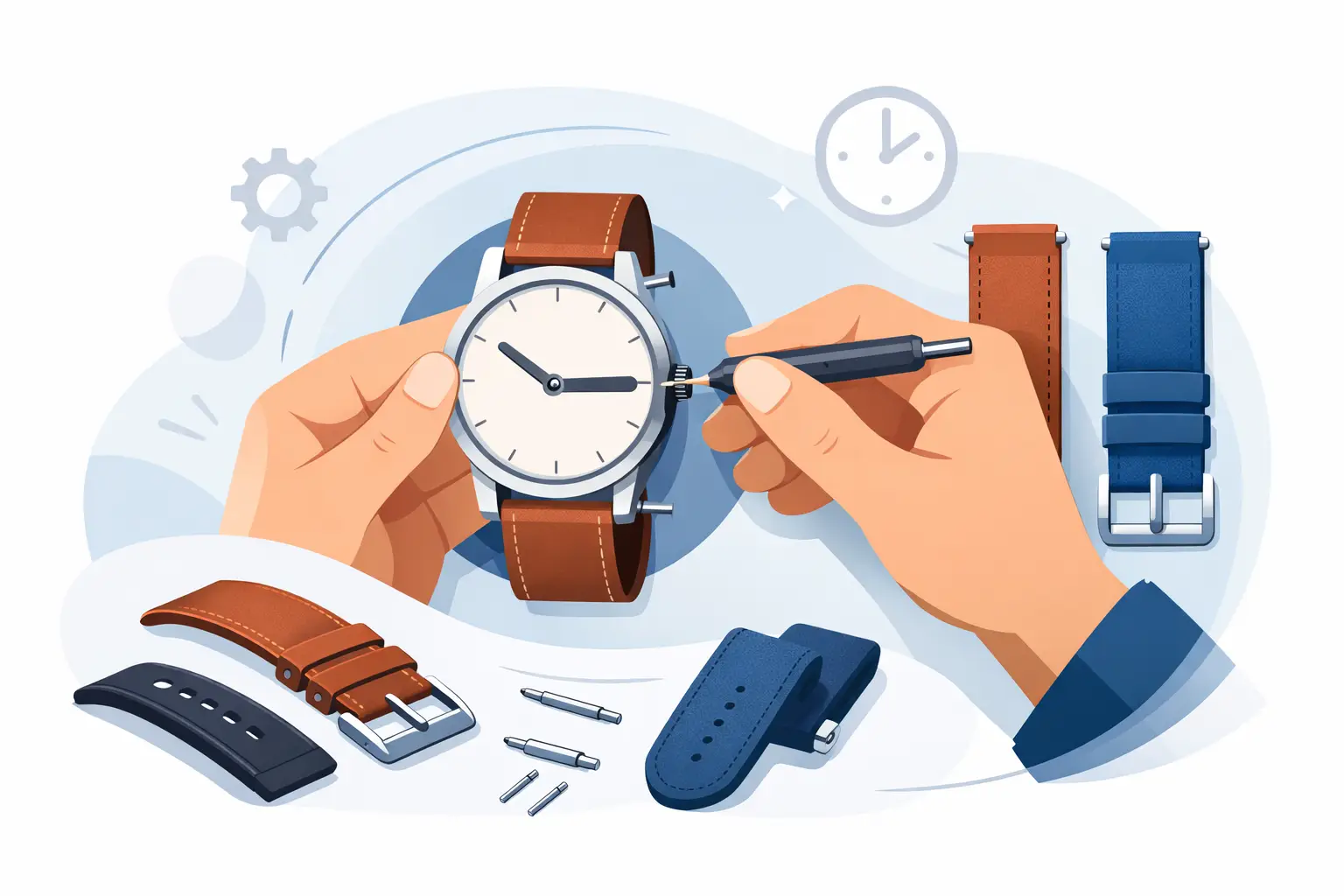
A watch can look entirely different with a new strap. A black leather band gives a dress watch boardroom polish; a textured rubber strap makes the same piece ready for the pool or weekend travel. Learning how to change watch strap yourself is one of the simplest ways to get more style, comfort, and versatility from a watch you already own.
The job is usually straightforward, but it deserves patience. A slipped tool can mark the back of a polished case, scratch a lug, or send a spring bar flying across the room. With the right setup and a careful hand, most standard watches can be re-strapped in minutes.
Before You Change a Watch Strap, Check the Fit
Not every watch uses the same attachment system. Most traditional watches have lugs – the two extensions on either side of the case – and a spring bar that holds the strap in place. The key measurement is the lug width, measured in millimeters between the inside edges of those lugs.
Common sizes include 18mm, 20mm, 22mm, and 24mm. A 20mm strap will technically fit only a 20mm lug gap if you want a clean, secure result. Trying to force a wider strap into place can damage the material or make the watch sit awkwardly on the wrist. A narrower strap may fit, but it leaves visible gaps and usually looks less considered.
Check the strap you are removing for its size stamp, often printed on the underside near the case end. If there is no stamp, use a ruler with millimeter markings or a digital caliper. It is also worth checking the thickness of the replacement strap. Thick padded leather, heavy rubber, and some NATO straps can overwhelm a slim vintage-style case, while a very thin strap can make a substantial dive watch feel underdressed.
Some watches cannot accept standard aftermarket straps. Integrated-bracelet models, certain smartwatches, and watches with proprietary case fittings require brand-specific straps or adapters. Do not pry at an attachment point until you know which system you are dealing with.
What You Need to Change a Watch Strap
A basic spring bar tool is the best investment for anyone who owns more than one watch. It has a small forked end designed to compress the shoulder of a spring bar and often a pointed end for pushing through drilled lug holes. A clean microfiber cloth protects the case while you work.
For a standard strap change, keep these items nearby:
- A spring bar tool with a fine forked tip
- A microfiber cloth or soft watch mat
- The correctly sized replacement strap
- Spare spring bars, ideally in the correct diameter and length
- Good lighting and a clear, uncluttered work surface
Avoid using a kitchen knife, sewing needle, or improvised metal tool. It may seem convenient, but these tools are more likely to slip and leave a permanent mark on a case. If the watch is valuable, highly polished, vintage, or emotionally irreplaceable, a local jeweler or watchmaker can make the change quickly and safely.
How to Change Watch Strap With Spring Bars
Place the watch face-down on the microfiber cloth, with the buckle or clasp opened. Working over a light-colored surface helps if a spring bar escapes. If you are especially concerned about scratches, place a narrow strip of low-tack painter’s tape along the inside edges of the lugs before starting.
Remove the old strap carefully
Turn the watch so you can see the small gap between the strap and the lug. Insert the forked end of the spring bar tool into that gap, aiming for the small shoulder on the spring bar rather than digging into the strap itself.
Gently press the spring bar inward, toward the center of the strap. Once one end clears the lug hole, ease that side of the strap away from the case. Keep a finger over the strap and bar as you release it. Spring bars are tiny, spring-loaded parts, and they have a talent for disappearing at the exact moment you look away.
Repeat on the other half of the strap. Set the old strap aside with its spring bars, but inspect them before reusing them. Bent, rusty, weak, or overly thin bars should be replaced. A quality strap deserves secure hardware, especially on a heavier steel sports watch.
Install the new strap in the right direction
Look at the replacement strap before fitting it. On most traditional two-piece straps, the shorter piece with the buckle goes at the 12 o’clock side of the watch. The longer piece with the adjustment holes goes at 6 o’clock. This orientation keeps the excess strap tail facing the natural direction when you wear the watch on your left wrist.
Place one end of a spring bar into the lug hole on one side of the case. Rest the other end of the bar against the opposite lug, then use the forked tool to compress it inward. Guide the strap into position and slowly release pressure until the bar snaps into the hole.
Do not assume it is seated because you heard a click. Pull the strap gently away from the case, first from one side and then the other. If it shifts or comes loose, remove it and try again. A secure spring bar should move slightly as the strap pivots, but it should not pull free from the lugs.
Repeat for the other strap half. Wipe away any dust or fingerprints from the case, then put the watch on your wrist and check that both strap pieces sit flat and evenly.
Quick-Release Straps Make the Job Easier
Quick-release straps have a small sliding lever on the underside near the case end. They use a built-in spring bar, eliminating the need for a separate tool. Pull the lever toward the center of the strap, lift one side free, and then release the other side.
To install one, insert the fixed end of the bar into a lug hole, pull the lever back, position the strap between the lugs, and release it. Give it the same gentle tug test afterward. Quick-release hardware is ideal for rotating straps often, but it is not automatically better for every watch. The lever can add bulk near the case and may not fit tightly curved lugs or very narrow gaps.
Changing a Metal Bracelet Is Different
A steel bracelet can transform a watch, but removing one is often more difficult than changing leather or fabric. Bracelet end links fit closely against the case, leaving less room for a tool. Use the forked end to compress the spring bar from the back side, and support the bracelet as you work so its weight does not drag across the case.
Some bracelets use screw bars rather than spring bars. These require a correctly sized precision screwdriver and a steady hand. Use only enough force to break the screw free. If the screw resists, stop rather than stripping it. Thread-locking compound, corrosion, or an unusual screw design may call for professional help.
Bracelet sizing is a separate task. Removing links or adjusting a micro-adjust clasp affects fit, not attachment to the case. If your goal is better comfort, try the clasp micro-adjustment first. It preserves the bracelet’s balanced look and is often enough to accommodate changes in weather or wrist swelling.
Choose Straps That Suit the Watch and the Occasion
The best strap change does more than fit physically. It should respect the character of the watch. Smooth calfskin, shell cordovan, or alligator-pattern leather brings elegant restraint to a dress watch. Suede adds relaxed texture to field watches and vintage-inspired chronographs. Rubber is the practical choice for dive watches, summer heat, and active days, while nylon gives a military-style tool watch a casual, durable edge.
Color matters as much as material. Black, dark brown, and navy are dependable foundations for a first strap collection. Tan leather works especially well with blue dials, cream dials, and warm-toned cases. A green, gray, or burgundy strap can add personality without turning a refined watch into a novelty.
A NATO strap deserves one additional consideration: it runs beneath the watch case, adding height on the wrist. That extra security is appealing because one failed spring bar will not send the watch straight to the ground, but the thicker profile may not suit a slim dress watch or a tightly fitted shirt cuff.
Common Mistakes to Avoid
The most common mistake is scratching the lugs by forcing the tool. Work slowly, and approach the spring bar shoulder at a shallow angle. Another is installing the buckle at 6 o’clock, which makes the watch feel backward and leaves the strap tail in an awkward position.
Do not reuse questionable spring bars simply because they appear intact. These inexpensive parts carry the full weight of the watch. Also avoid wearing a leather strap in the shower or during intense workouts. Leather absorbs moisture, odors, and oils over time, while rubber, nylon, or steel will handle those conditions far better.
Finally, check the fit after the first day of wear. A strap that felt good at your desk may become too tight in summer heat, and a loose bracelet can make a watch rotate constantly around the wrist. The ideal fit is secure enough to keep the case centered, with enough room to slide a fingertip under the strap.
A well-chosen strap gives a familiar watch a fresh purpose without requiring another major purchase. Keep a few strong options on hand, change them with care, and let the watch match the room, the season, and the version of your style you want to show that day.