
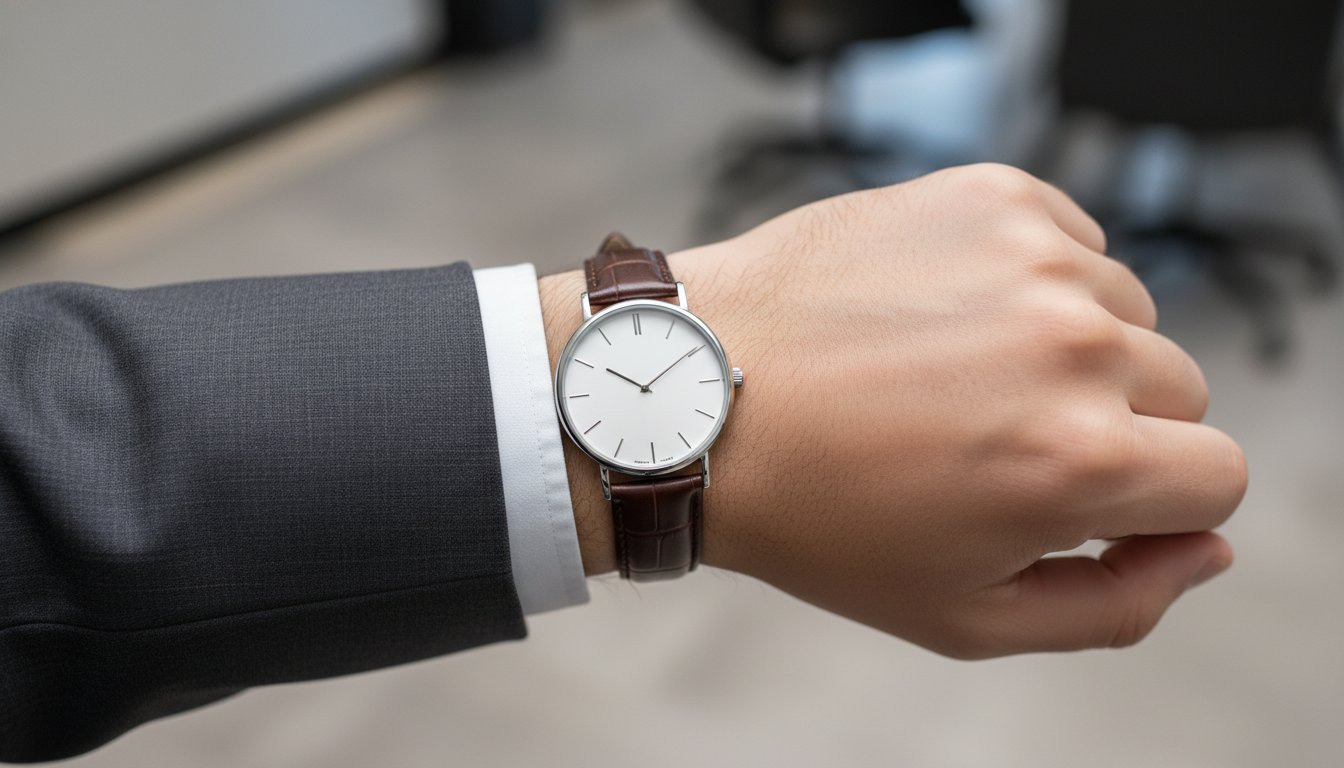
In a world of ever-present smartphones, the decision to wear a wristwatch is a conscious one—a nod to tradition, craftsmanship, and personal style. But not all watches are created equal. A rugged dive watch that looks perfect on the weekend might feel out of place with a tailored suit. This is where the formal dress watch comes in. This guide will help you learn the essential characteristics of a true formal dress watch, from its minimalist dial to its leather strap, ensuring you always look polished and appropriate for any distinguished occasion.
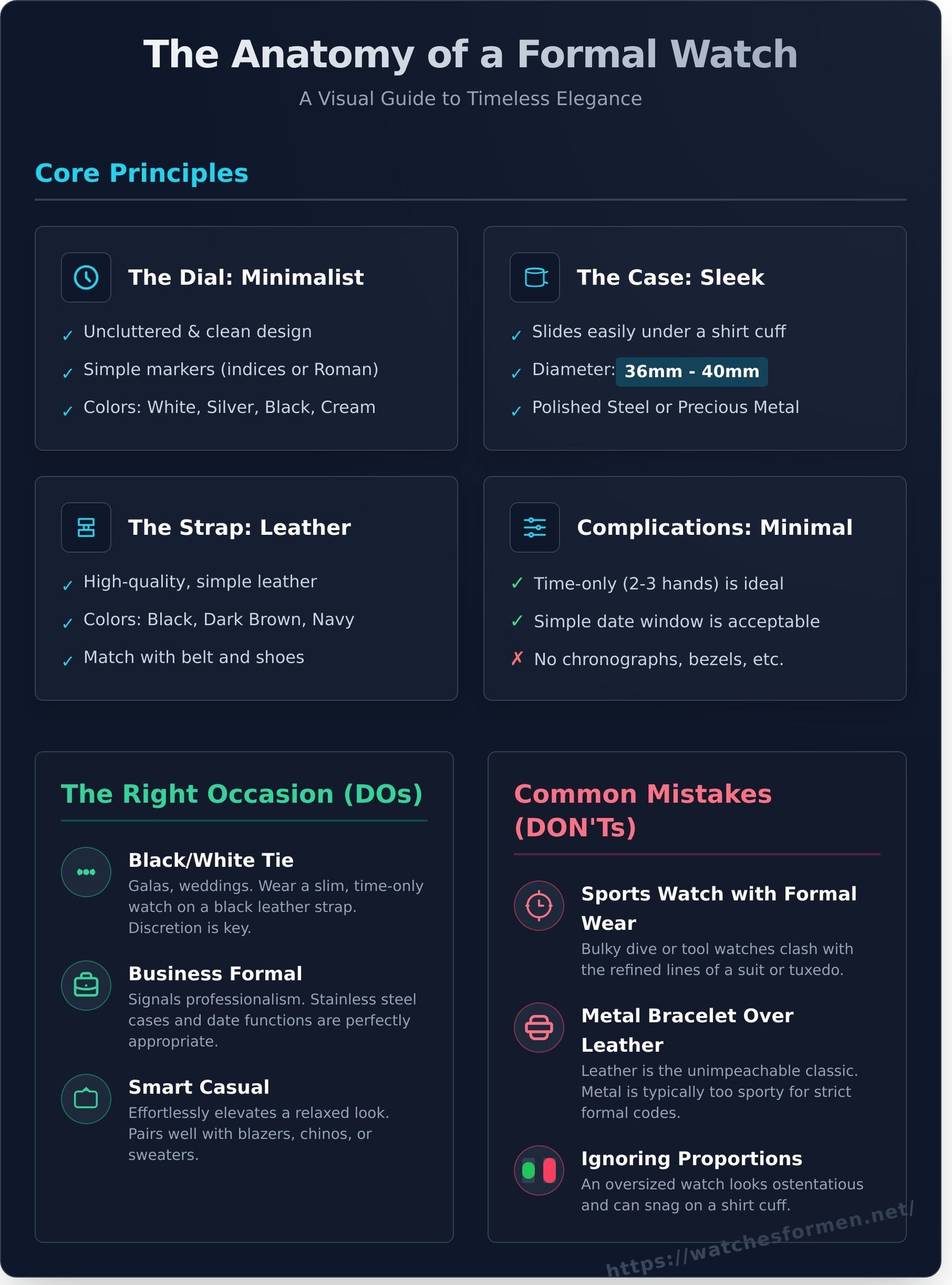
The Anatomy of a Formal Watch: Key Characteristics
A formal watch is defined by its subtlety and elegance. Its primary function is simply to tell time, not to broadcast a list of features or make a loud statement. Think of it as the refined final touch to a formal outfit, an accessory that whispers sophistication rather than shouts for attention. Its design principles are rooted in a century of tradition, prioritizing clean lines and understated grace.
The Dial: Simplicity is Paramount
The face of a formal watch should be the epitome of clarity and restraint. A minimalist design is paramount, featuring simple hour markers, which are often thin batons (indices) or classic Roman numerals. The goal is to avoid clutter at all costs; you will not find busy subdials, complex digital displays, or jarring logos on a traditional dress watch. The color palette is equally classic, typically sticking to timeless shades of white, silver, black, or a warm cream. This clean aesthetic ensures the watch is readable at a glance without drawing unnecessary attention. A perfect example of this principle is the Orient Bambino, celebrated for its pure, uncluttered dial and exceptional value.


See also Swiss Watches for Men: The Ultimate 2025 Buying Guide
The Case: Slim, Sleek, and Unobtrusive
A true dress watch is designed with discretion in mind. Its case should be thin enough to slide easily and comfortably under a well-fitted shirt cuff without snagging or creating a bulge. This requires a sleek profile that feels almost like a second skin. The diameter is also modest by modern standards, usually falling between a classic 36mm and a more contemporary 40mm. Anything larger risks looking ostentatious and clashing with the tailored lines of a suit. The case is typically crafted from polished precious metals like gold or, more commonly today, high-quality stainless steel, reflecting a quiet and confident luxury.
The Strap: The Leather Standard
While trends may come and go, the traditional choice for a formal watch strap is, and always has been, high-quality leather. A simple, elegant leather strap in a classic color like black, dark brown, or navy blue is the gold standard. For a truly cohesive look, it’s a timeless style rule to match the leather of your watch strap to your belt and shoes. This small detail demonstrates a keen eye and an appreciation for the finer points of formal dressing.
Complications: Less Is Always More
In the world of horology, a “complication” is any function on a watch that does more than tell the time. For a formal dress watch, the philosophy is simple: less is always more. A true, purist dress watch has few, if any, complications—it may only have two or three hands to indicate the hour, minute, and second. A simple date window is generally considered the most acceptable complication, as it offers practical utility without cluttering the dial. Functions like chronographs, tachymeters, and dive bezels are hallmarks of sports watches and are considered far too busy and utilitarian for a formal setting. The elegant Tissot Le Locle often features a discreet date window, perfectly balancing function with formal aesthetics.
When and How to Wear a Formal Wrist Watch
Wearing a dress watch is about more than just telling time; it’s about respecting the occasion and its corresponding dress code. The right watch complements your attire and demonstrates an appreciation for detail and tradition, signaling that you understand the nuances of formal style.
See also The Best Swiss Watches Under $300: Affordable Elegance is Possible
Black Tie and White Tie Events
For the most formal events, such as galas, weddings, or state dinners, the rules of elegance are at their strictest. Simplicity is non-negotiable. The ideal timepiece is a slim, time-only watch on a simple black leather strap. Historically, it was even considered rude to check the time at such events, as it implied you had somewhere better to be. Therefore, the watch itself should be so discreet that it goes almost unnoticed, serving as a subtle mark of refinement rather than a functional tool.
Business Formal and Professional Settings
In a business formal environment, a classic dress watch signals professionalism, reliability, and attention to detail. While the core principles of simplicity still apply, there is slightly more flexibility here. A watch with a date function or a stainless steel case is perfectly appropriate. The key is to avoid anything oversized, brightly colored, or loud that could be distracting in a meeting. Your watch should complement your authority, not compete for attention. Explore some of our favorite Luxury Dress Watches That Ooze Classic Style to find inspiration for your professional wardrobe.
Can You Wear a Dress Watch Casually?
Absolutely. While born from formal tradition, the modern style landscape allows for much more versatility. A classic dress watch can effortlessly elevate a smart-casual outfit. Paired with a blazer, quality chinos, or even a fine-knit sweater, a dress watch adds a touch of intentional elegance and sophistication to an otherwise relaxed look, showing that you value quality and style in all aspects of your life.
Common Mistakes to Avoid With Formal Watches
Adhering to a few simple guidelines can make the difference between looking polished and making a style misstep. Avoiding these common errors ensures your look remains impeccable, projecting an aura of quiet confidence rather than misplaced flash.
Wearing a Sports or Dive Watch with a Tuxedo
This is perhaps the most common and jarring style mistake. Bulky, tool-focused watches with rotating bezels and rubber straps are designed for activity, not elegance. Their rugged aesthetic fundamentally clashes with the smooth, refined lines of formal tailoring. Reserve your dive, field, and pilot watches for the casual occasions they were designed for.
Choosing a Metal Bracelet Over Leather
While some very simple, slim metal bracelets (like a Milanese mesh) can work in modern interpretations of formal wear, a high-quality leather strap remains the classic, unimpeachable choice. A leather strap is inherently more understated and traditionally formal. If you do opt for a metal bracelet, ensure it is sleek, not overly shiny, and complements the watch’s minimalist design.
See also The Best Men’s Watches Under $1000: Timeless Style for Any Budget
Ignoring Proportions: The Oversized Watch
A formal watch should never dominate your wrist. Its size should be proportional to your wrist and, crucially, your shirt cuff. A watch that is too large looks ostentatious, can disrupt the drape of your sleeve, and suggests a misunderstanding of formal aesthetics. The goal is a harmonious balance, where the watch is a subtle component of your overall look, not the main event. Explore our Men’s Dress Watch Buying Guide for curated picks that perfectly balance size and style.
FAQs About Formal Wrist Watches
What is the difference between a dress watch and a formal watch?
The terms “dress watch” and “formal watch” are used interchangeably. They both refer to the same style of elegant, simple, and slim timepiece designed to be worn with formal attire like a suit or tuxedo.
Can a smartwatch be considered a formal watch?
Generally, no. A smartwatch, with its bright screen and functional nature, is considered a piece of technology rather than a traditional piece of jewelry. Its aesthetic is too modern and casual for truly formal events like a black-tie gala. For business settings, however, a smartwatch with a simple, dark leather band and a minimalist analog face may be acceptable.
Is a metal bracelet acceptable for a formal watch?
While leather is the traditional and safest choice, a very slim and simple metal bracelet, such as a fine-link or Milanese mesh style, can be acceptable in modern business formal settings. For strict black-tie events, however, a black leather strap is always the most appropriate option.
What is the ideal case size for a men’s formal watch?
The ideal case size for a men’s formal watch is typically between 36mm and 40mm in diameter. The key is proportion—the watch should sit comfortably on the wrist without looking too large or too small, and it must be slim enough to slide under a shirt cuff.
Do I need an expensive luxury brand for a formal watch?
Not at all. While luxury brands create beautiful dress watches, the most important factors are the design principles: simplicity, slimness, and elegance. Many affordable brands like Seiko, Orient, Tissot, and Junghans offer exceptional formal watches that adhere to all the classic style rules without a high price tag.
Can I wear a watch with a white dial after 6 PM?
This is an outdated rule related to formal day and evening wear. In modern style, the color of the watch dial is not restricted by the time of day. A classic white or silver dial is perfectly acceptable and elegant for evening events.
Understanding the quiet allure of a formal watch is the first step toward mastering a timeless and sophisticated style. It’s an accessory that speaks volumes through its restraint, adding the perfect finishing touch to your most important moments. To continue your journey and find the ideal timepiece for your collection, we invite you to discover our curated buying guides to find your perfect timepiece.