
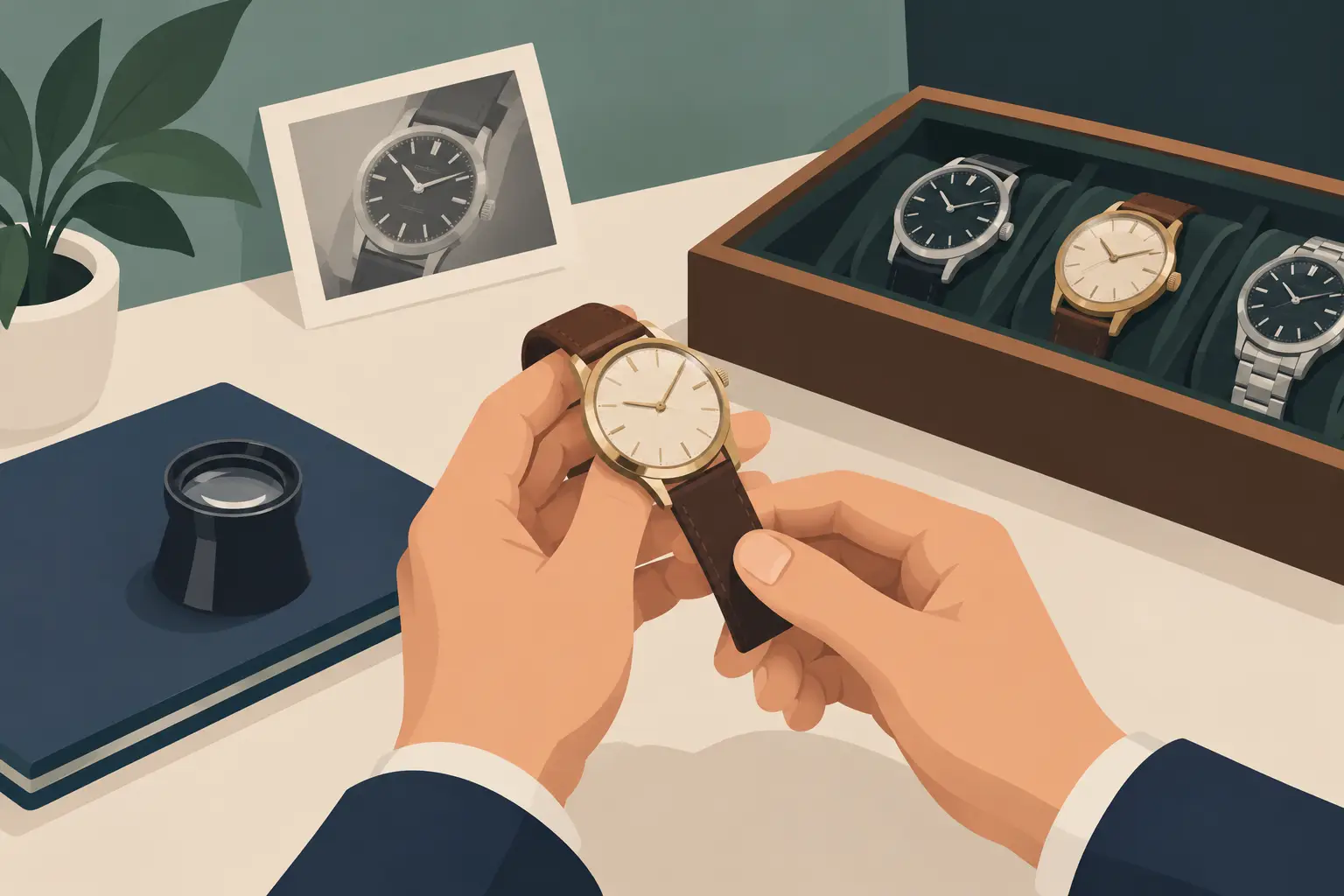
A 1960s Omega with a lightly faded dial or a well-worn Rolex Datejust can deliver something a new watch rarely does: a sense of history on the wrist. But learning how to buy vintage watches is less about chasing the oldest or most expensive example and more about recognizing honest condition, correct parts, and a price that leaves room for ownership.
Vintage watches reward patience. The right piece can sharpen a navy blazer, add character to a casual weekend look, and become the watch you reach for when a modern design feels too polished. The wrong one can arrive with a repainted dial, mismatched components, and an overdue service bill that changes the value equation fast.
Start With a Watch You Will Actually Wear
Before researching references and production years, decide what role the watch should play in your collection. A vintage dress watch from Longines, Omega, Bulova, or Universal Geneve offers restrained elegance and often represents strong value. A vintage diver or chronograph has more visual presence, but it may command higher prices and carry greater originality risk.
Think about case size honestly. Many watches made before the 1970s measure 34mm to 36mm, which can feel modest beside a modern 40mm sports watch. On the right leather strap, however, a 35mm watch looks deliberate rather than undersized. If you prefer a bolder wrist presence, late 1960s and 1970s models often offer wider cases, integrated bracelets, and more substantial proportions.
It also helps to choose your entry point by movement. A manual-wind watch creates a more hands-on ritual and can be beautifully slim. An automatic is convenient for regular wear. Quartz vintage watches are often overlooked, which makes them an affordable route into brands such as Seiko, Omega, and Cartier, although replacement parts can be harder to source for unusual calibers.
Set a Budget That Includes Ownership
The purchase price is only the first number. A vintage mechanical watch may need a proper service shortly after you buy it, even when the seller says it is running well. Timekeeping alone does not confirm that old lubricants, worn parts, or moisture damage have been addressed.
For an accessible first purchase, it is often smarter to buy a clean, straightforward three-hand Seiko, Timex, Bulova, or vintage Swiss dress watch than a heavily compromised example from a prestige brand. A modest watch with an original dial and healthy movement has more appeal than a famous name with a polished case, incorrect hands, and questionable history.
Build a reserve for servicing, a quality strap, and potentially a crystal replacement. Water resistance should not be assumed on any older watch, especially one with pushers or a rotating bezel. Treat most vintage pieces as resistant to an accidental splash at best, not as companions for swimming or showering.
How to Buy Vintage Watches With an Eye for Condition
Condition is where value is won or lost. Collectors often say to buy the best example you can afford, but that does not mean every watch needs to look untouched. A little patina can be attractive. The key distinction is between age that feels honest and damage that weakens the watch.
Study the dial before anything else
The dial usually carries the most collector value and the most personality. Look for even aging, crisp printing, and hour markers that make sense for the reference. A warm, lightly speckled dial can be desirable. A dial with bubbling lacquer, smudged lettering, or a color that appears unnaturally fresh may have been refinished.
A refinished, or redialed, watch is not automatically unwearable. It can be a practical choice if priced accordingly and disclosed clearly. The problem comes when a redial is presented as original, especially on a watch whose value depends heavily on rarity and collector appeal.
Ask for clear, close photographs taken in natural light. You should be able to inspect the brand signature, minute track, lume plots, hands, date window, and any text near the bottom of the dial. Soft photos and dramatic lighting are not enough when you are assessing a decades-old watch.
Examine the case and bracelet
A polished case can look shiny in listing photos while losing the sharp lines that define its design. On vintage Rolex, Omega, and Seiko sports watches, overpolishing can soften lugs, erase bevels, and make the watch appear smaller or less substantial. Light wear is usually preferable to a case that has been aggressively reshaped.
Original bracelets are valuable, particularly on iconic sports models, but they are not essential for every buyer. Vintage bracelets can stretch, feel light, and be expensive to repair. A correct leather strap may make a vintage dress watch more comfortable and versatile, provided the watch itself is sound.
Confirm that the parts belong together
A vintage watch does not need to be a museum piece to be worth buying. Still, the more original its visible components are, the easier it is to understand its value. The dial, hands, crown, bezel, crystal, bracelet, and movement should be appropriate for the model and era.
Replacement crowns and service hands are common, particularly on watches that were maintained by brand service centers years ago. That history can be useful for reliability, but collectors may pay less for a watch that no longer wears its original components. Decide whether your priority is purity, daily usability, or a sensible balance of both.
Research the Reference, Not Just the Brand
A brand name is only the start of the story. Two watches that look nearly identical can have very different values because of their reference number, dial variation, movement caliber, production period, or case material.
Before buying, compare the watch against multiple known examples. Check whether the dial layout, handset, caseback markings, and movement are consistent with that reference. Pay close attention to details such as the shape of the logo, the placement of the text, and whether lume on the hands matches the dial markers in color and aging.
Serial numbers can help establish an approximate production period, but they are not a guarantee of authenticity. Some brands place serials in different locations, and records are not always complete. Consider serial data one useful clue among many, not a final verdict.
For higher-value pieces, an independent watchmaker or knowledgeable collector can be worth consulting before money changes hands. A small fee for an informed second opinion is far less painful than discovering an incorrect movement after the sale.
Choose the Seller as Carefully as the Watch
Where you buy affects both risk and price. Established vintage dealers usually charge more, but their pricing may include authentication, a warranty, servicing, and a straightforward return policy. That premium can make sense for a first serious vintage purchase.
Private sellers and auctions can offer better value, especially if you have done the research. They also demand more discipline. Ask direct questions about service history, replacement parts, timekeeping, returns, and whether the watch has been tested for water resistance. A credible seller should not take reasonable questions personally.
Before committing, make sure you have these essentials:
- Sharp photos of the dial, case sides, caseback, movement, and serial or reference markings
- A clear statement of what is original, replaced, serviced, or unknown
- Details on current performance, including whether the watch winds, sets, and changes date correctly
- A return window or buyer protection suitable for the price of the watch
- A payment method that creates a documented transaction record
Be especially cautious when the price seems far below market. It may be an opportunity, but it may also reflect hidden damage, an incorrect configuration, or a seller counting on urgency. Vintage watch buying is one category where walking away is often a sign of good judgment.
Plan for Service, Then Wear It With Intention
Once the watch is in hand, have a trusted watchmaker inspect it if its service history is uncertain. Ask for a practical assessment rather than an automatic restoration. Replacing every aged component may improve function, but it can also erase original details that contribute to the watch’s character.
Wear the watch within its limits. Keep it away from water, magnets, and hard impacts. Rotate it with your modern watches if you own several, and store it somewhere dry and stable. A vintage watch does not need to live in a safe to be valuable, but it does deserve more consideration than a disposable accessory.
The best vintage watch is not necessarily the rarest reference or the most impressive name on the dial. It is the one whose condition you understand, whose proportions suit your wrist, and whose quiet history makes every glance at the time feel more personal.