
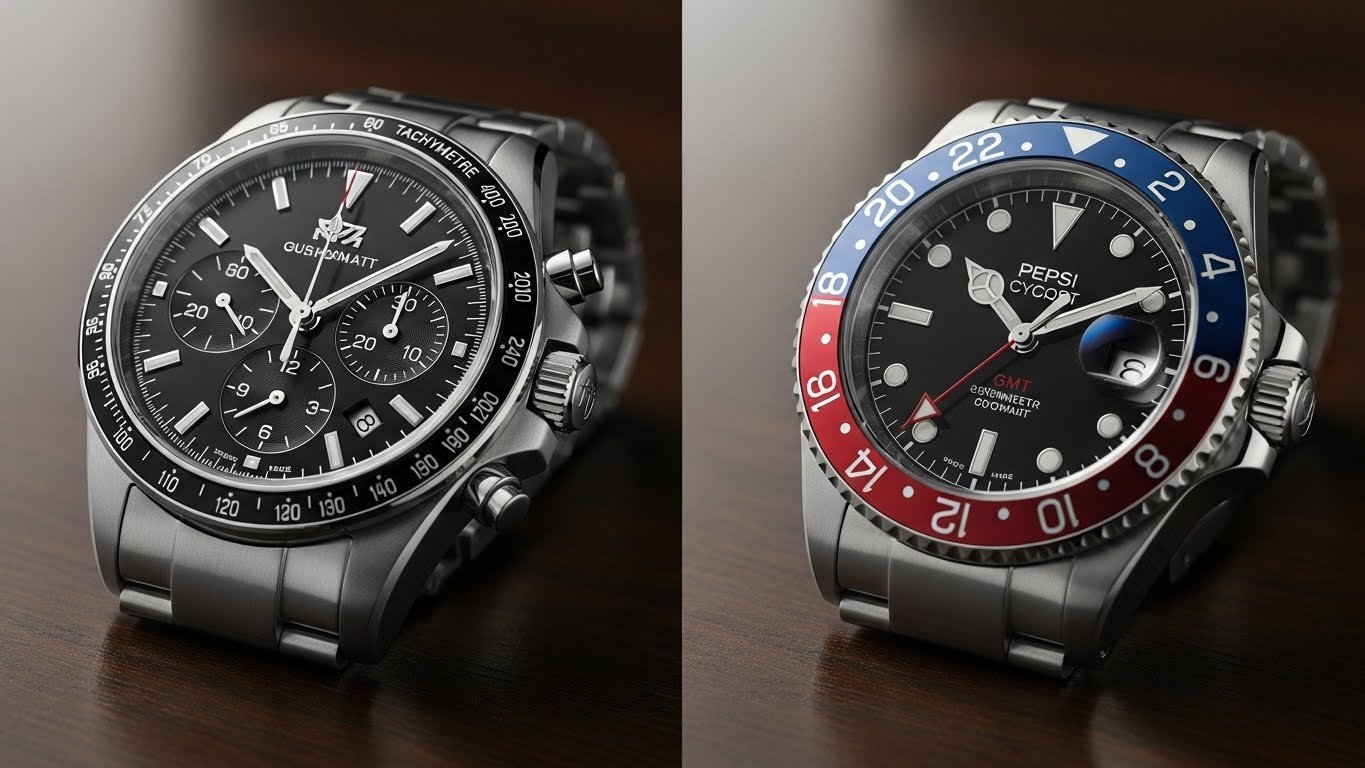
Chronograph vs GMT watches is one of the most common comparisons among watch buyers who want more than just basic timekeeping. Choosing a watch isn’t only about aesthetics; functionality plays an equally important role. Two of the most popular complications today are the chronograph and the GMT. Each serves a very different purpose, and understanding how they work will help you select a watch that genuinely fits your lifestyle.
Introduction
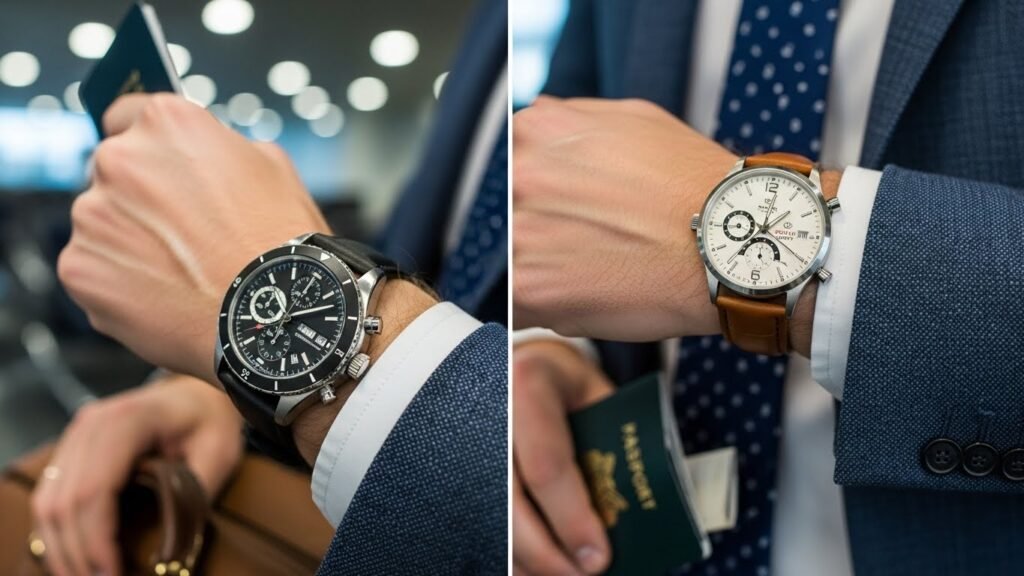
Whether you are timing workouts, tracking travel schedules, or coordinating across multiple time zones, watch complications can significantly enhance daily usability. In this guide, we break down how chronograph and GMT watches function, compare their strengths and weaknesses, and recommend reliable models across different budgets.
What to Look for in Complications
Movement Types: Chronograph vs. GMT
A chronograph functions as a stopwatch in addition to standard timekeeping. It is ideal for measuring elapsed time during activities such as workouts, meetings, or even cooking. GMT watches, on the other hand, display a second time zone via an additional hand or sub-dial, making them invaluable for frequent travelers or professionals working with international teams.
Both complications are available in automatic and quartz movements. If you want a deeper understanding of these mechanisms, see our guide on automatic vs quartz watches.
Build Quality Indicators
High-quality chronographs should have smooth, responsive pushers and well-aligned subdials. GMT watches benefit from independently adjustable GMT hands for easier time zone changes. Look for stainless steel cases, sapphire or hardened mineral crystals, and solid bracelets or durable straps.
Water Resistance
For everyday wear, a minimum of 50 meters of water resistance is recommended. Many chronographs feature screw-down pushers to prevent water ingress, while GMT watches often provide higher resistance for travel and outdoor use.
Brand Reputation
Established brands such as Seiko, Citizen, and Orient are known for producing reliable chronograph and GMT watches at accessible price points, backed by proven movement technology.
Warranty Considerations
A standard warranty of one to three years is typical for reputable watch manufacturers and provides peace of mind, especially for complications with additional mechanical components.
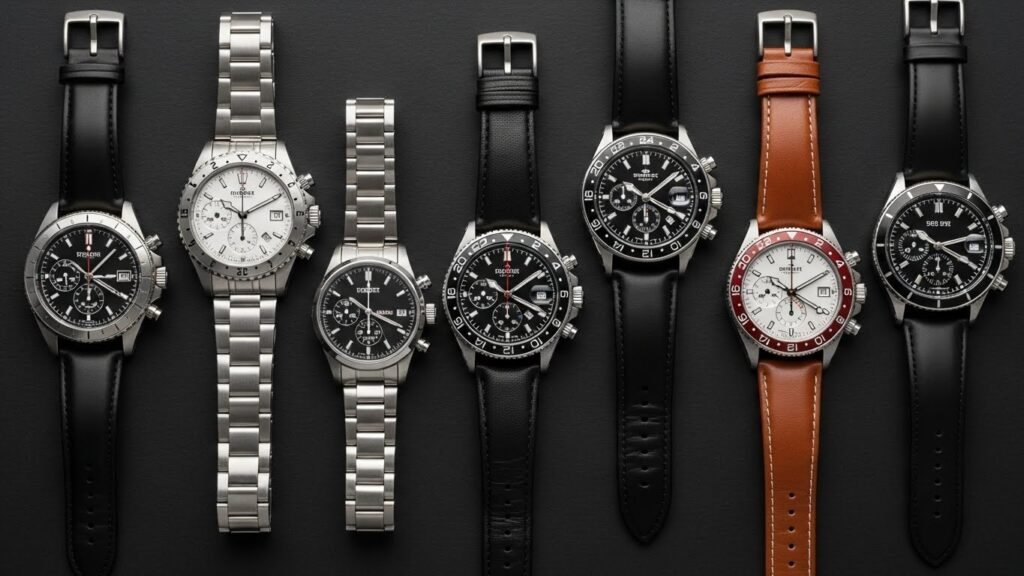
Chronograph vs GMT: Pros and Cons
| Feature | Chronograph | GMT |
|---|---|---|
| Primary Function | Stopwatch and elapsed time | Dual time zone tracking |
| Best For | Sports, timing tasks | Travel, global business |
| Ease of Use | Multiple pushers and subdials | Simple additional hand |
| Design Style | Sporty and technical | Classic and travel-focused |
| Maintenance | More moving parts | Slightly simpler mechanics |
| Price Range | $50–$5,000+ | $70–$5,000+ |
Top Picks: Chronograph vs GMT Watches
Timex Weekender Chronograph
Key Specs: Quartz movement, 40mm case, 30m water resistance, classic casual design.
Why it’s great: Affordable, versatile, and easy to use for everyday timing needs.
Best for: Students, casual wearers, and first-time chronograph buyers.
Seiko 5 Sports GMT SSK003
Key Specs: Automatic movement, 42.5mm case, 100m water resistance, robust sports build.
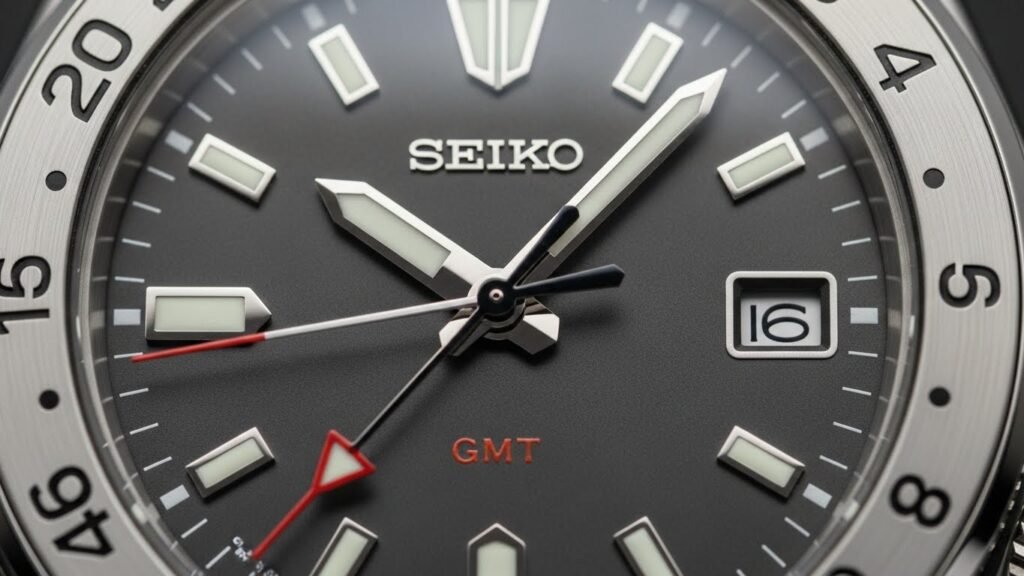
Why it’s great: One of the most accessible mechanical GMT watches with strong build quality.
Best for: Frequent travelers and enthusiasts who prefer mechanical movements.

Citizen Promaster GMT Chronograph
Key Specs: Eco-Drive solar quartz, 44mm case, 200m water resistance, dual complications.
Why it’s great: Combines chronograph and GMT functionality with low-maintenance solar power.
Best for: Adventurers and users who want maximum functionality in one watch.
How to Choose the Right Complication for You
Consider how you will use the watch day to day. If your lifestyle involves frequent travel or international coordination, a GMT watch offers immediate value. If you regularly need to measure elapsed time, a chronograph is more practical. Style preferences also matter, as chronographs tend to look sportier, while GMT watches maintain a cleaner, travel-inspired aesthetic.
Pro tip: Some watches combine both complications, offering an all-in-one solution for enthusiasts who want versatility without switching watches.
Conclusion
Both chronograph and GMT watches deliver meaningful functionality when matched correctly to your lifestyle. By understanding your needs and preferences, you can confidently select a watch that enhances how you manage time. If budget is a concern, explore our curated guide to the best watches under $200 for excellent value options.